

On July 30, Ethereum fluctuated around $1,920, failing to break through $2,000 for several consecutive trading sessions. Although the price has recovered significantly from its June lows, insufficient follow-up buying has kept this rebound in a consolidation phase.
ETFs turned to net outflows
The U.S. spot Ethereum ETF recorded a net outflow of approximately $18.65 million on July 29, ending the previous trading day's net inflows. While this is not a large amount compared to the overall inflows of the previous week, it indicates that institutional funds have not yet provided sufficient impetus to help ETH break through key psychological levels.
From a technical perspective, ETH initially rose to the $1970-$1980 range, but persistent selling pressure pushed the price back below $1930. The market is currently focused on resistance around $1940, with further concentrated selling pressure expected in the $1980-$2000 range.
Macroeconomic sentiment suppresses risk appetite
After the Federal Reserve maintained its benchmark interest rate range of 3.5% to 3.75%, the market's willingness to allocate to high-risk assets did not increase significantly. High interest rates mean that the opportunity cost of holding crypto assets remains high, which also weakens the incentive for funds to flow back into growth and high-volatility assets.
Meanwhile, geopolitical tensions are also fueling risk aversion. Reports indicate that Brent crude oil prices surged over 7% after tensions between the US and Iran escalated, while major US stock indices declined in tandem. The combination of rising energy prices and a weakening stock market has reignited concerns that inflationary pressures will not ease quickly.
Overall sentiment in the crypto market remains cautious. The Fear & Greed Index remains in the "Fear" zone, indicating that even though ETH has rebounded from its June lows, trader confidence has not fully recovered.
Slower legislative progress weakens short-term catalysts
The US Senate's delay in advancing the "Digital Asset Market Clarity Act" has also deprived the market of a short-term positive expectation. This bill originally aimed to clarify the regulatory division of labor between the US Securities and Exchange Commission and the Commodity Futures Trading Commission regarding digital assets.
While Ethereum already has compliant spot ETFs in the US, further clarification of market structure rules could increase the willingness of trading platforms, brokerages, and institutions to expand their crypto businesses. The current delay in legislation means that new policy catalysts are unlikely to emerge in the short term.
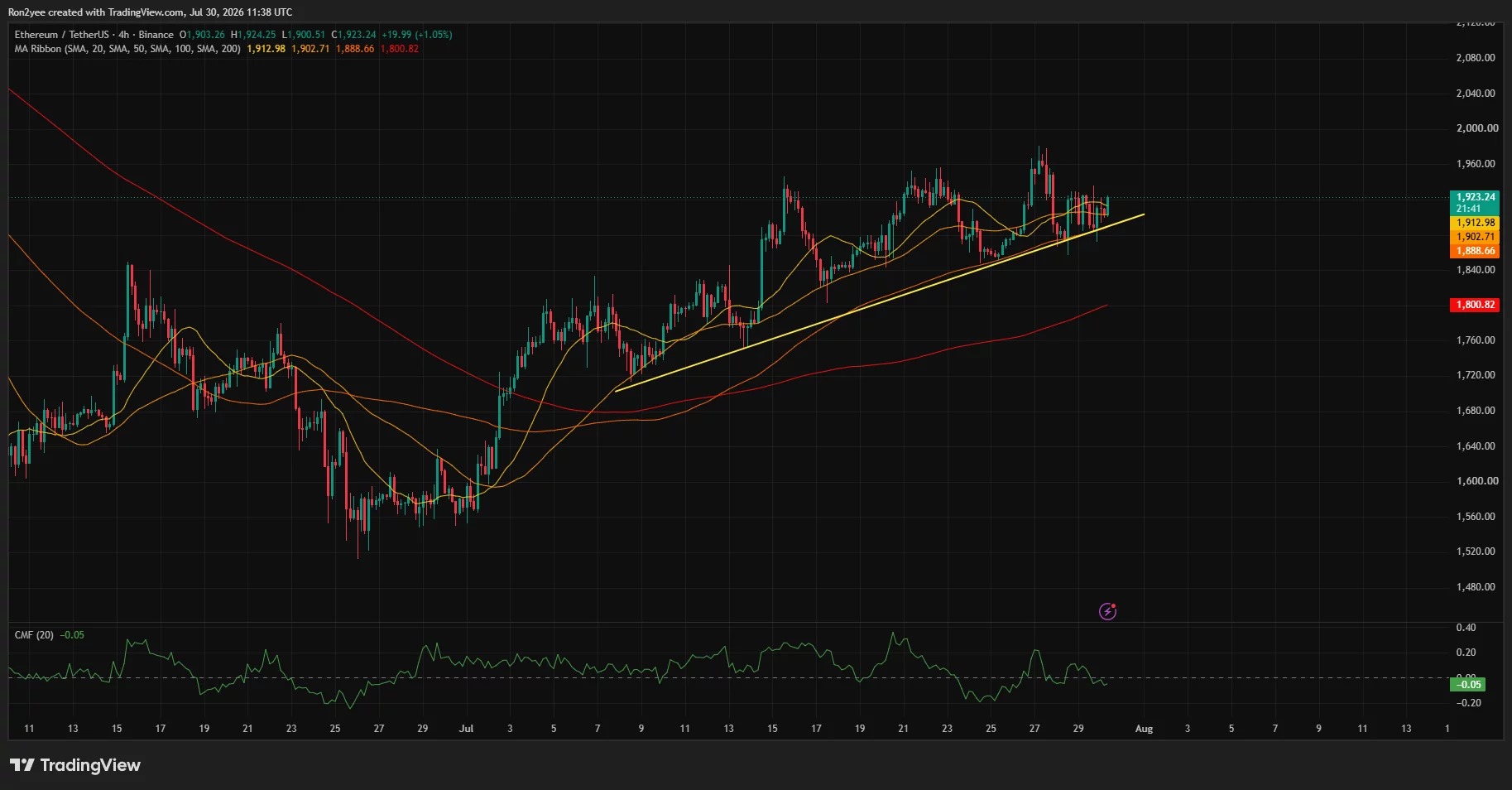
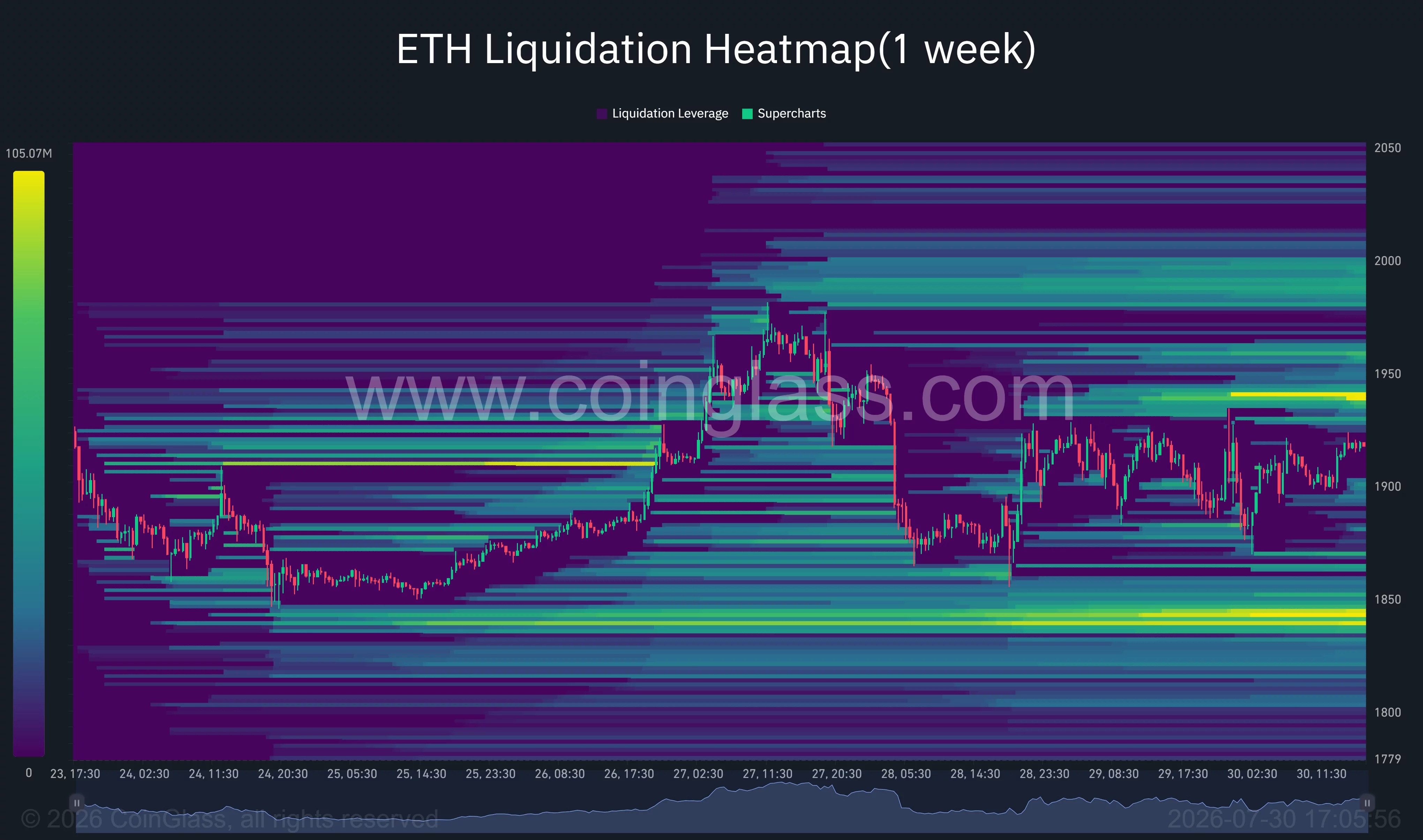
From a technical perspective, ETH is still trading above multiple short- and medium-term moving averages, indicating that the rebound structure remains intact. However, the money flow indicator is still negative, suggesting that the price recovery has not yet been fully confirmed by spot buying. If it fails to effectively break above $1940, the price may continue to consolidate within a range; support levels to watch are around $1888 to $1900.