

Foreign media reports that, based on historical weekly performance, Fridays are likely to be one of the weakest trading days for Bitcoin in recent times. The article cites long-term data indicating that Fridays have a two-week average return of negative values, with a drop exceeding 1%, while weekend performance is generally positive, with Tuesdays typically showing higher average gains.
Friday's average performance was weak.
The article states that slight pullbacks often occur on Mondays and Wednesdays, but historically, they are weaker than on Fridays. The author believes this phenomenon reflects trading rhythm rather than a fixed pattern.
- Friday's two-week average return was negative
- The average decline exceeded 1%.
- The overall performance over the weekend was relatively strong.
The main reason for the risk reduction before the weekend is likely
The article argues that traditional financial markets close on Friday evenings, while the crypto market continues to trade. Institutional traders, market makers, and hedge funds often reduce risk before exiting the market, especially after volatile trading weeks.
When leveraged positions are closed out, or some funds choose to take profits, selling pressure will be concentrated on Friday. At the same time, many crypto derivative contracts will also expire on Friday, and the related order flow may amplify the originally small price fluctuations.
Declining liquidity amplifies volatility
The article also mentions that institutional participation typically decreases as the trading week nears its end, leading to weaker market liquidity. In this environment, even small sell orders can result in more significant intraday declines.
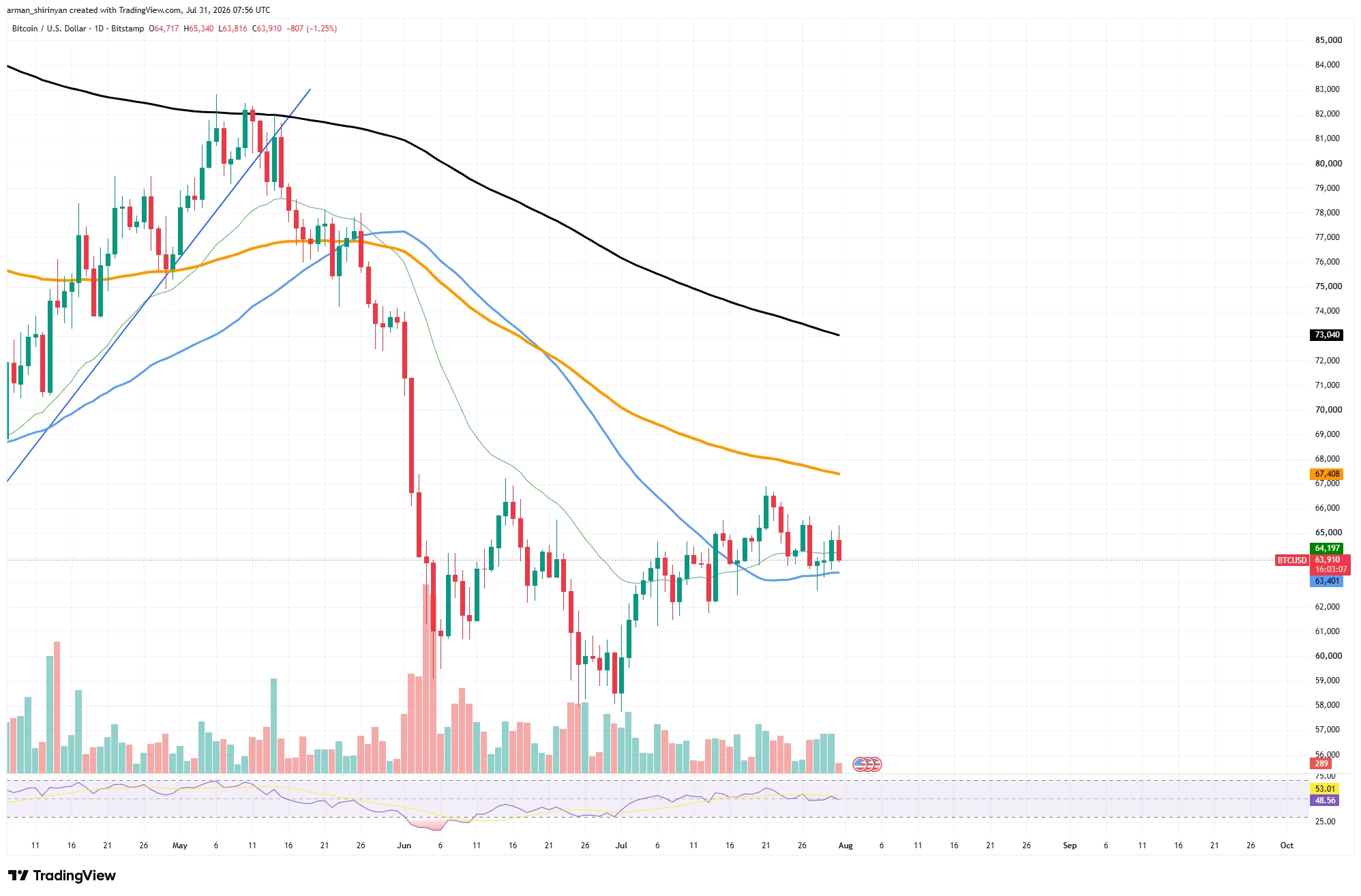
The author also points out that Bitcoin's current price is around $64,000, having recently fallen below the 50-day moving average of $67,400. Although the price remains above the 100-day moving average of $63,400, it is still constrained by the 50-day and 200-day moving averages, indicating an overall neutral to slightly weak trend.
RSI is near the neutral region.
The article states that the RSI is currently hovering around 49 to 50, indicating that neither bulls nor bears have clearly established dominance. The author argues that historical performance based on weekly charts cannot be used as the sole basis for trading decisions, as macroeconomic data, ETF fund flows, geopolitical events, and liquidations can all rapidly alter the day's price action.
From this perspective, the so-called "Friday effect" is more suitable as an auxiliary clue for observing market rhythm than as a rule for independently judging price direction.