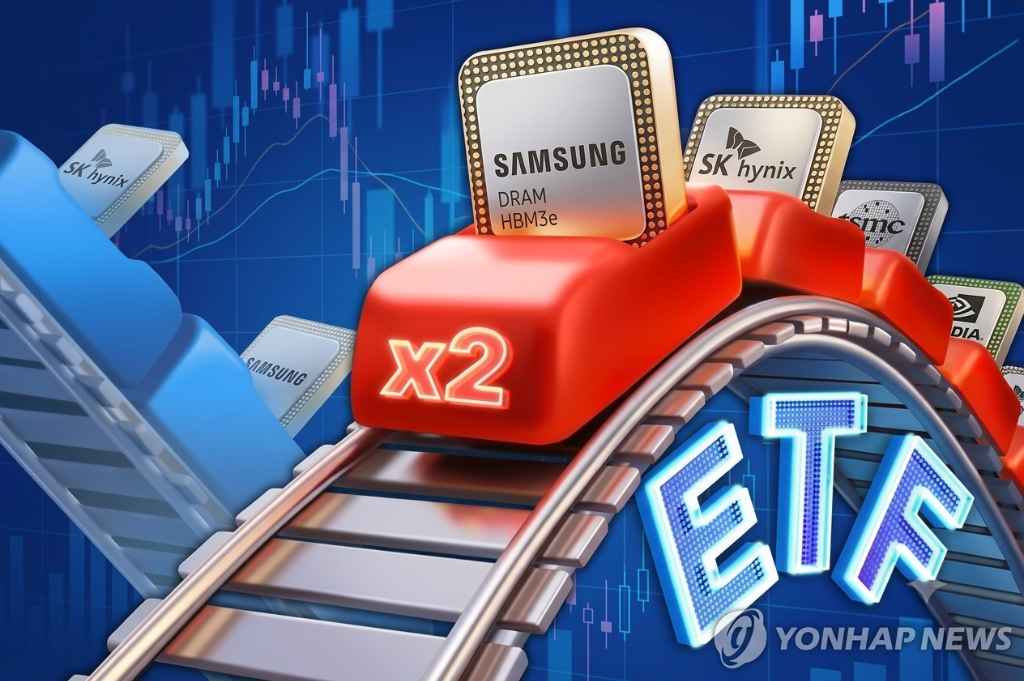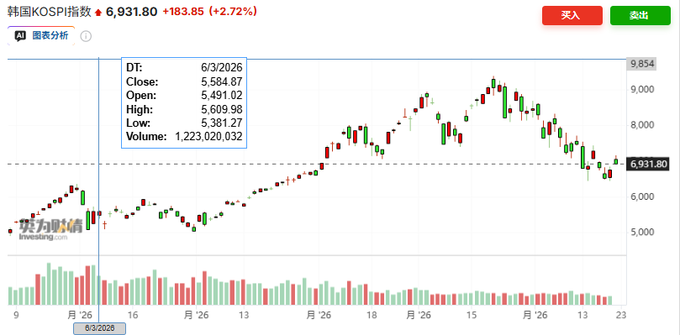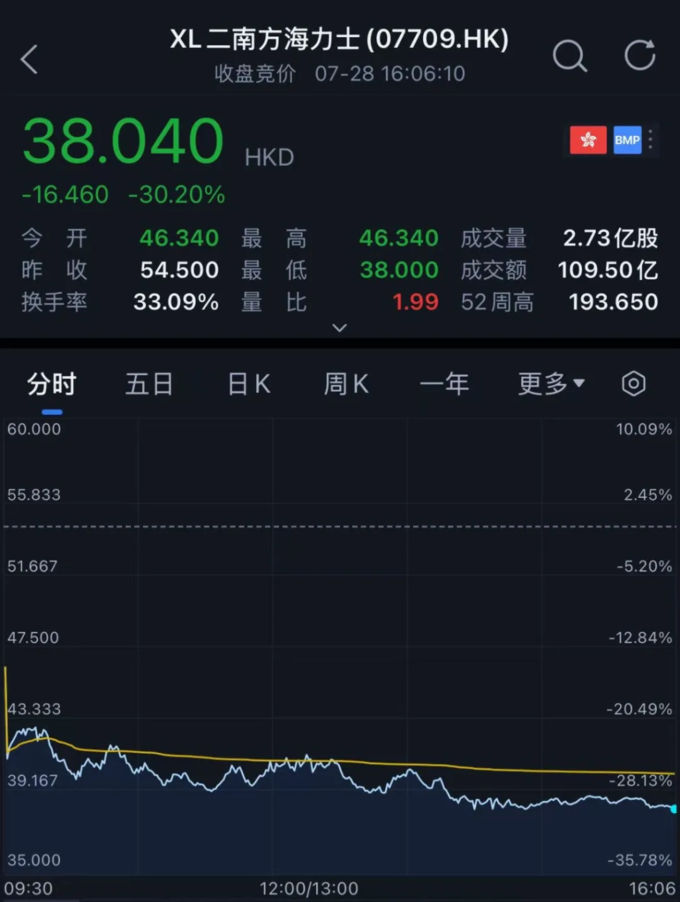


Amidst the sharp fluctuations in the South Korean stock market, leveraged ETFs for single stocks have become the focus of market attention. On July 28, both major South Korean stock markets triggered circuit breakers simultaneously, with the KOSPI falling below 6,000 points for the first time in over three months. Against this backdrop, trading in leveraged and inverse products related to stocks such as SK Hynix continued to surge, and cases of retail investors suffering losses also increased rapidly.
High transaction volume prompts regulators to indicate increased scrutiny.
According to reports, the combined trading volume of "KODEX SK Hynix Single Stock Leveraged" and "SOL SK Hynix Futures Single Stock Inverse 2X" this month has exceeded 139 trillion won, higher than the total trading volume of the entire KOSDAQ market during the same period. On July 28, the Financial Services Commission of Korea stated that if market demand remains high, it will consider further raising investment thresholds or setting an upper limit on individual investments.
South Korea's Financial Services Commission had previously raised the basic margin requirements for related products from 10 million won to 30 million won on July 16. However, judging from the trading volume, market enthusiasm has not cooled significantly. On the day of the announcement, these single-stock leveraged products accounted for 36.6% of the total ETF trading volume, and this figure has remained high since then.
Retail investors repeatedly added to their positions, causing their losses to continue to widen.
As semiconductor stocks declined, several individual investors repeatedly added to their positions in an attempt to average down their costs, but their losses only widened. The report mentioned that a 45-year-old investor started with 7 million won and added to his position five times, increasing his total investment to 34 million won; his current unrealized loss exceeds 50%. Another 25-year-old investor continued to buy after borrowing money, ultimately leaving his account with only about half of his initial capital.
More cases of large losses have emerged in online communities. Some investors who concentrated their holdings in Samsung Electronics, SK Hynix, and related leveraged ETFs experienced significant drawdowns in a short period. Market controversy has intensified, with some questioning the adequacy of product approval and risk disclosure.
Intraday compounding amplifies losses from market volatility.
These products track twice the daily return of the underlying stock. If the stock continues to rise in a one-sided manner, the returns will be amplified; however, in a volatile market with repeated ups and downs, losses will accumulate due to the intraday compounding effect. Even if the underlying stock returns to its original position, the net asset value of the leveraged ETF often fails to recover in tandem.
A South Korean investment trust executive recently warned that if the underlying stock remains highly volatile, the losses from leveraged ETFs will continue to accumulate. Industry insiders also pointed out that South Korean retail investors favor high-volatility themes and momentum trading, which makes them more prone to significant drawdowns when the market reverses.
The product launch was rushed, and approval disputes escalated.
The related single-stock leveraged ETFs were launched on May 27, with the policy goal of alleviating exchange rate pressure, reducing capital outflows, and boosting the domestic stock market. However, after the products were launched, funds quickly concentrated in a few popular stocks, and the pre-market rebalancing further amplified the volatility of the underlying stocks. The report mentioned that the net assets of these products reached 16 trillion won by the end of June, and the daily trading volume once reached 14 trillion won.
A South Korean Financial Supervisory Service official previously stated that, in hindsight, the relevant applications should have been more forcefully prevented from being approved. This statement was interpreted by the market as a reflection on the approval process by regulators. The ruling party and regulatory authorities have begun discussions and will observe the effects of the increased margin requirements in the short term before deciding whether to introduce stricter restrictions.