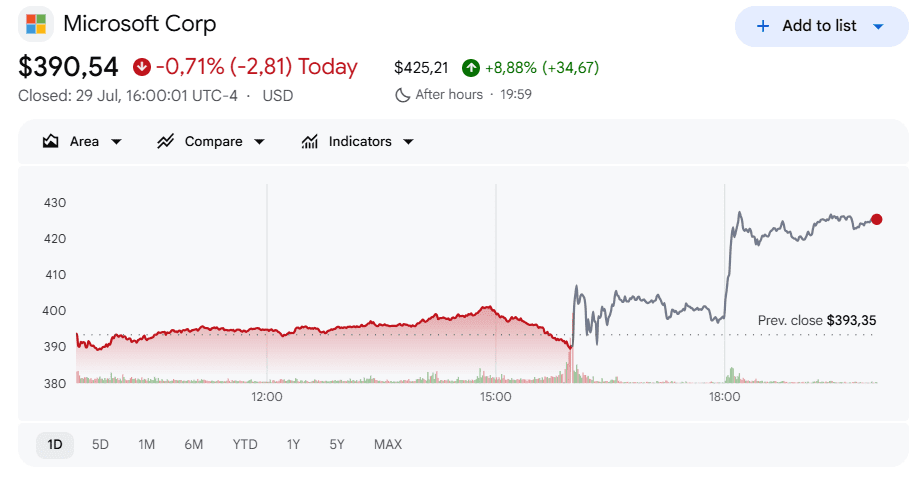


Microsoft's stock price rose significantly in after-hours trading following the release of its fourth fiscal quarter results ending June 30. The company's revenue grew approximately 18% year-over-year, exceeding market expectations and prompting investors to reassess the resilience of its cloud business and AI services.
Azure is growing faster than expected.
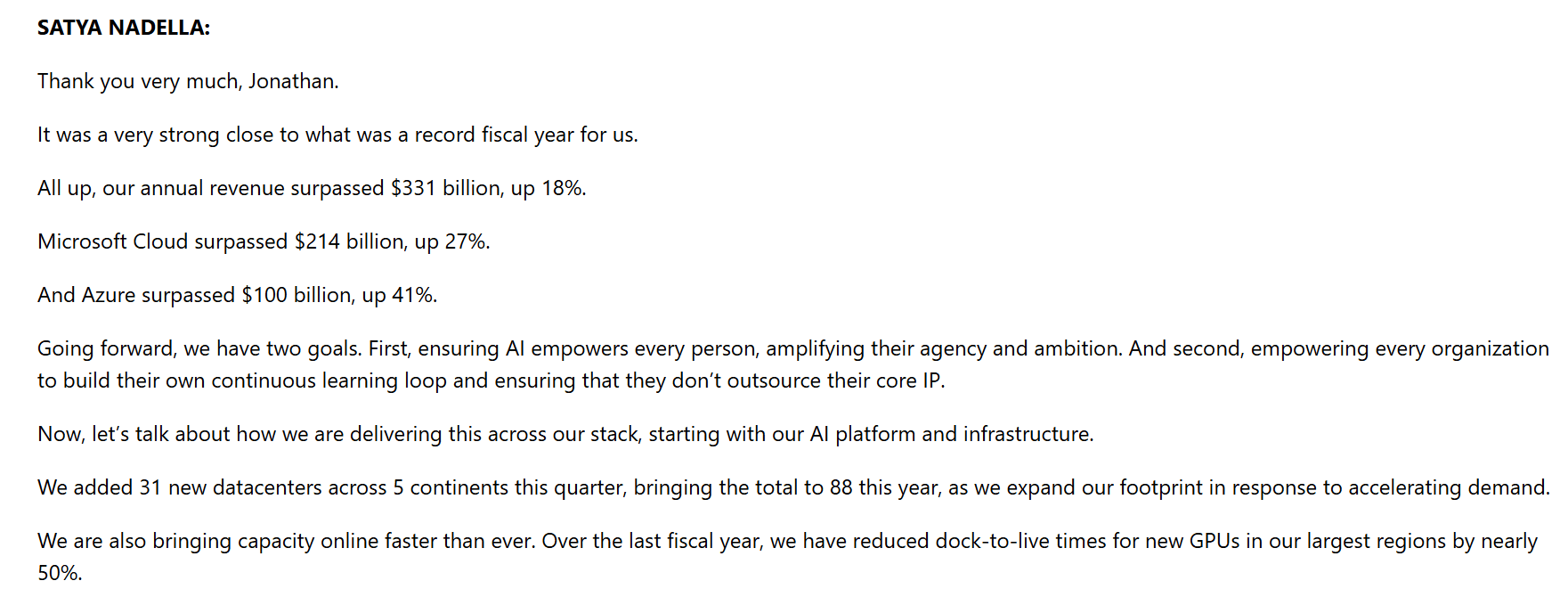
Microsoft's Intelligent Cloud business reported revenue of $39.31 billion for the quarter, a 31.6% year-over-year increase, exceeding analysts' expectations of approximately $38.16 billion. Azure revenue grew by 43%, higher than the 40% growth in the previous quarter and faster than previously anticipated.
The company also stated that Azure's annual revenue will exceed $100 billion for the first time in fiscal year 2026. This figure demonstrates that enterprise demand for Microsoft cloud services and AI products continues amid intensifying competition in generative AI.
Capital expenditures continued to expand
Microsoft's capital expenditures and finance lease expenses for the quarter were approximately $41 billion, a 69% year-over-year increase. Company management disclosed that related expenses are expected to reach approximately $175 billion in fiscal year 2026, although the accounting classification for some data center investments will be adjusted.
Microsoft plans to extend the projected lifespan of its office and data center buildings from 15 years to 25 years. At the same time, more data center leases will be classified as operating leases, rather than finance leases.
The company anticipates that capital expenditures will continue to increase in fiscal year 2027, supported by demand signals from its product lines. This indicates that Microsoft is still ramping up its investment in cloud computing and AI infrastructure.
Commercial contract backlog rises to $678 billion
Microsoft's remaining commercial performance obligations rose to $678 billion, an 8% increase from the previous quarter. This metric reflects revenue that has been contracted but not yet recognized. The company stated that the sequential increase was primarily driven by customer commitments outside of AI model developers, indicating that demand is not entirely dependent on a few large AI companies.
However, the market is also paying attention to the concentration risk of Microsoft's involvement in OpenAI. Microsoft previously stated that approximately 45% of its $625 billion commercial contract pipeline is related to OpenAI. As open-source AI models become more widely adopted, this concentration exposure remains a key focus of analyst discussion.
Despite a surge in after-hours trading, Microsoft's stock price is still projected to decline by approximately 19% year-to-date in 2026.