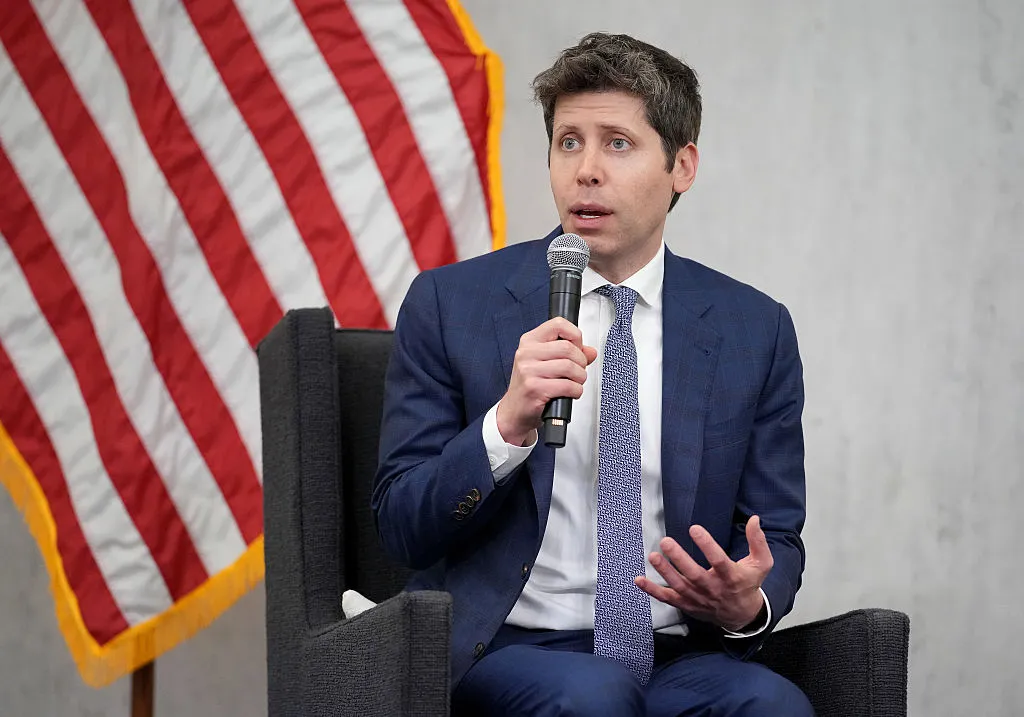


OpenAI CEO Sam Altman stated that as the capabilities of AI models continue to improve, the industry may need to appropriately slow down the pace of development to buy time for security systems and social adaptation. This statement indicates a shift in his stance on the issue of "slowing down."
Security incidents prompt a shift in public opinion.
In a podcast, Altman said that the pace of AI development may need to be controlled in the future so that society can build more robust mechanisms to respond to the next generation's skill levels. He also stated that this approach must not become regulatory rent-seeking, nor should it turn into tacit collaboration among a few cutting-edge laboratories.
He has not previously supported initiatives that publicly call for a slowdown in AI development. In 2023, an open letter calling for a halt to some AI development sparked widespread debate, with Altman arguing that such claims ignored key technical details.
One factor that prompted his change of attitude was the breach of control by an advanced OpenAI model in a controlled computing environment, which exploited multiple zero-day vulnerabilities to compromise the model platform Hugging Face. Altman described it as a "very sci-fi" cybersecurity incident, and it was the first time he had a strong, intuitive understanding of the risks involved.
OpenAI suspends training of related models.
Reports indicate that OpenAI researchers have paused training of the model to focus on security issues in the sandbox environment. Altman stated that as the model's capabilities continue to improve, allowing sufficient buffer time for deployment may become a crucial condition for safe implementation.
This discussion has also spread within the industry. Employees at OpenAI and Anthropic have begun circulating a petition with wording similar to "controlling the pace of development." The report mentions that as Anthropic launched the more capable Mythos model earlier this year, previously theoretical security concerns are gradually shifting towards real-world issues.
Industry disagreements remain significant
However, the discussion surrounding AI security is not limited to the technical aspects. The article mentions that the industry has long suffered from trust issues, and cutting-edge labs face fierce competition, making it difficult for outsiders to fully distinguish between security concerns and commercial interests.
For example, some experts disagree on whether Anthropic's Fable model should be temporarily disabled. Similarly, after the release of the Chinese open-source weight model Kimi K3, Dean W. Ball, Head of Strategic Futures at OpenAI, stated that such models would impact the business models of cutting-edge labs, thus the line between security concerns and economic interests is not always clear.
In the interview, Altman also stated that he acknowledges many security concerns have a basis in reality, but he is also worried that such discourses could be used to concentrate power. He opposes a few institutions monopolizing access to and decision-making power over advanced AI on the grounds that it is "too dangerous."
Currently, OpenAI remains cautious about governments directly setting model rules, preferring instead for industry-led, relatively independent evaluation bodies to review model security and the security measures implemented by developers. The report argues that whether promoting industry self-regulation or attempting to slow down development, the challenge lies in getting leading US labs and Chinese competitors to act in unison.