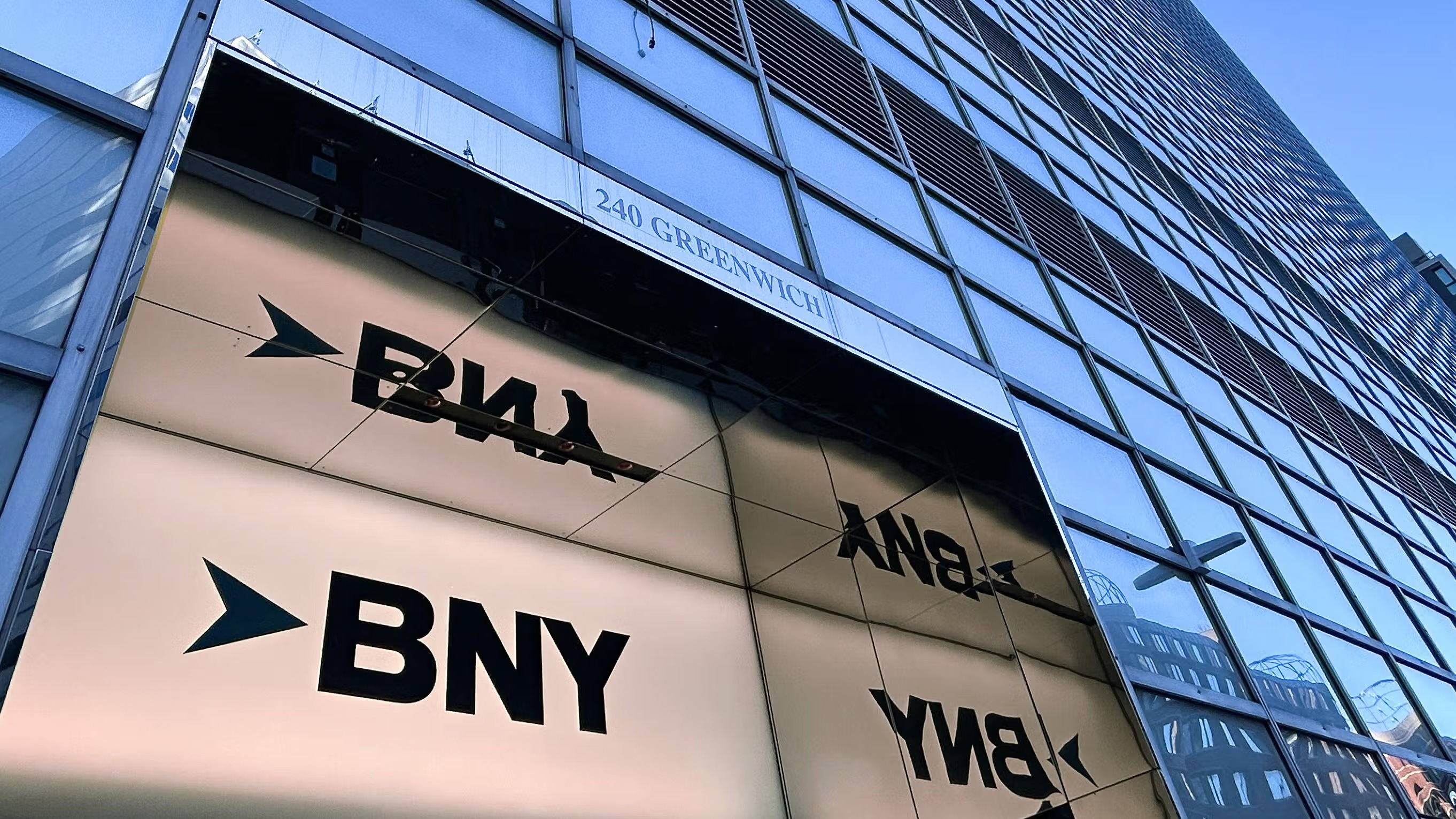


Bank of New York Mellon (BNY) is integrating a core fund back-office function with a blockchain. The bank plans to retain its existing legacy systems while adding digital ownership records to create a unified on-chain ledger of holders for tokenized funds.
The first batch of funds supporting tokenization
This adjustment targets fund transfer registration. This process records fund unit ownership, account information, and post-transaction accounting updates. BNY aims to consolidate these records, previously scattered across multiple parties, into a single on-chain ledger, reducing intermediaries and redundant reconciliation.
According to reports, the initial clients include Baillie Gifford, BlackRock, and Dreyfus, BNY's cash management business. Baillie Gifford will use the service for a fund described as the first fully native tokenized fund under UK regulations, while other clients plan to use it for subsequent products.
Covering $8.6 trillion in business
BNY stated that putting fund transfer registration on the blockchain can create a single ownership record, reducing the need to rely on multiple intermediaries for data processing and verification. The bank currently serves approximately 7.6 million accounts, involving assets of approximately $8.6 trillion.
As one of the world's largest custodians, BNY holds and manages over $59 trillion in assets. For such an institution, migrating its back-end ledgers and records to the blockchain is not just a technological upgrade, but also laying the infrastructure for the broader tokenization of funds on Wall Street.
Traditional systems will still operate in parallel.
However, BNY does not believe the old system will be phased out anytime soon. The bank expects trillions of dollars in funds to continue operating on the existing track for many years to come, with traditional transfer agent systems coexisting alongside new blockchain systems.
The bank noted that blockchain infrastructure still faces cybersecurity and smart contract risks, and cross-network connections may introduce new vulnerabilities. BNY is betting that a unified on-chain ownership ledger can replace some of the costly back-end reconciliation processes, but a complete replacement of traditional systems will still take time.

Additional information:In recent years, asset management firms such as BlackRock and Franklin Templeton have launched tokenized money market funds. These products typically hold short-term debt instruments and cash assets, but fund units are issued and recorded in the form of blockchain tokens.