

Solana has enabled SIMD-0286 on its mainnet, increasing the maximum computational capacity of a single block to 100 million CUs (computing units). This adjustment means that each block can pack more transactions and accommodate more complex on-chain operations, thereby expanding network throughput.
The block size limit has been increased to 100 million CUs.
Reports indicate that the Solana block limit, previously raised to 60 million CUs, has been further increased to 100 million CUs after this upgrade, representing an increase of approximately 66%. CUs are a unit for measuring transaction resource consumption; with the increased limit, block-producing nodes can load more transaction data into each slot.
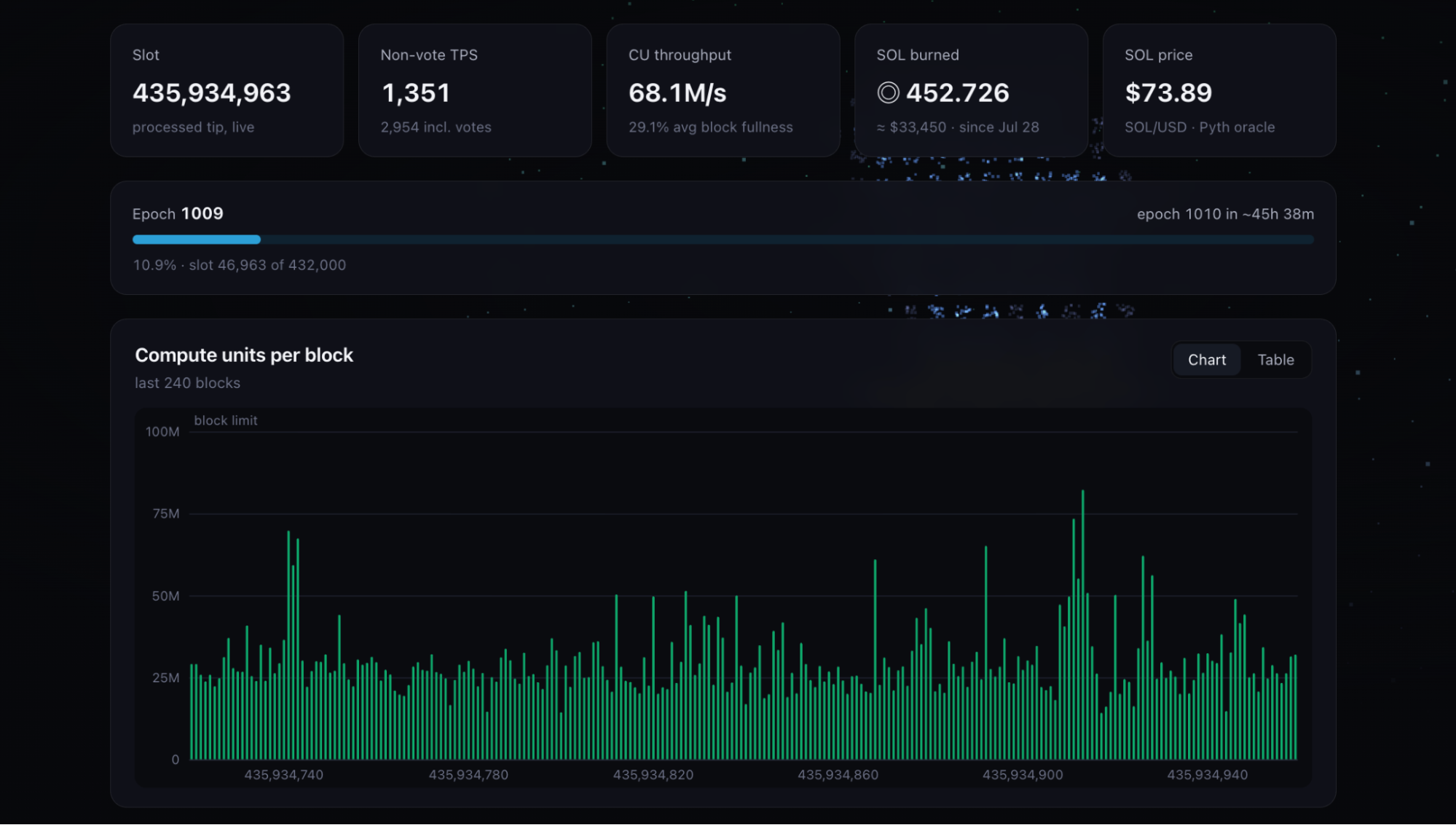
In actual operation, this change has already begun to be reflected on the mainnet. On-chain data platform Ultrasoundsol shows that the load of some slots has exceeded the previous level of 60 million CUs, and the packaging volume of some blocks has reached 75 million to 80 million CUs.
Benefiting from transaction and payment scenarios
Increased block capacity primarily benefits high-frequency trading, payments, and more complex on-chain applications. As on-chain activity picks up, Solana is handling increased transaction demand. The original text also mentions that increased institutional participation and the expansion of the RWA market are further driving up the network's demand for throughput.
A higher block limit does not directly equate to all applications speeding up simultaneously, but it increases the network's capacity during periods of high load, helping to reduce congestion caused by capacity constraints.
Two more upgrades are planned.
- Agave v4.2 is scheduled for release on August 17th.
- This version will introduce a 200-millisecond slot time and reduce rent.
- Alpenglow is expected to launch its mainnet in the third quarter.
Agave v4.2 is the next validator client update being pushed forward by Anza. Alpenglow, on the other hand, is seen as a significant upgrade to further reduce transaction final confirmation times. According to previous communications from the Solana Foundation, Alpenglow aims to reduce transaction final confirmation times to a minimum of approximately 150 milliseconds, while simultaneously lowering validator operating costs.
The launch date for Alpenglow's mainnet is still undetermined, but the network has begun preparations for validator switching.
Governance proposals will also be reviewed within the year.
In addition to performance upgrades, the Solana ecosystem may also advance new governance proposals this year. According to Anza CEO Brennan Watt, SIMD-0550 and SIMD-0553 are expected to enter the voting process before the end of the year.

If the relevant proposals are passed, the Solana token economic model will also be adjusted, including increasing the deinflation rate and introducing a SOL burning mechanism based on resource consumption.