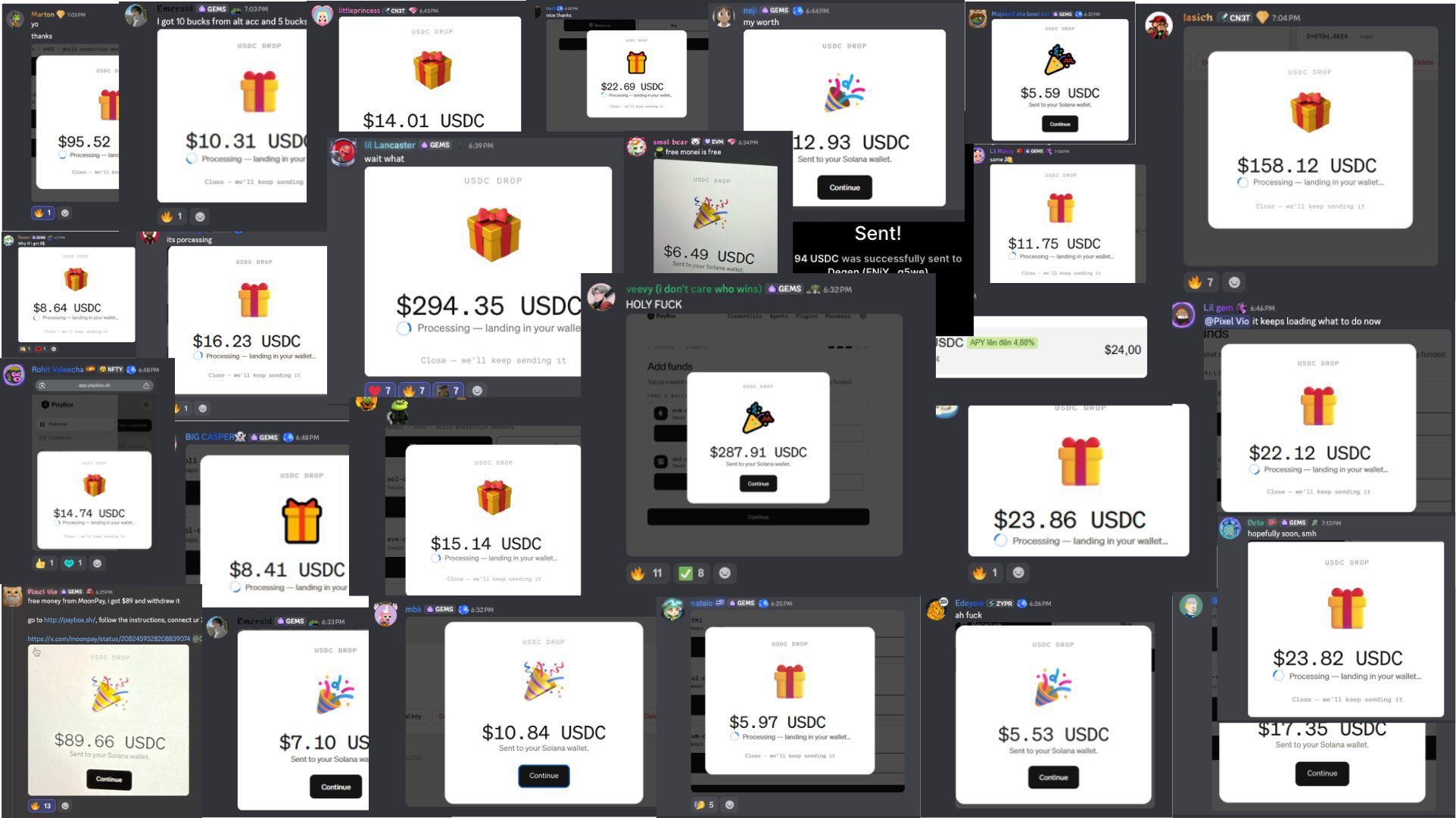


MoonPay launched a non-custodial wallet and payment vault called PayBox, which aims to allow users to complete crypto transactions and online payments using natural language via ChatGPT and Claude. After the product launch, market attention quickly shifted to something else: early users could receive a one-time USDC reward, ranging from a few dollars to $1,000, and related screenshots spread rapidly on social media platforms.
Incentive programs drive word-of-mouth marketing
According to the process shared by users, participants need to create a PayBox account, connect to ChatGPT or Claude, generate a wallet, link an X account, and then claim rewards through a faucet. Multiple users have shared screenshots of receiving $5, $380, $500, $600, and $1000, while others have reported completing withdrawals.
MoonPay subsequently suspended faucet, stating it would reopen at an undisclosed time on July 30th, while also bringing more surprises to PayBox users. The company later disclosed that within one day of the product's launch, its X platform gained 35,000 new followers.
Transactions can be initiated through dialogue.
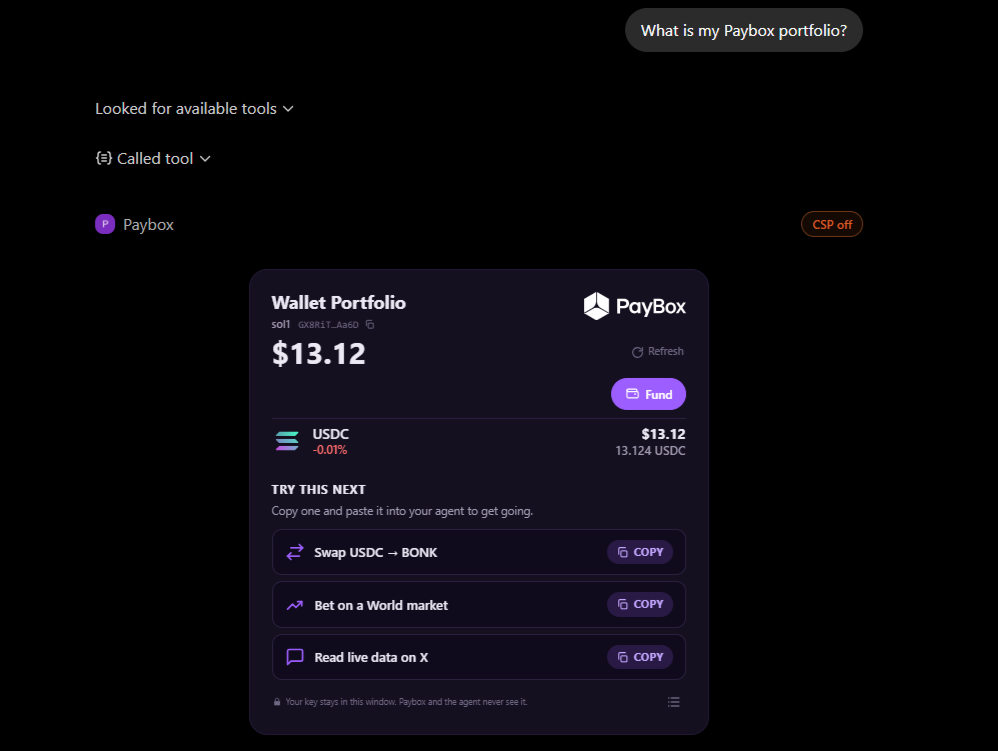
Beyond reward programs, PayBox's core function is to integrate conversational interaction with encrypted wallets. After connecting their wallets to ChatGPT or Claude via a dedicated connector, users can directly describe their needs in natural language, have AI prepare the transaction, and then complete the authorization using their passkey.
MoonPay's use cases include converting funds into stablecoins, completing token swaps on Solana, transferring assets across supported blockchains, executing DeFi yield strategies, and booking flights, restaurants, and online shopping.
PayBox initially supports networks including Solana, as well as several EVM-compatible chains such as Ethereum, Base, Arbitrum, Polygon, Hyperliquid, Tempo, and Robinhood Chain.
Privacy and permission settings spark discussion
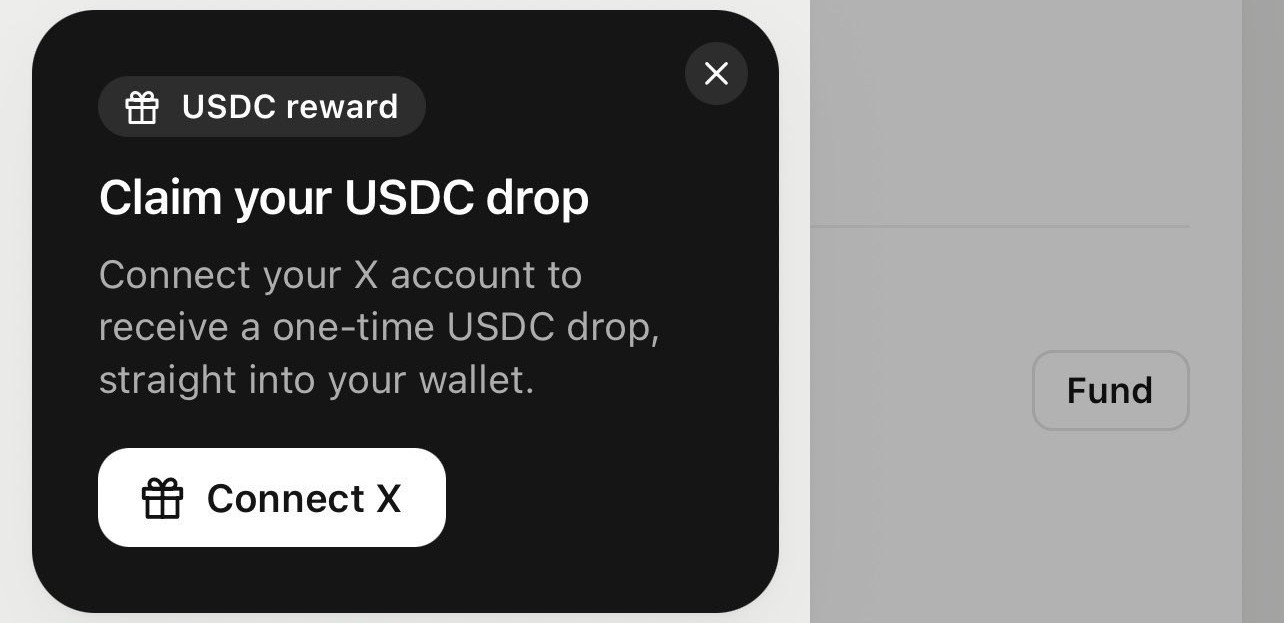
This round of USDC rewards has also sparked discussions about privacy within the community. Some participants believe it's more like a user acquisition campaign than a traditional airdrop; others worry that connecting chat tools and accounts could lead to data exposure risks.
MoonPay responded that PayBox does not access users' chat history or wallet private keys. Neeraj Prasad, chief engineer at MoonPay Labs and founder of Dawn Labs, further stated that the connector transmits tool call parameters, not the complete conversation content.
Regarding fund control, MoonPay states that the AI agent will not hold user assets in escrow. The system stores wallet keys through multi-party computation and a trusted execution environment, preventing any single party, including MoonPay or the AI assistant, from obtaining the complete private key independently.
PayBox currently offers two permission modes: "Always Ask," which requires user confirmation for every transaction, and "Autonomous," which allows AI to perform operations within a user-defined scope. Each authorization corresponds to a single operation and expires after use.
It will be expanded to more DeFi scenarios in the future.
MoonPay states that PayBox not only supports fund transfers, but can also be used to create wallets, manage credentials, view asset balances, perform cross-chain exchanges, sign on-chain transactions, retrieve stored key information after authorization, and track pending requests.
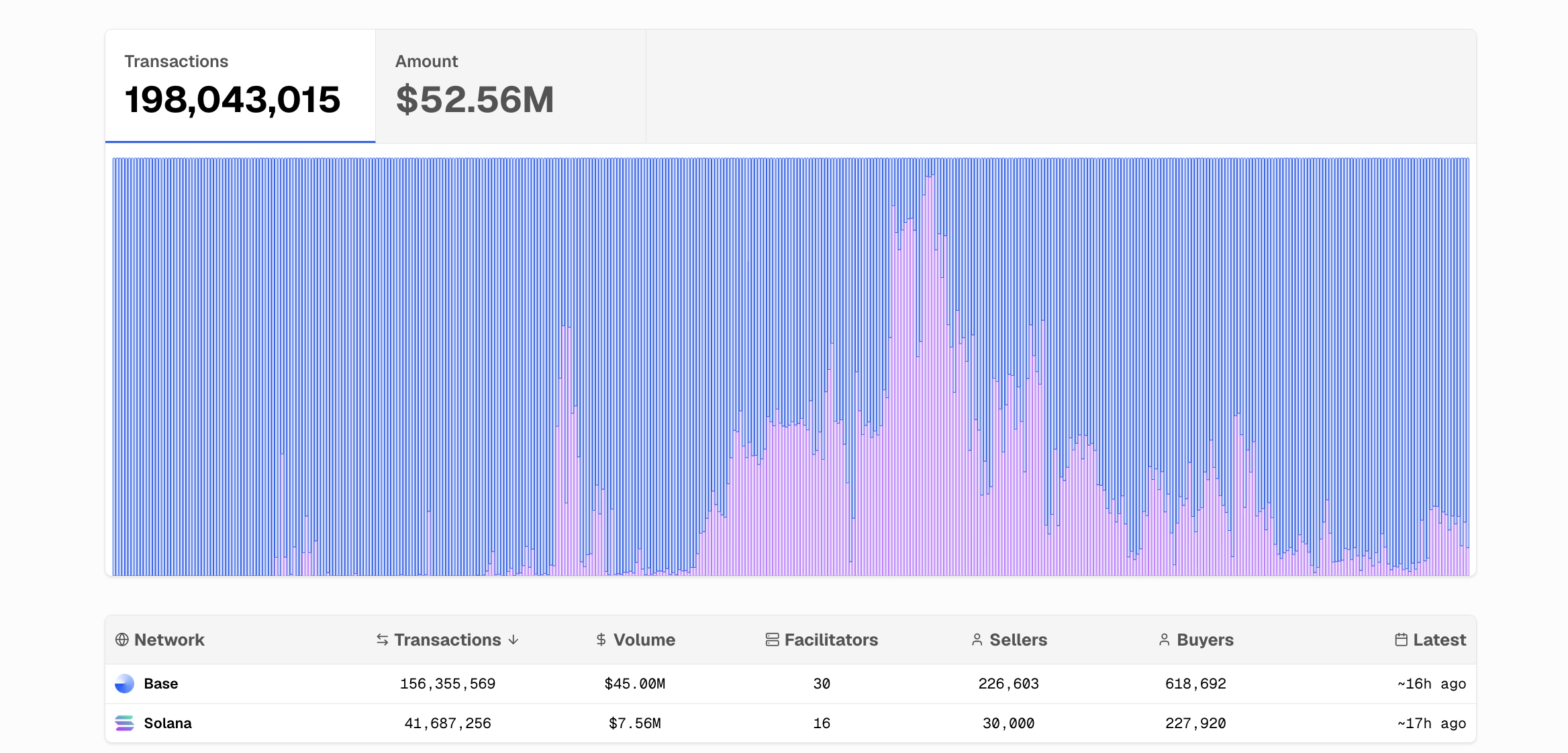
The platform also supports x402-based payment scenarios, allowing AI agents to make payments for internet transactions such as APIs, travel bookings, shopping, and digital services. PayBox has also integrated with the World Prediction Market, allowing users to view events, browse market data, trade positions, and redeem them after settlement.
MoonPay plans to continue expanding PayBox's DeFi capabilities, adding perpetual contracts, liquidity management, and support for more AI platforms.