

At the 2026 Farnborough Airshow, Boeing announced that it had surpassed Airbus in the number of aircraft orders. This marks the first time in four years that Boeing has led in order statistics at a major airshow, indicating that customer confidence has somewhat recovered after experiencing a production and quality crisis.
Boeing leads Airbus in orders
During this year's airshow, Boeing announced orders for 173 aircraft, while Airbus placed orders for 154. In recent years, Airbus has consistently dominated the Farnborough and Paris air shows, while Boeing has been dealing with the aftermath of the 2024 737 Max crashes, 787 production issues, and 777X certification delays.
Boeing CEO Kelly Ottberg made frequent public appearances during the airshow, including attending signing ceremonies and media briefings. Augusto Viansson Ponte, director of aviation consultancy Alton Aviation Consultancy, stated that this gesture itself is a positive sign, indicating that customers are still willing to place orders with Boeing.
Losses continue
Despite improved order performance, Boeing's operational recovery is not yet complete. The company recorded a loss of $428 million in the second quarter, with revenue of $24.6 billion. The $280 million expense related to the replacement of the U.S. presidential aircraft dragged down the quarter's results.
Analysts believe investors are currently more focused on Boeing's continued improvements in deliveries, production ramp-up, and free cash flow. Deutsche Bank also noted that while Boeing's execution is improving amid strong demand, its stance remains cautious.
Signing activity among major clients is relatively weak.
While the total order volume at this year's airshow is similar to that of 2024, the presence of major airlines is relatively weak. The largest order comes from aircraft lessor SMBC Aviation, which placed orders for 100 aircraft each with Boeing and Airbus. Compared to previous years, which were dominated by major airlines, this year saw more lessor companies filling in the gaps.
Saudi Arabia's new airline, Riyadh Air, also announced an order for 28 Boeing 787s and 6 Airbus A350-1000s, but it had already completed most of its core fleet procurement over the past two years. Meanwhile, tensions in the Middle East are suppressing local air travel demand, potentially affecting some airlines' willingness to place new orders in the short term.
777X deliveries continue to face pressure.
Boeing's recovery does not mean that the problems with its main aircraft models have been resolved. In early 2024, an Alaska Airlines 737 Max experienced a door plug detachment incident during flight. The investigation revealed that the aircraft was missing a critical bolt when it left the factory. Subsequently, Boeing restructured its production processes and quality control system, and Ottberg took over as CEO after the crisis.
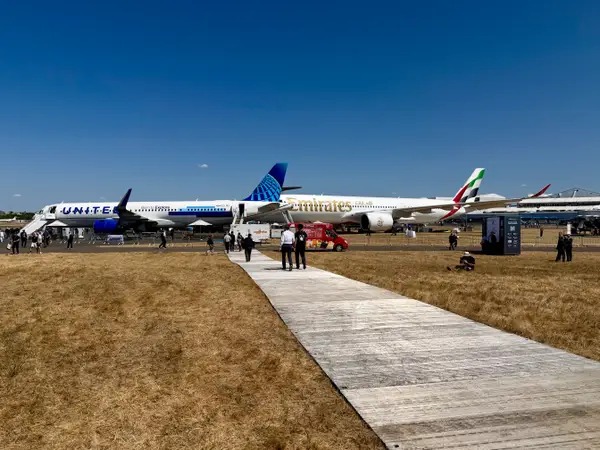
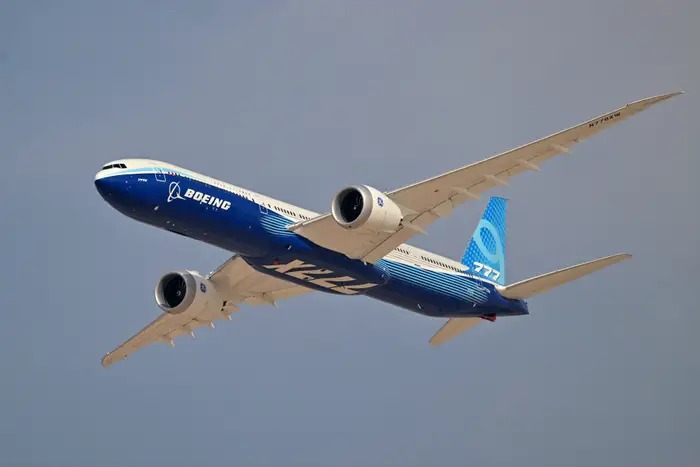
At this year's airshow, the 777X once again became the focus. Emirates President Tim Clark stated that the airline will refuse to accept the first batch of 10 777X aircraft manufactured for it. Originally scheduled to enter service in 2020, the first delivery has now been delayed until 2027. Due to design adjustments resulting from prolonged certification delays, Emirates believes that the subsequent modifications to the first batch of aircraft are excessive and will not meet requirements.