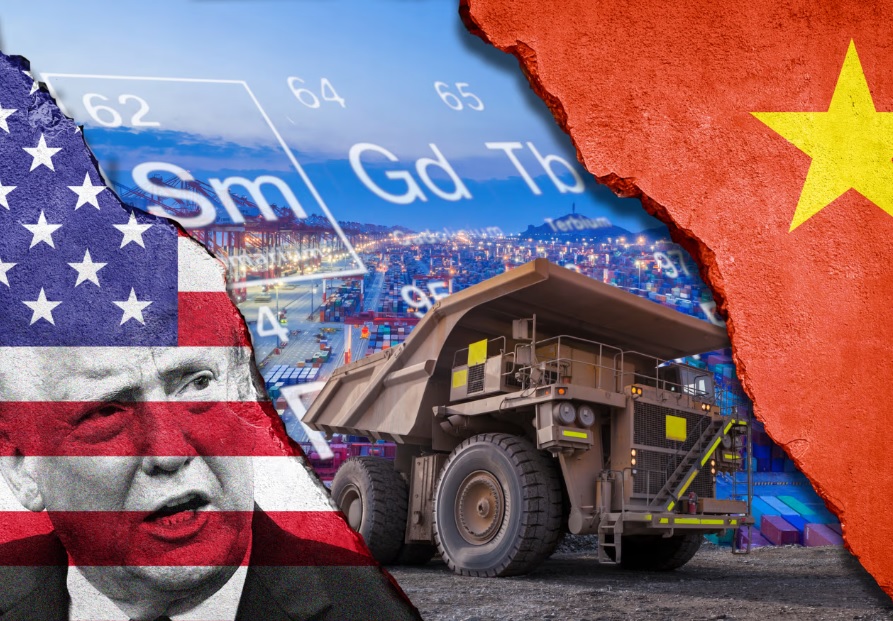


The United States is accelerating the development of its rare earth permanent magnet supply chain, aiming to reduce its reliance on Chinese manufacturing. The latest development is that Florida-based alloy manufacturer REalloys has signed a strategic agreement with South Korean magnet manufacturer JS Link to build a complete non-Chinese rare earth magnet supply chain in North America.
The cooperation covers the entire manufacturing process.
According to the disclosure, this collaboration will integrate raw material supply, separation, metallization, and permanent magnet manufacturing into a single industrial system. Both companies hope to complete key processes in North America as much as possible to establish localized production capabilities.
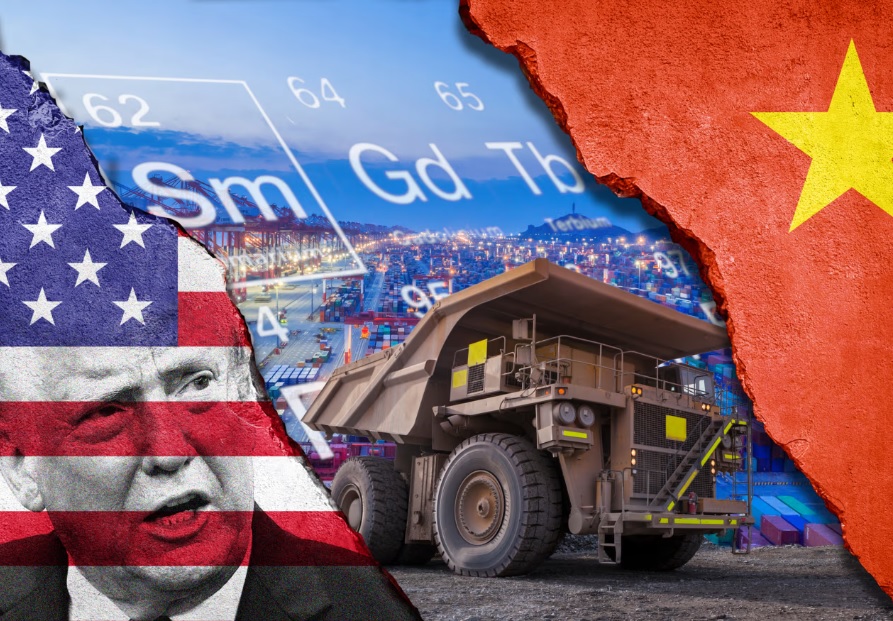
Rare earth permanent magnets are widely used in missiles, fighter jets, submarines, industrial robots, electric vehicles, AI infrastructure, and wind power equipment. Because these materials are relevant to both military and advanced manufacturing, their supply security has been a growing concern for the United States in recent years.
The United States is accelerating the development of domestic production capacity.
The report noted that just a week earlier, REalloys had been selected by the U.S. Army to negotiate a rare earth processing facility at the Tooele Army Depot in Utah. This demonstrates that the U.S. government is viewing rare earth processing and magnet manufacturing as a more complete industrial development, rather than just a single raw material link.
For the United States, the focus of the rare earth supply chain is no longer just on mining, but also on the ability to process materials into final magnets. This collaboration between REalloys and JS Link is seen as another step forward for the US in this direction.
Supply chain competition continues to intensify
China currently dominates the global rare earth magnet manufacturing market, leaving markets such as the United States and Europe with a long-standing high degree of external dependence. With increasing demand from the military, robotics, electric vehicles, and AI-related sectors, the importance of rare earth magnets is further rising.
REalloys CEO Lipi Sternheim stated that strategic advantage in the rare earth sector ultimately depends on who can manufacture magnets, and this is precisely the capability the company hopes to establish in the United States. If a more complete mass production system subsequently develops in North America, the global rare earth magnet industry landscape may be reshaped.