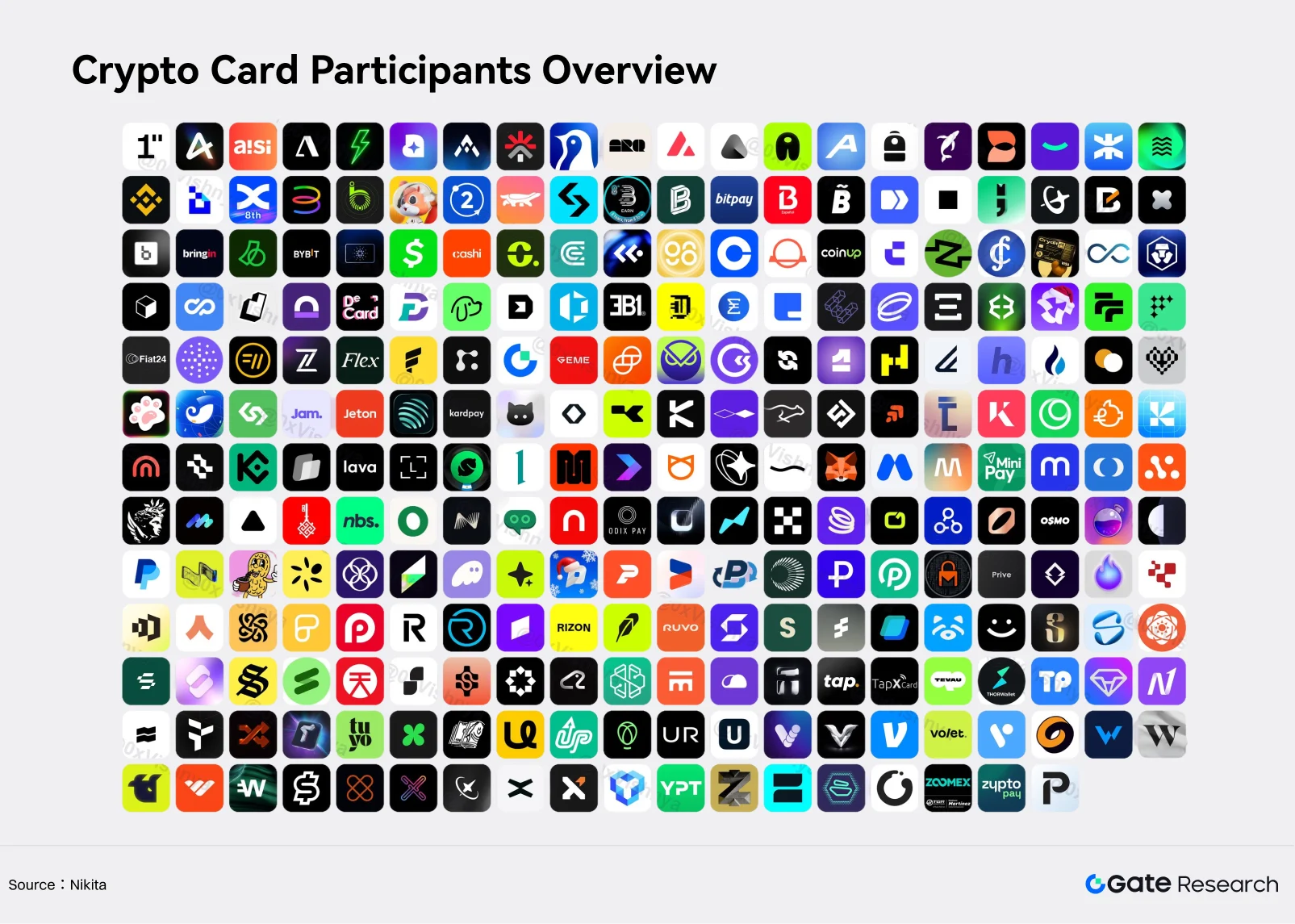


According to Gate Research, the monthly transaction volume of the global cryptocurrency card market has exceeded $1 billion, indicating that digital assets are increasingly being integrated into daily payment scenarios. The report states that as users begin to use cryptocurrency assets for travel, software subscriptions, and cross-border payments, the scope of use for such products is no longer limited to small-scale retail consumption.
The trading volume is expected to significantly increase in 2026.
According to Gate Research statistics, since March 2023, the cumulative transaction volume of tracked crypto card projects has exceeded 10 billion US dollars. By July 2026, the number of monthly transactions exceeded 10.5 million, with a monthly transaction volume of about 1.038 billion US dollars.
The report also shows that the transaction volume in the first seven months of 2026 was approximately 5.48 billion US dollars, which has already surpassed the level of about 3.8 billion US dollars for the entire year of 2025, reflecting the continued expansion of this market in the past year.
- In July 2026, the monthly transaction volume was approximately 1.038 billion US dollars.
- In the first seven months of 2026, the transaction volume was approximately 5.48 billion US dollars.
- Since March 2023, the cumulative transaction volume has exceeded 10 billion US dollars.
Leading platforms still hold the majority share
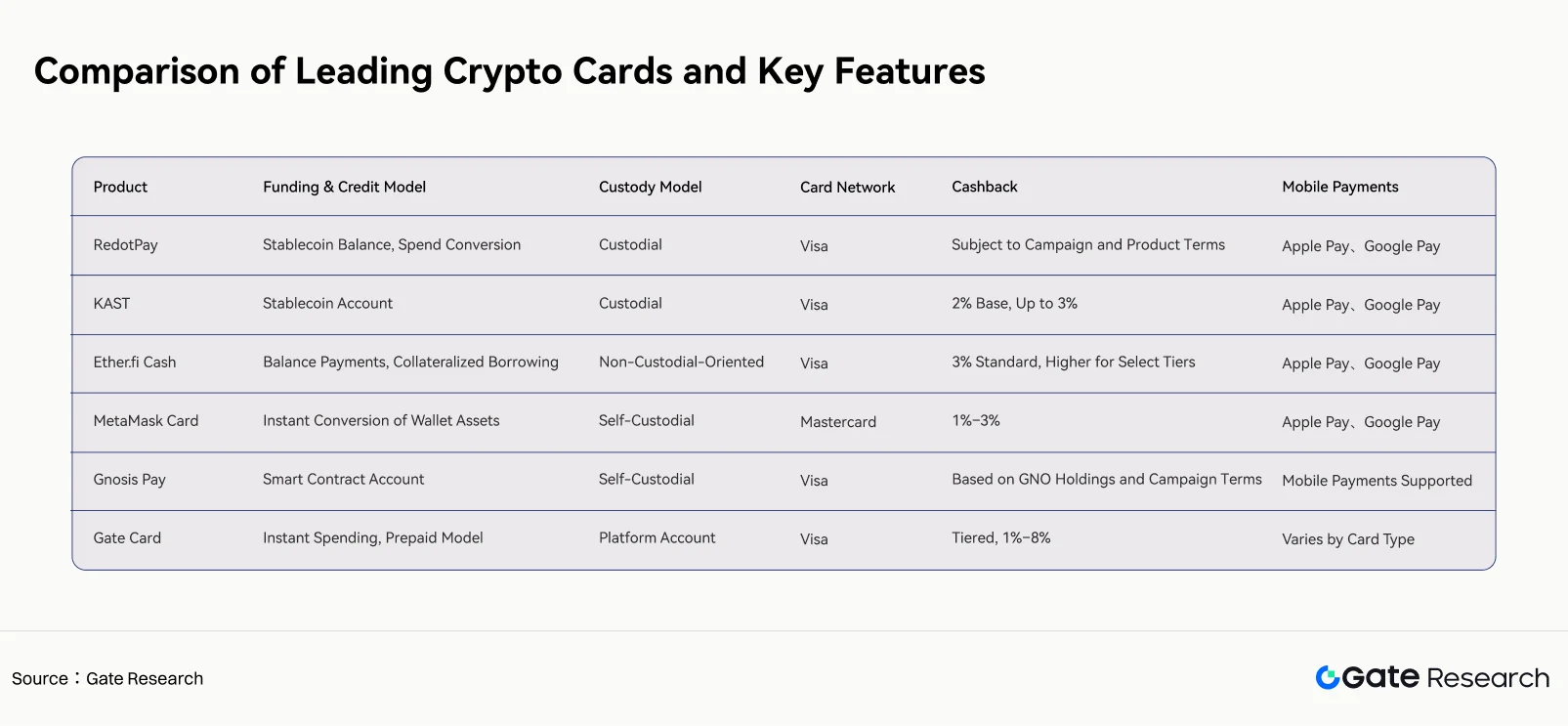
From the perspective of market structure, trading volume is still concentrated on a few platforms. The cumulative trading volume of RedotPay exceeds $6 billion, accounting for about 56% of the total tracked volume. The cumulative trading volumes of Ether.fi and KAST are approximately $754 million and $684 million respectively.
The report mentions that in addition to the traditional prepaid model, the market is also developing more payment pathways. Some products use an instant deduction model, completing asset conversion at the time of card swiping; others require users to exchange or transfer their crypto assets into a consumable balance first. Stablecoin settlement, smart contract deductions, and crypto asset-backed loans are also being used to support the payment process.
Gate Card adopts dual-mode payment
Gate Card supports both immediate consumption and prepaid methods. In the immediate consumption mode, users can directly use the balance of their spot accounts, demand Simple Earn, or time deposit Gate Pay as the source of funds. The system will then handle the deduction and conversion at the time of payment.
If the prepaid mode is used, users need to convert their assets into supported fiat currency balances before making any purchases. Gate Also, this card is integrated with the trading platform's internal account system, eliminating the need for users to manually transfer assets between trading, financial management, and payment accounts repeatedly.
The report states that Gate Card currently has a six-tier rebate mechanism ranging from T0 to T5, with eligible purchases offering up to 8% rebates. However, the level of rebate still depends on grade requirements, consumption limits, and the scope of application.
The industry expansion still faces several types of risks.
Despite the relatively rapid market growth, the report also mentions that there are still several structural risks associated with the crypto card business, including dependence on banks and card-issuing partners, risks related to custody and smart contracts, exposure to stablecoins, regulatory differences across regions, and ongoing issues with high rebate models.
Overall, crypto cards are gradually becoming a connecting tool between digital assets and traditional payment systems. The report suggests that whether such products can continue to gain wider use in the future will still depend on whether the fee structure is clear, whether payment processing is stable, and whether the platform's ability to integrate accounts can continue to provide convenience.