

On September 1st, Circle updated and launched the Agent Stack product page, integrating the "wallet, service search, payment, settlement" functions provided by AI into a single development tool. This tool is not aimed at humans browsing websites to shop, but rather at software agents that, within the permissions granted by users, identify certain API, charge USDC based on the number of calls made, and then return the results to the workflow. Agent Wallets, Agent Marketplace, Nanopayments, as well as Circle CLI and Skills, constitute the main components of this product.
In the past, most AI agents only used pre-configured tools. To enable them to independently purchase data, computing power, or content, developers typically had to set up accounts, keys, subscription systems, and billing mechanisms as well. The approach proposed by Circle is to allow service providers to directly turn API endpoints into “stores” that charge USDC per use, without requiring each agent to go through traditional checkout processes, registration, or monthly contracts first. For sellers, this can transform a single technical request into a transaction that can be settled; for buyer agents, payment becomes part of the tool selection process.
However, the product page displays an infrastructure that is still in the process of being established, which does not mean that the autonomous proxy economy has already been operating on a large scale. Circle clearly reminds us that proxies will act according to user-defined permissions and may also operate without real-time human review; the quality of third-party services and transaction results are not guaranteed by Circle. The real test is not whether the wallet can perform transfers, but whether permissions, disputes, and billing can be kept under control at machine speed.
The wallet is responsible for holding value, while micro-payments ensure that small transactions are worth settling.
Agent Wallets enables agents to hold, transfer, and settle USDC. The difference between it and ordinary cryptocurrency wallets lies not in the assets, but in the control logic: humans do not need to confirm every time; instead, limits, targets, frequencies, and allowable actions are predetermined in advance, allowing agents to act automatically within those boundaries. If the permission model is detailed enough, research agents can purchase data, customer service agents can pay to use translation services, and development agents can temporarily rent computing resources.
Nanopayments addresses the issue of small, frequent transactions that traditional payment methods are not adept at handling. Credit card networks have fixed transaction fees, chargeback cycles, and merchant account opening costs, making it difficult to settle individual API calls that are worth just a few cents each. Stablecoins, being transferred via on-chain or related settlement mechanisms, can theoretically reduce costs to per-request levels. Service providers do not need to force users to purchase monthly packages, and agents also do not have to establish long-term relationships for tools that are used only once.
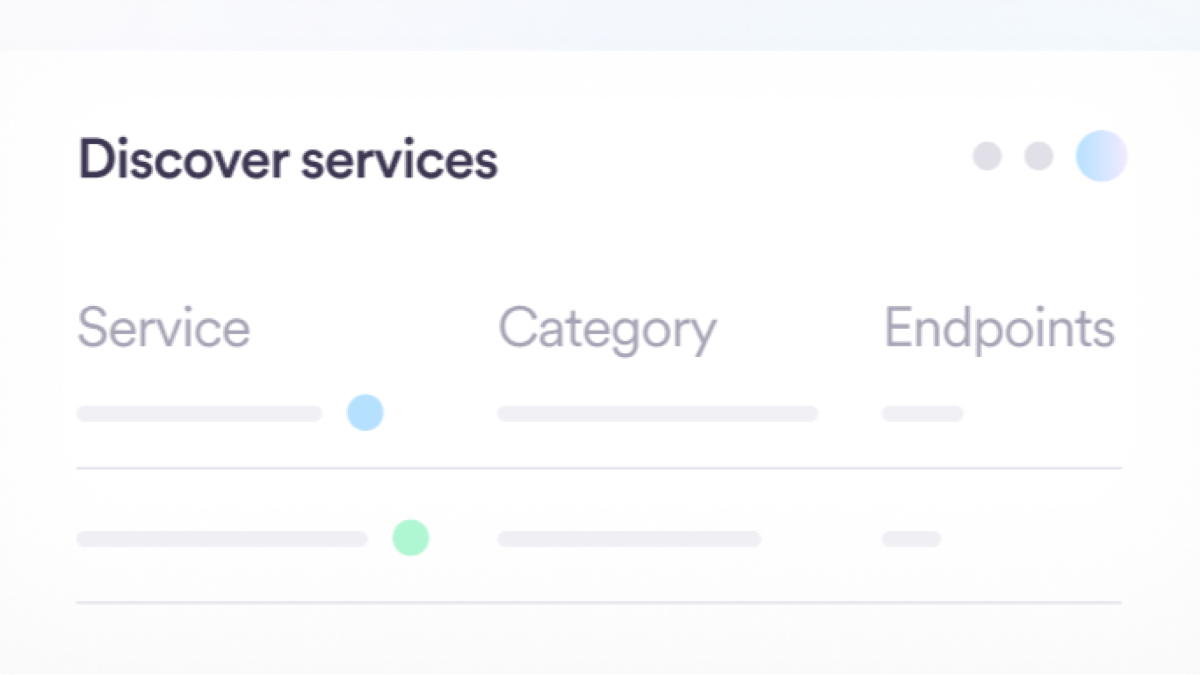
Marketplace is responsible for the discovery process. Agents need to find available services based on tasks, and they cannot rely solely on humans pre-writing all endpoints into the code. The market directory needs to describe prices, capabilities, inputs and outputs, as well as reputation. CLI and Skills assist developers in integrating these services into the agent framework. Circle claims that the system is designed for multi-chain and multi-protocol environments, but the statement "chains and protocols are irrelevant" is more of a design goal; the actual range of usability still depends on the integration status of specific networks, wallets, and services.
If this model is established, it will change the commercialization approach of API. Today's developer tools typically identify corporate clients first, followed by signing contracts, issuing invoices, and allocating keys; in contrast, the agency market may see initial low-value usage before gradually forming long-term relationships. Long-tail services can reduce sales friction, and prices can be adjusted in real-time based on quality, speed, or scarcity. However, machines automatically comparing prices will intensify competition, and service providers must prove the reliability of their data, rather than relying solely on brand pages to attract subscriptions.
Automated payments turn permission errors into actual losses; risk control must precede scale.
When the proxy can only write drafts, errors usually manifest as low-quality output; once it is capable of making payments, those errors can turn into financial losses. Prompt injection may induce the proxy to purchase unrelated services, malicious endpoints may return forged results, and recursive calls could also deplete the budget in a short time. Minimum controls should include limits per transaction and per day, service whitelists, usage constraints, interception of abnormal frequencies, and the ability to revoke permissions at any time.
Trackable accounts do not equate to reversible transactions. On-chain transfers usually lack a credit card-style chargeback mechanism, and it is difficult to objectively verify the delivery of services provided by AI. It is challenging for machines to determine on their own whether a piece of analysis is of "poor quality" and thus warrants a refund. The market needs to establish rules for receipts, service hashes, response times, and dispute resolution. When necessary, risks should be mitigated through escrow or phased payments. Otherwise, low-friction payments can also become a conduit for low-friction fraud.
Compliance responsibilities do not disappear just because the purchaser is a piece of software. There are still controllers behind the wallet, and service providers must still assess customers, regions, and uses; when dealing with regulated data or financial services, authorization chains and audit records must be able to trace back to the actual entities. Circle positions itself on the page as a technical service provider, rather than a financial, legal, investment advisor, or third-party service guarantor, which means that application developers cannot shift ultimate responsibility to the infrastructure.
The most noteworthy aspect of Agent Stack is that it takes the question of “whether AI agents can function” to a further level, exploring whether “these agents can participate in economic activities” (AI). Wallets and stablecoins can facilitate value transfer, but they only address the most easily standardizable aspect of this process. It is the design of permissions, service credibility, proof of delivery, and dispute resolution that determine whether an automated market can move from a demonstration phase to a production environment. Developers can now conduct experiments, but the logical sequence should be to first allow agents to prove their stability within a very limited scope and with a clear whitelist, before gradually granting them more autonomy, rather than immediately providing them with an unlimited digital credit card.