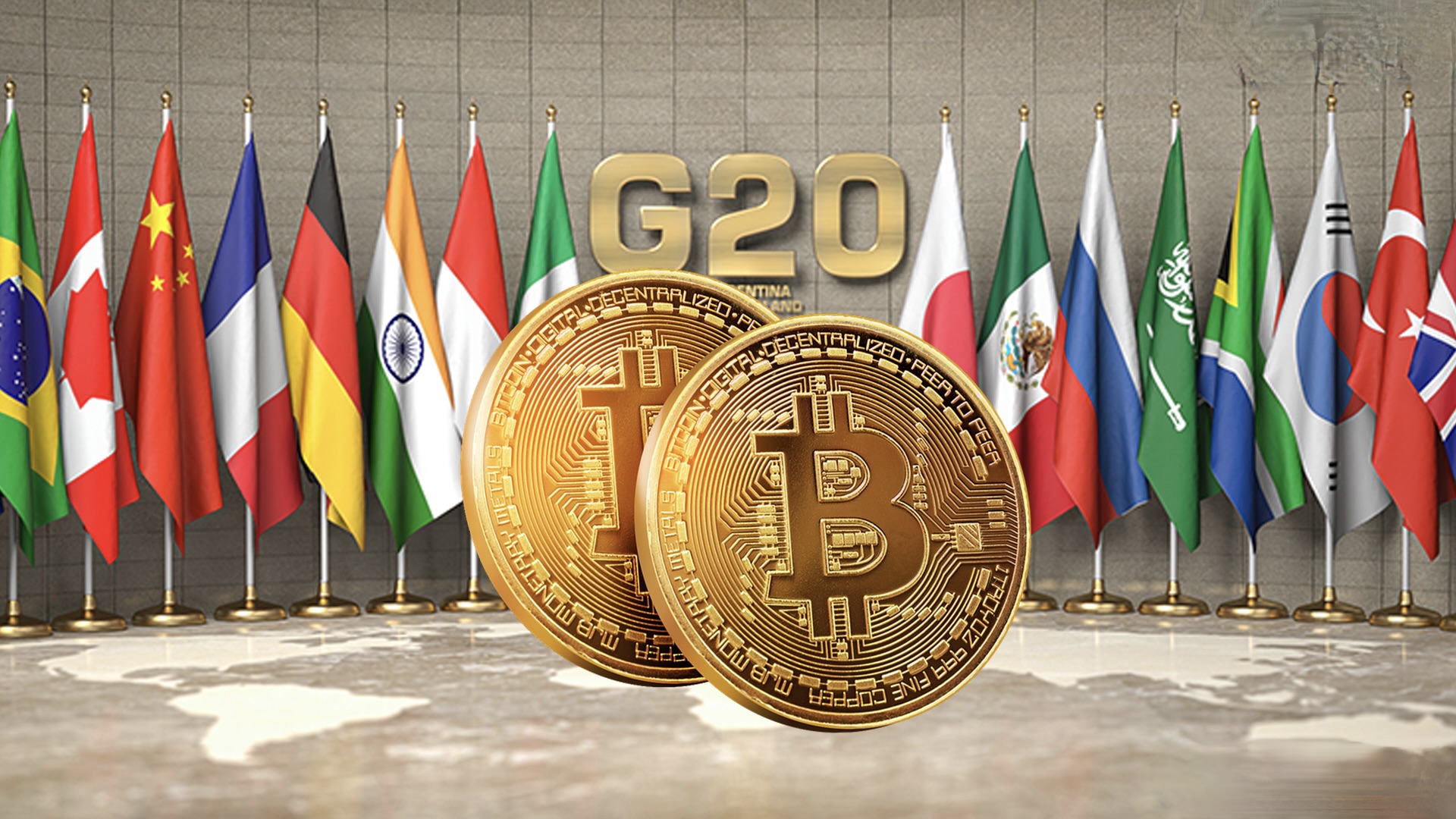


G20 The finance minister and the central bank governor have agreed to initiate the development of a regulatory framework for crypto assets and stablecoins. The meeting also included enhancing the clarity of digital asset regulation, strengthening the construction of regulatory tools, and improving payment systems as part of the financial stability agenda.
At a conference held this week in Asheville, North Carolina, USA, officials discussed the role of digital assets within the financial system. A statement issued by US Treasury Secretary Scott Bessent, as outlined in the G20, indicated that participants believed digital assets have the potential to support economic growth.
Regulatory focus shifts to clarity
G20 indicates that subsequent work will focus on clarifying the regulatory and supervisory framework, while also taking into account digital finance innovation. The statement asserts that relevant arrangements need to strike a balance between supporting responsible digital finance and controlling potential risks.
This means that the discussion on digital assets by G20 has moved beyond mere principled statements and has begun to focus on more specific regulatory tools and cross-border coordination issues. For stablecoins, circulation across judicial jurisdictions, data sources, and information accessibility are all key topics for further discussion.
Stablecoin cross-border issues draw attention
G20 mentioned in the statement that it is awaiting further conclusions from the Financial Stability Board (FSB) regarding global stablecoin arrangements. The relevant content will cover cross-border impacts, as well as issues related to the availability and sources of stablecoin data.
Stablecoins have become a focus because of their stronger payment capabilities and easier cross-border circulation. For finance ministers and central bank governors, such tools can not only improve payment efficiency but also introduce issues related to liquidity, compliance, and regulatory arbitrage across multiple markets.
- Key areas of focus include global stablecoin arrangements.
- Involving the impact on cross-border transmission and payment systems
- Data accessibility and source issues were specifically mentioned.
Countries have advanced local regulations.
While G20 is advancing a common framework, member countries are also continuing to improve their local regulatory systems. Reports mention that the United States has begun to implement GENIUS Act, establishing a federal regulatory framework for payment-style stablecoins; the European Union has advanced MiCA rules.
Japan is also advancing its own digital asset reforms. However, this declaration does not replace the existing systems of the member countries; rather, it serves as a foundation for higher-level discussions on cross-border coordination and joint regulation.
From a market perspective, the stance of G20 sends a clearer signal: major economies are incorporating crypto assets and stablecoins into a more formal international policy agenda, with subsequent focus on refining regulations and cross-border collaboration.