





Foreign media reports that after the recent rebound of Bitcoin, the funds in the market have not remained solely in BTC. The latest position and capital flow data show that large holders continue to buy Bitcoin during the pullback, while also shifting some of their positions to ETH, SOL, XRP, and HYPE. There has been a rise in the market's risk appetite.
There are still buying orders during the Bitcoin pullback.
The report mentioned that during the most recent round of adjustments, the whale investor purchased a total of 6,765 BTC, which is approximately equivalent to 521 million US dollars according to the figures in the text. This indicates that Bitcoin remains the core investment direction for large funds, and it can still attract buyers even when its price falls.
However, the funds did not remain solely in Bitcoin. As BTC entered a consolidation phase after the rebound, some traders began to look for alternative assets that offered greater flexibility and relatively stronger performance.
ETH and SOL obtained leveraged bets
Ethereum is one of the most closely watched large-cap alternative assets at present. Reports indicate that a giant whale has opened a long position in a ETH perpetual contract worth approximately $44.85 million, with a leverage of 25 times, and there is another position totaling about $107 million. The large-scale wallet holdings, derivative exposures, and relatively strong performance have made ETH a key asset in this round of rotation.
However, high leverage also means that short-term fluctuations may be amplified. If ETH is unable to maintain the current momentum, such positions could exacerbate the degree of pullback.
Solana has attracted even more aggressive venture capital. Reports mention that a large investor opened a new long position of 100,000 SOL, valued at approximately $10.45 million according to the text, with a leverage of 20 times. Meanwhile, the weekly net inflow into SOL investment products was about $28.34 million, indicating that it not only has substantial positions in support but also continuous capital inflows.
XRP and HYPE undertake incremental funding
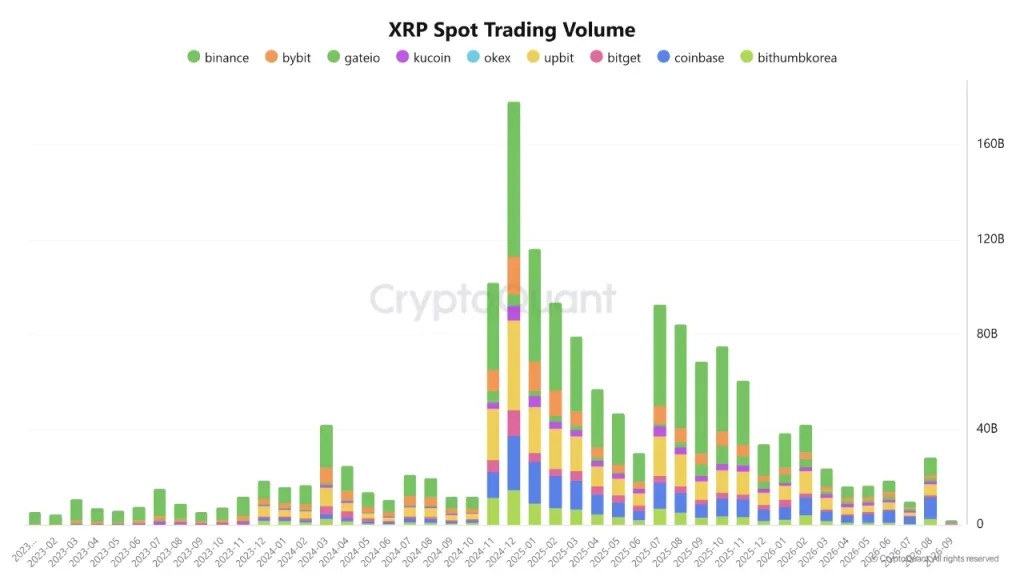
The logic of XRP is slightly different from that of ETH and SOL. The article argues that XRP relies more on institutional adoption and payment narratives, and therefore plays a different role as a target for capital reception in this round of rotation. Data shows that XRP has a weekly investment product inflow of approximately 39.78 million US dollars, performing relatively prominently among the main alternative coins.
The HYPE of Hyperliquid tends to be more oriented towards high-volatility assets. Since it is related to on-chain derivatives and decentralized trading infrastructure, HYPE tends to receive more attention when risk appetite increases. However, its capital flow scale is still smaller than that of XRP and SOL, making it more of a high-elasticity configuration rather than a core asset that directly competes with Bitcoin or Ethereum.
Overall, the current market exhibits a clear stratification: BTC remains the base position for large funds, ETH and SOL undertake leveraged trading with a higher risk appetite, XRP has attracted attention from institutional thematic funds, while HYPE represents later-stage high-volatility bets. If Bitcoin maintains its high levels, the relative strength of altcoins may continue; however, if BTC weakens significantly again, high-leverage positions could also lead to faster losses.