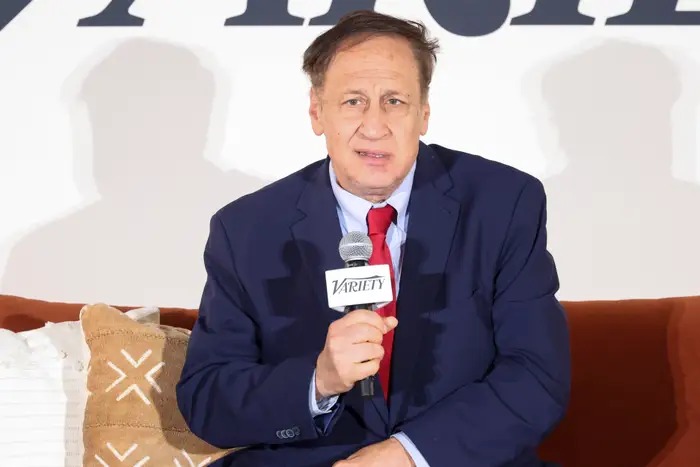


In the latest round of layoffs, Uber has placed organizational restructuring at the core of its efforts. The company's CEO, Dara Cosrosashi, stated that Uber will reduce the number of management levels and cut the number of "mini-teams" with only one or two direct subordinates by nearly half in order to create a more streamlined organizational structure.
This round of adjustments is taking place against the backdrop of widespread team reorganizations in technology companies. An increasing number of enterprises are looking to reduce middle management levels, so that managers are not only responsible for coordination but also directly involved in execution. As the AI tool becomes part of daily work, many companies believe that managers can lead larger teams, and employees can rely on AI for support with more tasks.
Uber Compress Management Hierarchy
In an internal memo, Kostrosasi stated that the goal of the adjustment is to make the company "more focused on construction rather than management." In addition to reducing micro-teams, Uber also plans to decrease the number of positions seven levels or higher from CEO, with a reduction of about 20%.
The article mentions that Uber is not merely about reducing the number of people in small teams, but rather focuses on cutting down on small-scale teams that have their own independent management layers. This indicates that the company is more concerned with organizational hierarchy and management efficiency, rather than just the size of the teams themselves.
- Affected employees account for approximately 10% of the total workforce.
- The number of microteams is planned to be cut by nearly half.
- Positions at seven levels and above, including CEO, are planned to be reduced by approximately 20%.
AI Promotes Managers to Lead Larger Teams
AI is changing the division of labor between managers and employees. AI Proxy platform. Dome Systems Co-founder. David McJannet indicates that employees no longer need to seek guidance from their supervisors for each task; some support work can be delegated to AI. As a result, managers can focus more of their energy on goal setting and progress monitoring.
Some companies have already implemented these changes in their organizational design. In May of this year, Coinbase stated that they would shift to a team model with more AI native characteristics and proposed to eliminate the role of pure managers. AI The software company Simpro Group is also expanding the management span; its responsible person mentioned that the ratio of individual contributors to managers within the company has increased from about 8 to 1 to 17 to 1.
In this mode, managers are required to be more directly involved in the business. For example, the technical lead needs to participate in software architecture discussions, and the marketing manager also has to write copy themselves, rather than just being responsible for approval and coordination.
Small teams may not necessarily disappear.
However, there are costs associated with a compressed management structure. The article points out that when managers need to oversee more subordinates and responsibilities, employee training, career development, and daily guidance may be marginalized, and management relationships can become more transactional in nature.
The consulting firm Boston Consulting Group, which is responsible for the organizational design of Kevin Kelley, believes that small teams will not completely disappear. For new projects, scenarios with high uncertainty, or those that require close collaboration among senior personnel, small teams still have value for a certain period of time.
Former Medtronic CEO Bill George stated that too small a team may lack sufficient professional division of labor, which is not conducive to independently solving complex problems. He expects that in the future, more companies will have one manager responsible for 15 to 50 people, but there is no fixed standard number of employees that applies to all enterprises.