

After the U.S. employment data in August significantly exceeded expectations, market expectations for the Federal Reserve to continue tightening policy this month have risen. As a result, U.S. Treasury yields increased, and the performance of U.S. stocks was mixed in the early session on Friday. Chip stocks were relatively strong, helping to maintain stability in the Nasdaq index.
82,000 new jobs created in August
Data shows that the United States added 162,000 non-farm jobs in August, significantly higher than the 56,000 expected by economists surveyed by Reuters. The unemployment rate remained at 4.1%, and the increase in non-farm jobs in July was also significantly revised upward to 21,000, from a previous figure of a decrease of 23,000.
In terms of salaries, the average hourly wage in August increased by 0.3% month-on-month and by 3.1% year-on-year. The labor participation rate rose from 61.4% to 61.6%. Overall, the job market still has resilience; it is weaker than at the beginning of the year, but has not yet experienced a significant slowdown.
September interest rate hike expectations rebound
After the employment data was released, the interest rate market quickly adjusted. Short-term interest rate futures indicate that the probability of the Federal Reserve raising interest rates at its meeting on September 15-16 has risen to about 59%, up from around 55% before the data was released.
U.S. Treasury yields rose in tandem. The yield on 2-year U.S. Treasuries climbed to around 4.38%, and the yield on 10-year U.S. Treasuries rose to around 4.78%. Rising yields also put pressure on interest rate-sensitive assets.
Chip stocks support the Nasdaq index.
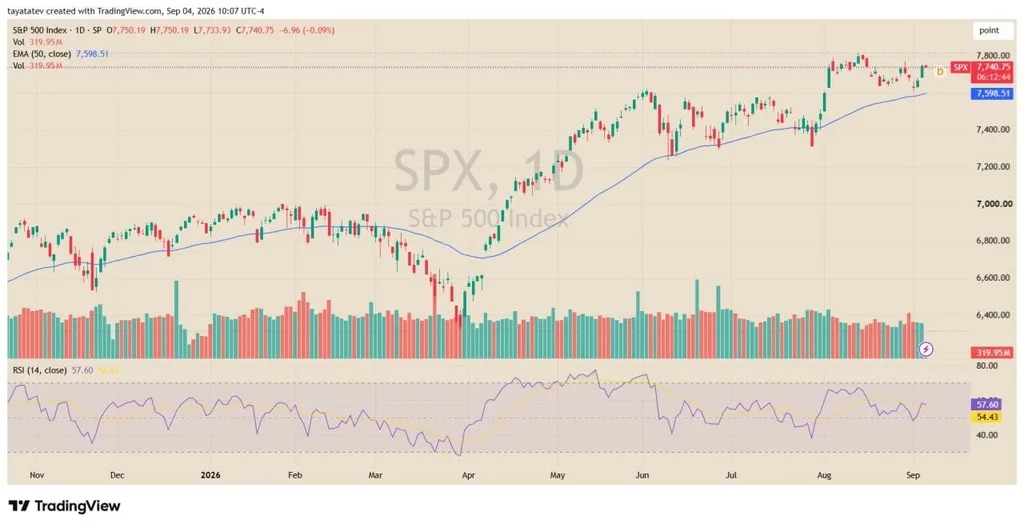
As of around 10:10 a.m. Eastern Time on Friday, the S&P 500 index was at around 7,741 points, down about 0.1%; the Dow Jones Industrial Average was at around 53,500 points, down about 0.3%; the Nasdaq Composite Index remained relatively flat or showed a slight increase.
On the market, chip stocks performed strongly. NVIDIA rose by about 2.4%, AMD rose by about 3.5%, and Intel also increased by about 3.5%. Among them, NVIDIA continues to attract attention as the company previously agreed to acquire AI's development platform Hugging Face for approximately $12.9 billion.
Most large tech stocks weakened. Apple fell by about 1.7%, Microsoft fell by about 1.3%, and Tesla fell by more than 5%. The backdrop for Tesla's decline is that the National Highway Traffic Safety Administration (NHTSA) stated that it is evaluating its plans to launch driverless taxis in Austin, Texas.
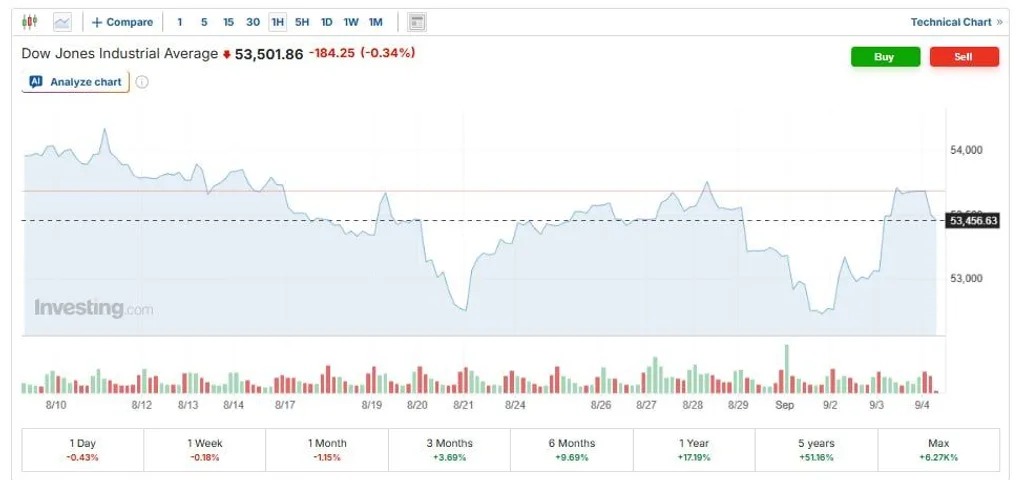
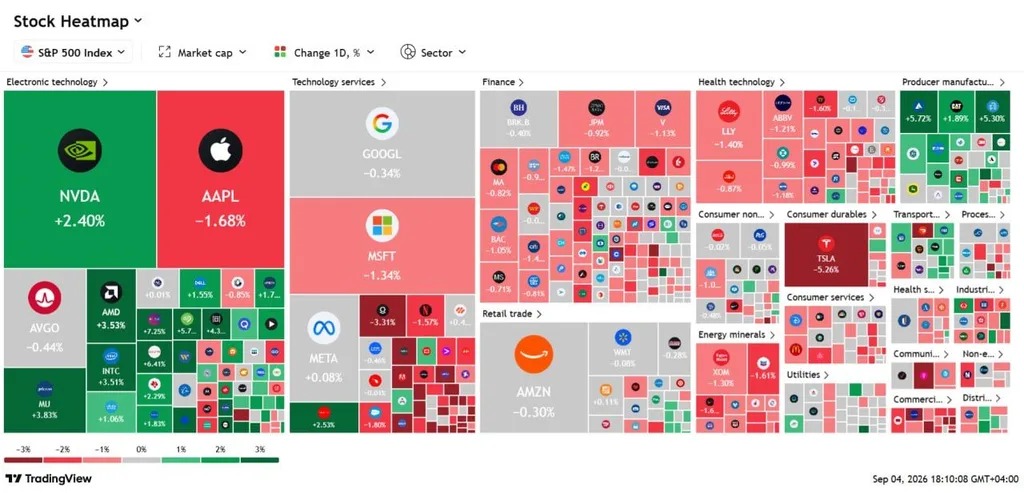
Sectors such as banking, healthcare, and energy also faced general pressure, dragging down the Dow Jones performance, which was weaker than that of the Nasdaq. The market will continue to focus on next week's U.S. inflation data, which will further affect interest rate expectations ahead of the September policy meeting.