

Foreign media believes that after OpenAI launched GPT-6 and Astra, the competitive logic of AI has changed. The focus is no longer just on "who is better at using AI", but on "who can deploy and master AI Agent earlier". The article regards Astra as a node that moves from answering questions to executing tasks.
From response to execution
Astra is described as being capable of operating computers, browsing web pages, using software, writing and running code, and completing longer workflow chains. The article argues that this indicates a shift from a model responding to human questions to a model handing over tasks to Agent and Agent for completion.
In the author's view, the key aspect of Astra is not just its enhanced capabilities, but rather its closer resemblance to a "hirable" digital labor force. It no longer merely generates answers; instead, it begins to undertake continuous work tasks.
Penetration rate is no longer calculated per capita.
The article uses the test results of OSWorld 2.0 to demonstrate that Astra performs better on long-term tasks, with a significantly reduced completion time. Based on this, the author believes that the method for calculating AI penetration rate also needs to be changed; it can no longer be simply estimated by the number of people using AI.
More important variables have become: how many Agent are running, how many tasks each Agent executes, and how much Token is consumed per task. The article suggests that a single person can deploy multiple Agent simultaneously, and enterprises may also run hundreds or even thousands of Agent at the same time.
Token The demand will be amplified.
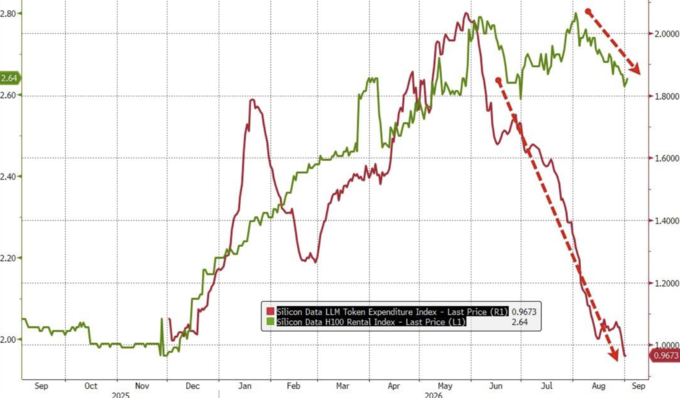
The author further points out that in the era of Agent, the requirements for Token not only increase with the growth in user numbers but also rise in tandem with the complexity of tasks and the duration of operations. A continuously running Agent involves ongoing planning, searching, execution, verification, and correction, leading to more calls and higher consumption of Token.
The article also mentions that the participation of models in training itself creates a kind of 'flywheel effect': stronger models lead to even stronger Agent, and stronger Agent generates more high-quality data, which in turn drives the models to continue improving. The author believes that this will bring computing power and the demand for Token into a stage of stronger self-amplification.