






In the past six months, several large Bitcoin mining companies have been reducing their existing computing power while diverting funds towards high-performance computing and AI infrastructure. According to industry data cited by foreign media, this round of adjustments is not a passive withdrawal; rather, mining companies are actively shutting down some of their mining machines and redirecting their data center renovation budgets towards new business areas.
About 56 EH were closed in half a year /s
Reports show that listed mining companies have reduced their realized computing power by approximately 15% over the past six months, with about 56 EH units of computing capacity being phased out. Among them, two domestic and international mining companies, Cango and IREN, experienced the largest reductions, shutting down by 29.5 EH and 21.9 EH units respectively, accounting for a large portion of the total reduction among publicly listed mining companies.
Cipher, Riot, TeraWulf, and CleanSpark also saw varying degrees of decline. The article suggests that this change reflects mining companies re-allocating their electricity, data center resources, and capital expenditures, shifting some of their resources from traditional mining to AI related businesses.
AI Reform expenditures exceed $30 billion
The article states that mining companies have invested over $30 billion in transforming their existing data centers into AI facilities. The capital expenditures of six major infrastructure providers on this transformation have approached 15 times their current operating revenue.
High initial investments once forced some mining companies to sell the Bitcoin they mined during the summer market period in order to cover the costs of equipment procurement and renovation. In other words, selling Bitcoin at that time was more about raising cash rather than a complete shift towards reducing their asset holdings.
Miners' selling pressure has clearly declined recently.
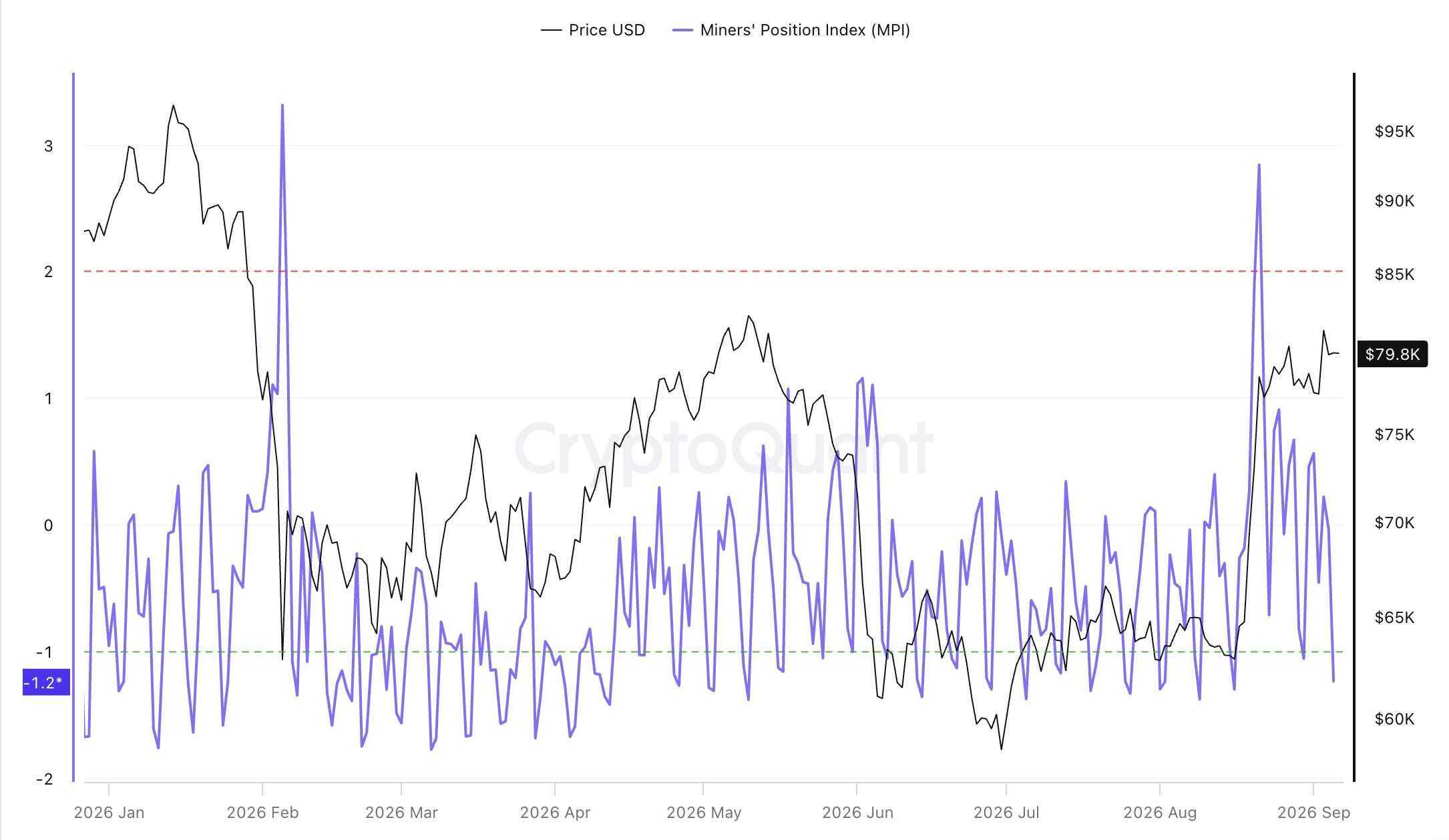
Reports cited data from CryptoQuant and Bitfinex stating that during Bitcoin's upward trend in August, the miner position index MPI rose to 2.8, reflecting a period when miners concentrated on selling their coins. After entering September 2026, this indicator fell back to -1.2, below the annual average level.
At the same time, the amount of Bitcoin flowing from miner wallets to exchanges has also significantly decreased. According to the article, after the procurement of major AI devices is completed, the demand of mining companies to sell Bitcoin externally declines, and accordingly, the new supply on the exchange side also shrinks.
The market is paying attention to changes in supply.
If miners continue to reduce the transfer of coins to exchanges, the short-term selling pressure may continue to ease. The article regards this as a signal of tightening supply, but whether this trend can continue still depends on the subsequent capital expenditure pace of mining companies, the performance of Bitcoin prices, and the progress of AI's business investment.