





NYU A mathematics professor Tristan Buckmaster announced three proof results on Monday and revealed that he had a dispute with Anthropic a mathematician Levent Alp ö ge while working on a major mathematical problem, involving OpenAI. The focus was not only on who completed the proof first but also on the use of AI models in scientific research.
Controversy surrounds the Millennium Problem
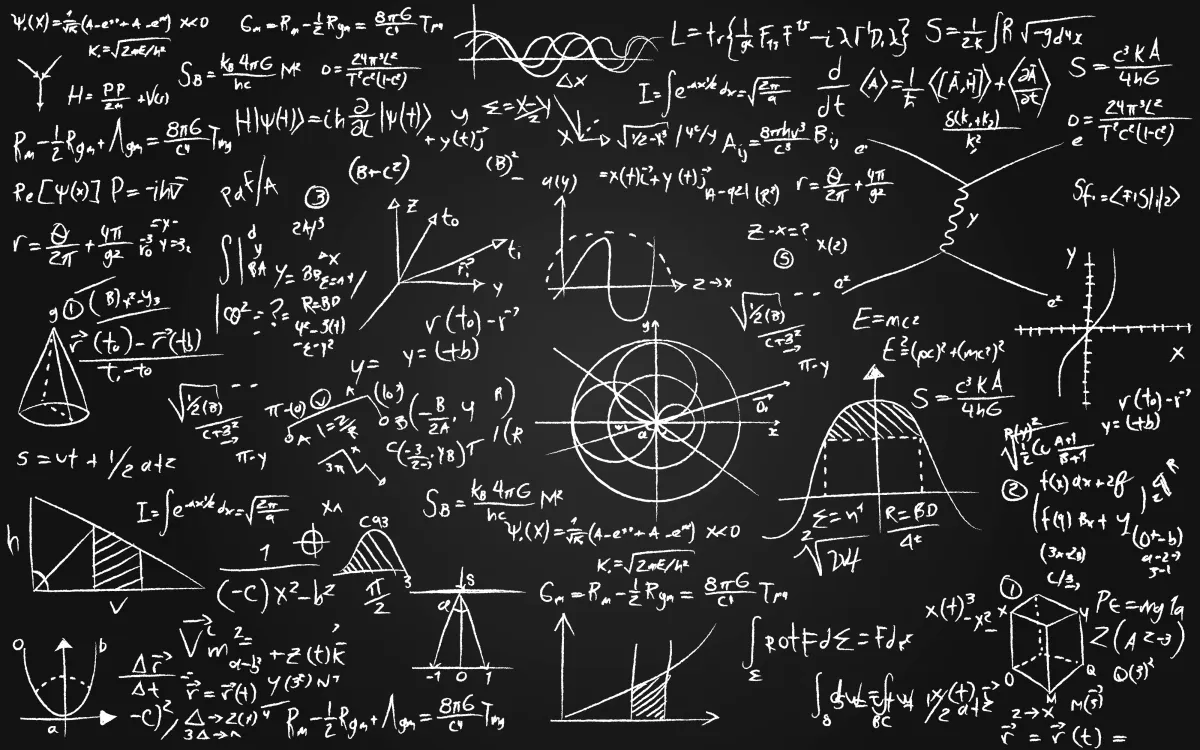
This controversy involves the issue of the existence and smoothness of the Navier-Stokes equations. This problem is one of the seven "Millennium Prize Problems," and the first individual or team to provide a solution can receive a $1 million prize from the Clay Mathematics Institute.
This issue has long existed in the field of theoretical mathematics. The relevant equations are widely used in fluid dynamics, but their theoretical properties have not yet been fully explained. The results published this time by Buckmaster, Alp, and ge have therefore attracted attention from the academic community.
Research progress has reached OpenAI.
Buckmaster indicates that when he and Alp ö ge were nearing completion of the results, they learned that information regarding the research progress had been transmitted to OpenAI. Subsequently, he communicated with OpenAI, who stated that they had completed the full proof of that core issue.
But Buckmaster said that when he continued to ask when OpenAI started the research and how much manpower was involved, the replies became vague. He further stated that later he learned that OpenAI had a complete team working on this issue and that a large amount of computing power was invested.
According to Buckmaster, both parties finally confirmed that the initial relevant reminders were only issued in the recent days, which is after the time point when OpenAI learned about the research progress. Based on this timeline, he suspects that OpenAI may have used stronger computing power to accelerate the completion of the formal proof after confirming that the research path was feasible.
Codex Disagreement over the use of signatures
Buckmaster believes that the approach chosen by him and his collaborators is not common in related research, which made him suspicious when OpenAI adopted a similar path at the same time. He stated that this is not an outcome that would naturally emerge just by submitting the topic to a model after a few days.
It is worth noting that although Alp and ge hold positions at Anthropic, this research was not conducted on behalf of the company. Buckmaster stated that the two researchers used a combination of multiple models in their study, with a primary reliance on OpenAI's Codex.
He also raised another concern: since he used a large amount of Codex during the project organization process, it is theoretically possible that the related interaction content could enter the model training process of OpenAI. The report mentioned that Codex interactions may be used for training by default, but users have the option to opt out. OpenAI did not respond to this possibility.
In addition, Buckmaster also mentioned that during the discussion on how to handle disputes, Researcher Sé bastien from OpenAI proposed to remove the signature of Alp ö ge as part of a compromise solution. Bubeck subsequently responded that they participated in the discussion in accordance with academic norms and would provide further clarification on the matter.