





Foreign media commentary suggests that after OpenAI launched GPT-6 and Astra, there is more than one company that will benefit from the AI chip industry chain. The article states that NVIDIA still holds a core position in advanced model training, while Broadcom may gain more momentum in the expansion of inference chips.
Training demand continues to grow.
OpenAI released GPT-6 and Astra on September 3rd, claiming that they are among the strongest widely deployed models currently available, with improvements in capabilities focusing on programming, computer operations, network security, and professional work scenarios.
The article quotes Jensen Huang, CEO of NVIDIA, as saying that the training process for Astra used approximately 100,000 sets of Grace Blackwell systems, and another 400,000 chips will be ready for OpenAI to go live. These figures indicate that the training of cutting-edge models continues to consume large-scale GPU computing power.
Broadcom bets on inference chips
The article argues that Broadcom's opportunity does not lie in completely replacing NVIDIA, but rather in the customized inference chips that OpenAI is currently advancing.
In June this year, OpenAI and Broadcom announced Jalapeno. This is the first intelligently designed processor by OpenAI, primarily aimed at large language model inference, with plans to support gigawatt-level deployments. As more users call upon the AI models daily, the cost of inference is also increasing as a proportion of overall expenditures.
OpenAI Expanding Supply Chain Layout
The article also mentions that OpenAI is continuing to expand its range of chip suppliers. Reuters reports that the company is deepening its cooperation with Samsung on the next generation of chips; meanwhile, Samsung and SK Hynix have made storage supply commitments for the Stargate project.
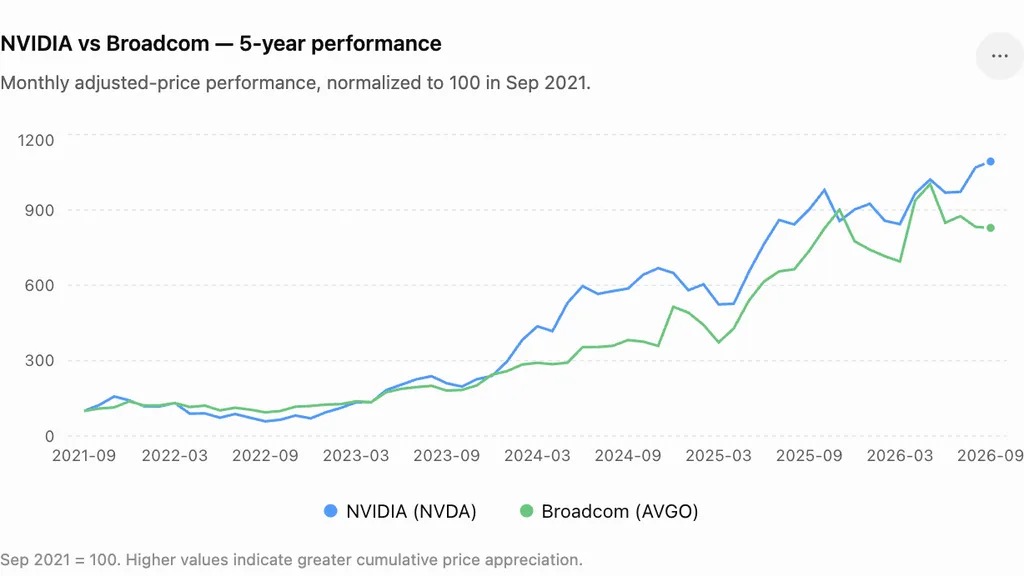
From this comment, it seems that the narrative of "NVIDIA dominating everything" is becoming less straightforward. OpenAI hopes to gain deeper control over models, software, chips, storage, and data centers, a direction that would benefit custom chip suppliers by allowing them to secure more orders.
The article argues that NVIDIA's position on the training side remains stable in the short term, but as Astra and subsequent models are deployed on a larger scale, Broadcom may continue to see opportunities for growth in the inference layer.