







U.S. stocks opened weaker on Wednesday as the market dealt with three pressures simultaneously: an escalation in trade restrictions between the United States and Canada, high yields on U.S. Treasury bonds, and increasing expectations of a Fed interest rate hike at its September meeting. As a result, the Dow Jones Industrial Average, the S&P 500 Index, and the Nasdaq Index all declined after opening.
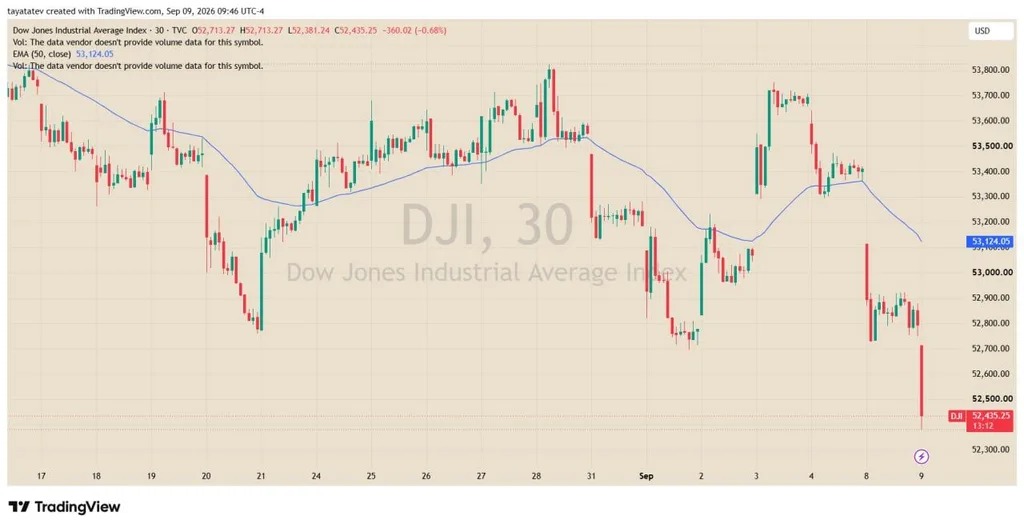
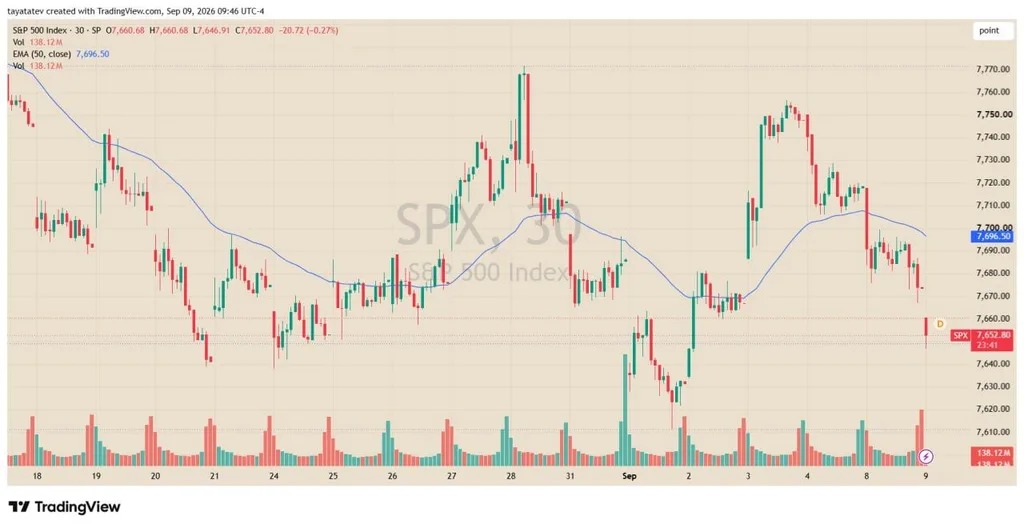
Opening market data shows that the Dow Jones Industrial Average closed at 52,707.9 points, down 0.15%; the S&P 500 index closed at 7,660.68 points, down 0.17%; and the Nasdaq Composite Index closed at 26,325.06 points, down 0.36%. The selling pressure continued to increase after the opening. Around 9:46 a.m. Eastern Time, the Dow Jones decline widened to 0.68%, while the S&P 500 index fell 0.27%.
Futures weaken, followed by a decline in spot prices
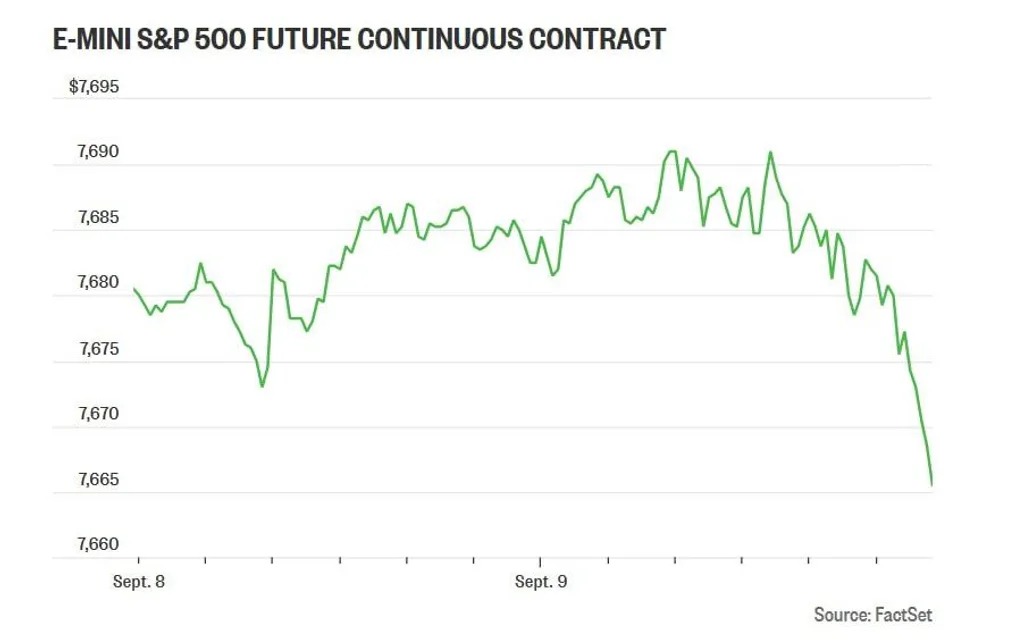
Before the opening of the spot market, the S&P 500 E-mini futures once rose to around 7,690 points, then quickly fell back, approaching 7,665 points near the opening time. The reversal in pre-market trends reflects investors' more cautious judgment regarding trade policies, interest rate paths, and changes in yield rates.
Although Barclays raised its target for the S&P 500 by the end of 2026 from 7,800 points to 7,950 points, citing the resilience of corporate earnings and the ongoing advancement in artificial intelligence investments, the bank also noted that inflation, geopolitical tensions, and a tighter interest rate environment will continue to suppress valuation performance.
US-Canada trade tensions rise again
It is reported that after Canada imposed retaliatory tariffs on approximately $20 billion worth of US exports, US President Donald Trump signed five announcements under Section 338 of the Tariff Act of 1930 to expand import restrictions on certain Canadian goods and adjust the scope of existing tariffs.
Some of the arrangements for adding or removing certain products will take effect on September 15, while other import bans will be implemented on September 29. The White House also stated that the relevant Section 338 tariffs will apply to these covered products. Even if these products originally meet the origin rules of the US-Mexico-Canada Agreement (USMCA), it does not affect the additional tariff measures, and the related taxes are imposed in addition to the Section 232 tariffs.
The focus of the market is not only on the industries that are directly affected. The introduction of new trade barriers could increase corporate costs, disrupt the North American supply chain, and also add pressure on manufacturers and retailers to raise prices.
September interest rate hike expectations are heating up
Interest rate expectations are another factor that could suppress the stock market. According to CME FedWatch tools, traders currently estimate a 60.2% probability that the Federal Reserve will raise interest rates by 25 basis points at its meeting on September 16, compared to a 39.8% probability of no action. If the rate hike does occur, the federal funds rate target range will be raised from 3.50% to 3.75% to 3.75% to 4.00%.
However, a survey conducted by Reuters from September 4th to 9th showed that approximately 70% of economists still expect the Federal Reserve to keep interest rates unchanged this month. This indicates that there is still a divergence between market pricing and the judgments of mainstream economists.
Ministry of Finance's repurchase operations draw attention
In addition to interest rate expectations, the U.S. Treasury Department has adjusted its operations in the Treasury bond market since Wednesday. The Treasury Department stated that it will increase the single-time limit for liquidity support repurchases of 10- to 20-year and 20- to 30-year Treasury bonds from $2 billion to at least $4 billion, with this measure temporarily lasting until November 4th.
The reason this change has drawn attention is that the long-term yield on U.S. Treasury bonds directly affects stock valuations, corporate financing costs, and mortgage rates. Next, the market will observe whether the repurchase arrangements can help stabilize long-term yields and alleviate the valuation pressures faced by the stock market.