





Foreign media reports that on the morning of September 15th, the crypto market clearly weakened, with funds shifting to a defensive stance ahead of the Federal Reserve's interest rate meeting and a procedural vote in the U.S. Senate. Bitcoin and Ethereum both saw declines simultaneously. Although XRP was briefly driven upward by news from the Ripple ecosystem, the upward trend quickly faded.
BTC and ETH decline, while ETF shows a net outflow.
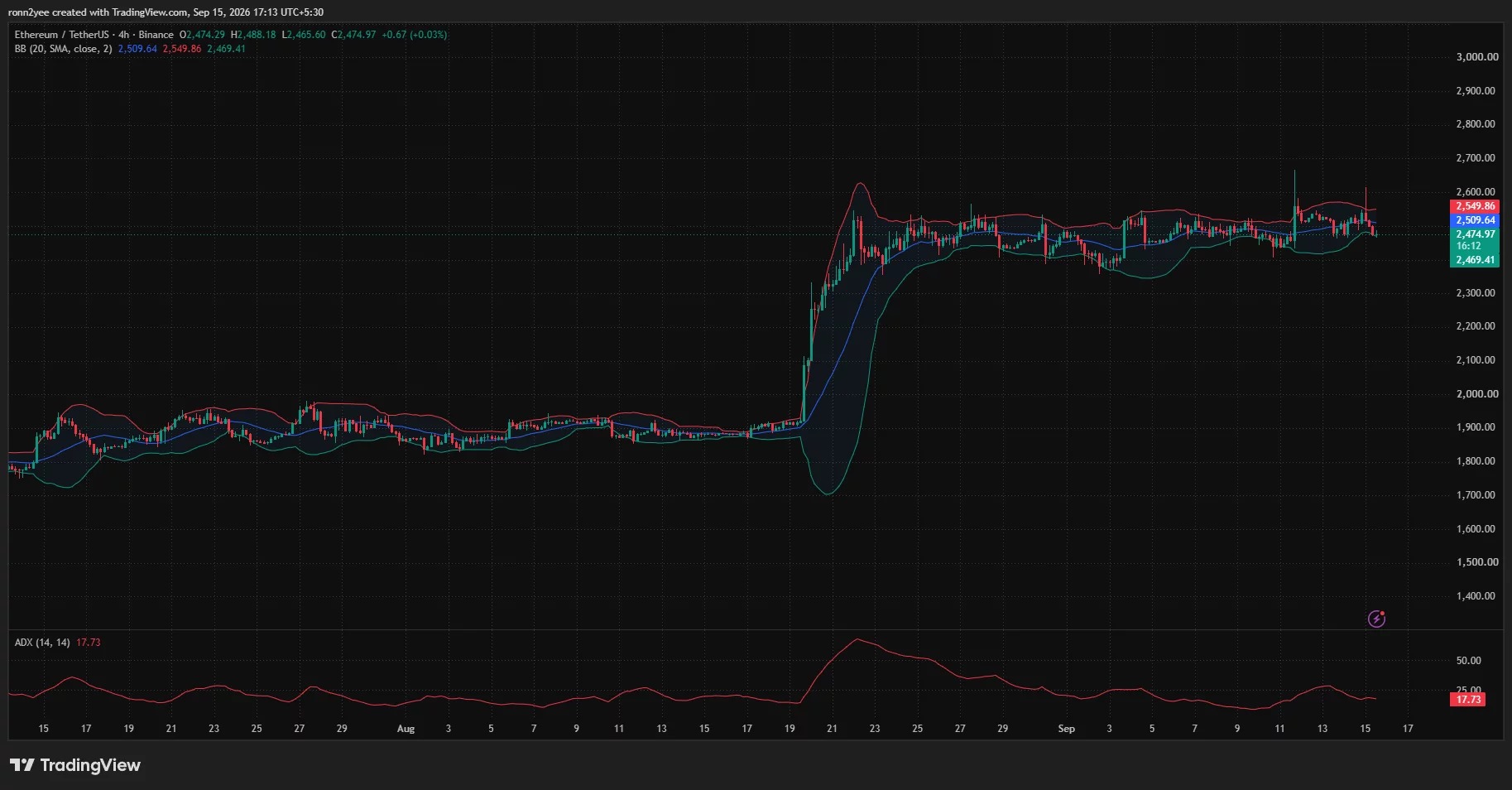
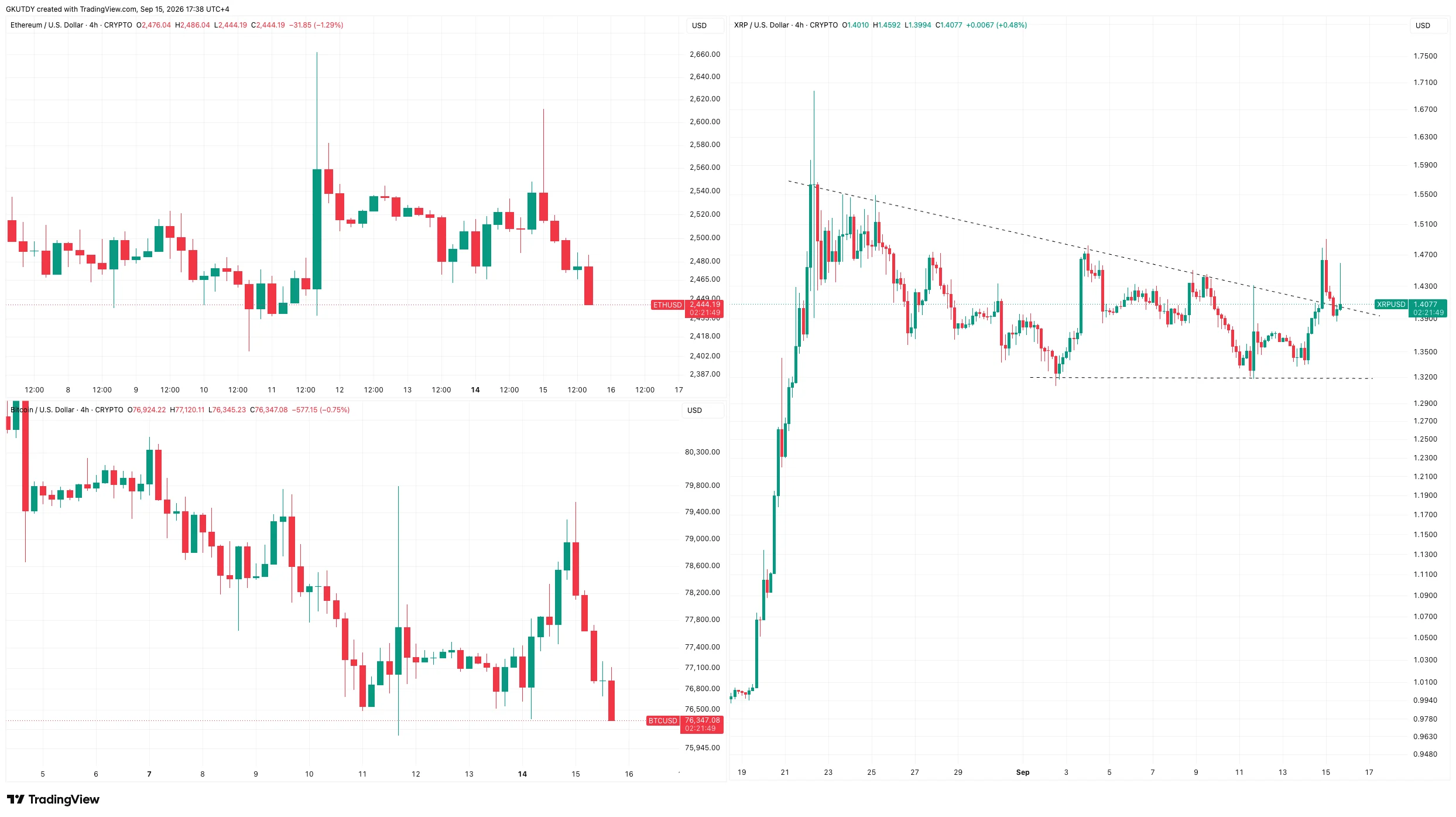
Reports cited market data stating that Bitcoin fell to $76,868, a decrease of 1.68% for the day; Ethereum fell to $2,475.03, with a decline of 1.56%. The traditional markets were also cautious, the US dollar index strengthened, and U.S. stocks also saw a pullback.
Statistics from the on-chain data platform Santiment show that in the past three weeks, addresses holding between 10 and 10,000 BTC have slightly reduced their holdings, while retail addresses have increased their holdings. At the same time, US spot funds recorded a net outflow of 937.8 BTC and 74,500 ETH on that day.
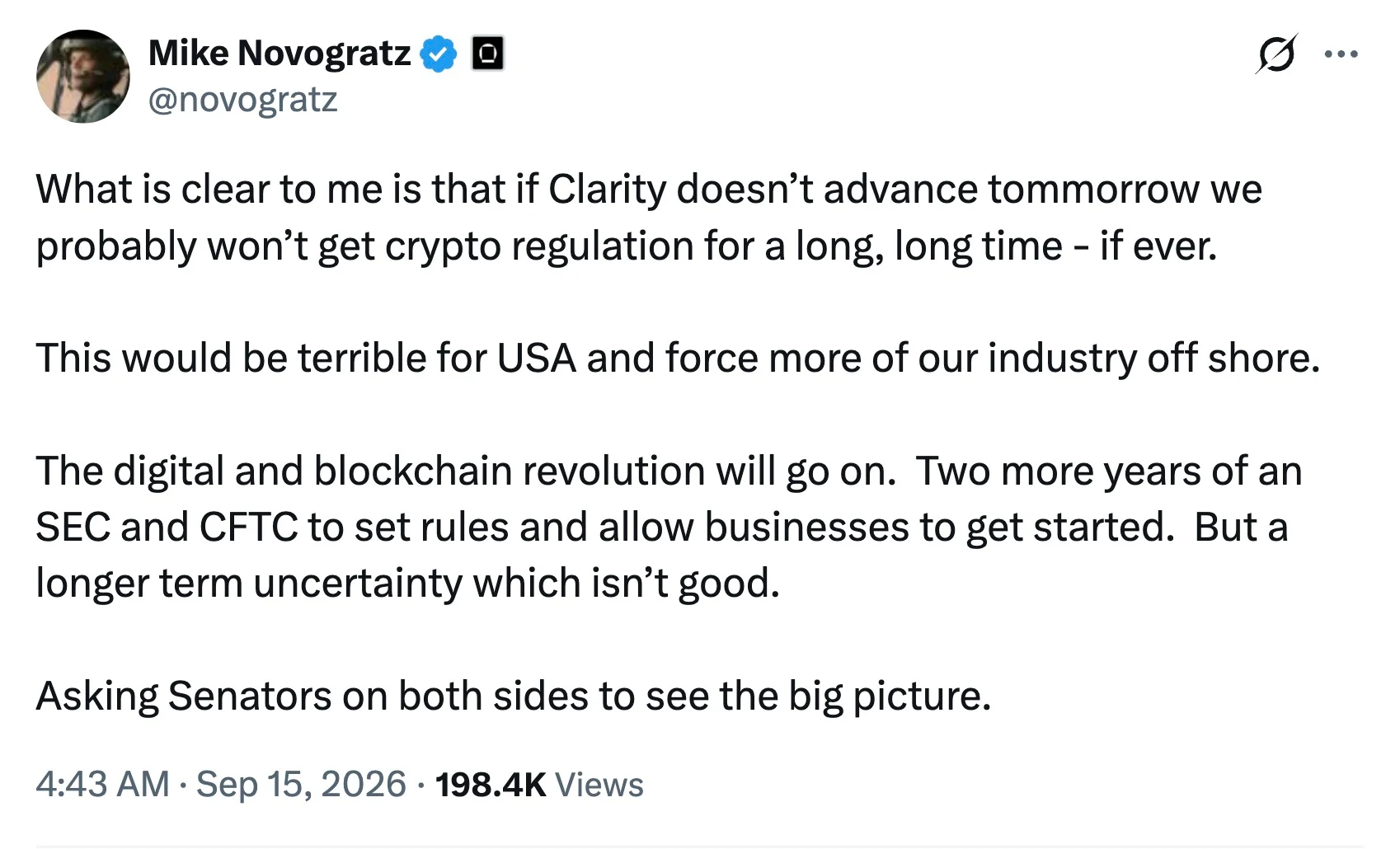
The article argues that the direct cause of the market's risk aversion is two macroeconomic events that will occur within the next 48 hours: a procedural vote by the U.S. Senate regarding CLARITY Act, followed by the release of the Federal Reserve's interest rate decision.
XRP rose to $1.41 before falling back
While the market awaited policy signals, XRP once rose to $1.41 due to news related to the Ripple ecosystem, but then returned to its previous consolidation range. The article described this round of movement as a failure of a short-term breakout, with some buyers who chased the rise getting trapped at high levels.
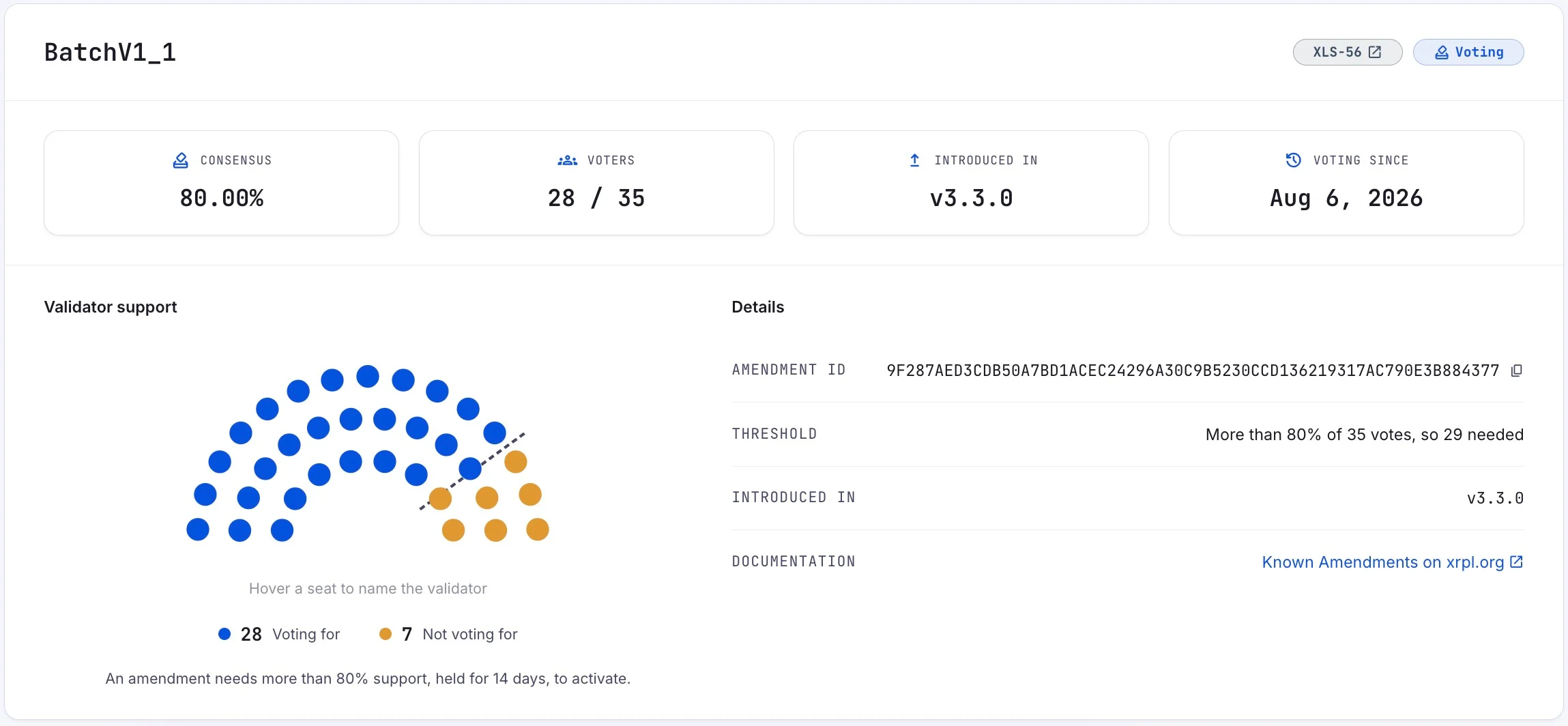
Parallel to the price fluctuations, the official countdown for the upgrade of the XRP Ledger mainnet has not yet begun. Reports indicate that the Batch V1.1 upgrade requires the support of 80% of trusted validators to trigger the 14-day activation process.
According to the online snapshot cited in the text, 27 out of 35 node operators have already expressed their support, representing a support rate of 77.1%, just one vote short of the required threshold. This upgrade is aimed at adjusting the multi-step transaction processing method, but validators are still continuing to review the security of the code.
XRPL is still one vote short of an upgrade, and the U.S. bill has encountered obstacles.
The article mentions that the reasons for the verifiers' caution include the previous withdrawal of Batch V1.0 due to a signature verification vulnerability, as well as the fact that version 3.3.0 of xrpld fixed 11 serious vulnerabilities. The new architecture has also undergone review by third parties such as Halborn, which has led some nodes to choose to wait and see.
However, institutional funds have not completely withdrawn XRP. Reports indicate that spot XRP ETF saw a net inflow of $11.51 million on that day, and the net asset management scale increased to $1.22 billion.
At the policy level, the advancement of CLARITY Act has also encountered resistance. The article states that this bill was intended to delineate the regulatory powers of the U.S. Securities and Exchange Commission (SEC) and the Commodity Futures Trading Commission (CFTC) over digital assets, and to establish a clearer legal framework for certain tokens and stablecoins. However, disagreements within the Senate have diminished the likelihood of its passage in 2026.
In addition to prices and policies, the article also mentions several industry developments, including CoinEx shutting down operations, Balancer proposing dissolution, DAO, as well as an attack related to Gnosis Safe that was intercepted by a MEV robot. Overall, foreign media believes that until the macroeconomic situation and regulatory outcomes are clearer, the crypto market will remain cautious in the short term.