


Public libraries in several U.S. cities have recently begun hosting "Turn Off AI" workshops, explaining to the public how to disable features such as Apple Intelligence and Gemini on mobile phones and commonly used platforms. The enthusiastic participation reflects the dissatisfaction among some users with large technology companies' continued embedding of AI features into their devices and services.
The course explains the principles first, then teaches how to close the circuit.
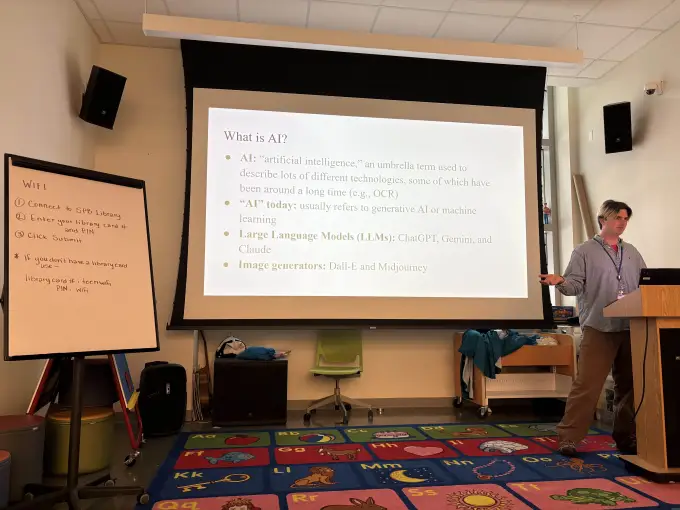
In a course held in South Philadelphia, led by librarian Charlie Bailey, participants were asked to take out their phones and follow a projection to disable relevant functions step by step. Bailey said he designed the course because more and more people feel that AI tools are not actively chosen, but rather directly pushed into their daily lives.
These courses typically last about an hour, starting by introducing the basic workings of chatbots and other consumer AI tools, then explaining why some people use these products and why others choose not to. Following this, the librarian demonstrates the specific steps for disabling certain AI features on mainstream devices and platforms.
Maine's curriculum has inspired other regions to follow suit.
This enthusiasm originated with Hannah Cyrus, a librarian at Bangor Public Library in Maine. After writing an article introducing the course design, she received contacts from dozens of librarians around the world, many of whom wanted to refer to her course materials and replicate similar activities locally.
Cyrus said she was often asked the same questions by readers: why emails automatically generate content, why the system summarizes an email with only one sentence for the user, and how to turn off these AI features. She therefore decided to compile these scattered requests for help into a public course.
- The maximum number of participants for the first offline event is 30.
- The library then opened the waiting list.
- The first two sessions, including the live stream, each had approximately 70 participants.
The objection is to enable it by default, not to the technology itself.
A similar situation occurred in Philadelphia. The Instagram post by Bailey's library for the event received over 2,000 likes and 220 retweets, significantly higher than the library's usual engagement. Due to overwhelming turnout for the first event, the library subsequently added another session.
The reasons given by the participants were not entirely the same. Some worried about the environmental impact of the expansion of AI-related infrastructure, while others resented being constantly required to use AI tools in their work. However, these voices do not equate to a complete rejection of AI.
Cyrus noted that technologies like optical character recognition remain useful when scanning old documents in libraries. She believes that these courses don't simply reflect "anti-AI," but rather users' desire for more control over how they use technology and their unwillingness to accept product designs that are enabled by default and difficult to avoid.