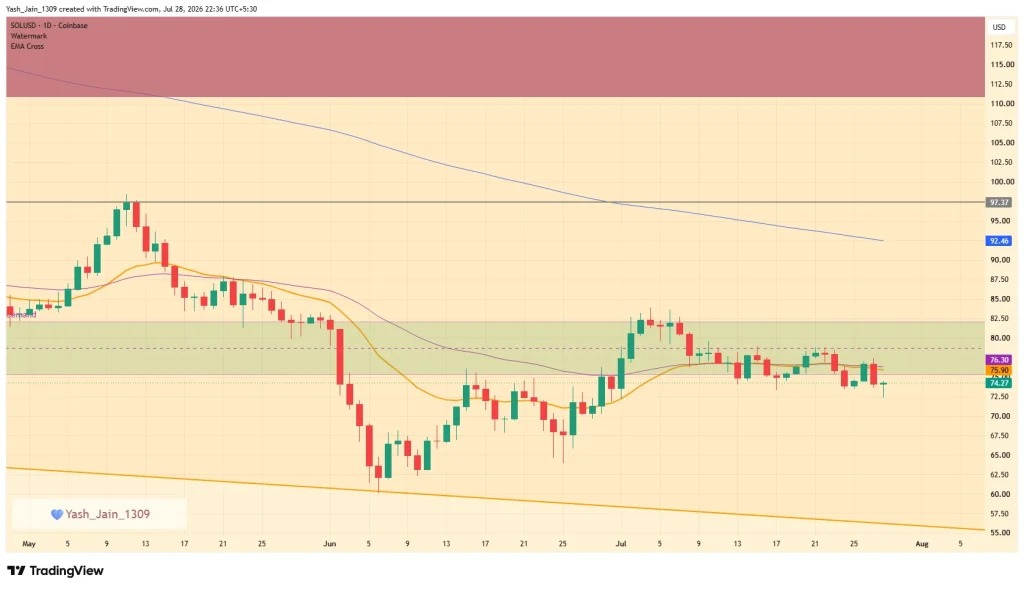


Foreign media commentators believe that Solana has long attracted users with its high throughput and low fees, but the real issue of fees is gradually shifting from "is it expensive?" to "why should I pay this fee?" During peak network hours, users often increase priority fees to secure faster transactions, but most are unaware of the actual real-time prices.
Widening gap in similar transaction costs
The article states that priority fees, MEV payments, private order flow, and validator incentives have made Solana's transaction market more complex. Two seemingly similar transactions may end up with vastly different costs, and users may not be aware of the reasons for these differences.
Many users now rely primarily on estimates provided by their wallets or front-ends to bid. To avoid transaction failures or delays, they often choose to keep raising fees. This means users are paying more of a certainty premium than the actual price of network demand.
Information dispersion weakens price discovery
The article compares this phenomenon to traditional financial markets. In traditional markets, participants can typically see buy and sell quotes and liquidity before deciding whether to trade. However, in on-chain trading environments, information such as transaction ordering, MEV opportunities, and validator incentives remains scattered among infrastructure service providers, private partnerships, and proprietary systems.
This type of structure can help optimize execution efficiency, but it can also widen information gaps. Players who are more familiar with the infrastructure often know better than ordinary users how to bid. As a result, some users pay higher costs not because they know how much the market needs, but because they don't.
Solana ecosystem discussion open for bidding
The article argues that the focus of competition in blockchain infrastructure is shifting. While the industry previously prioritized throughput, block times, and latency, the design of the transaction market itself is now equally important. How transactions are ordered, who controls the order flow, and how MEV rewards are distributed all impact validator income, user experience, and network performance.
The article mentions that Ethereum has attempted to introduce a more competitive block building market through solutions such as MEV-Boost. Similar discussions are also beginning to emerge in the Solana ecosystem. Some infrastructure teams are exploring whether it is possible to improve the transparency of the transaction market without sacrificing performance.
The article cites Flowra's development of an open order flow auction layer, aiming to process more transaction opportunities through transparent bidding. According to their vision, this mechanism not only affects validator revenue but also users' understanding of the fee formation process and whether MEV opportunities can shift from closed channels to open competition.
Additional information:The original article was a commentary, and its core argument was that Solana's next competitive advantage might not just be speed and low fees, but also whether transaction sorting and fee discovery would be more transparent.