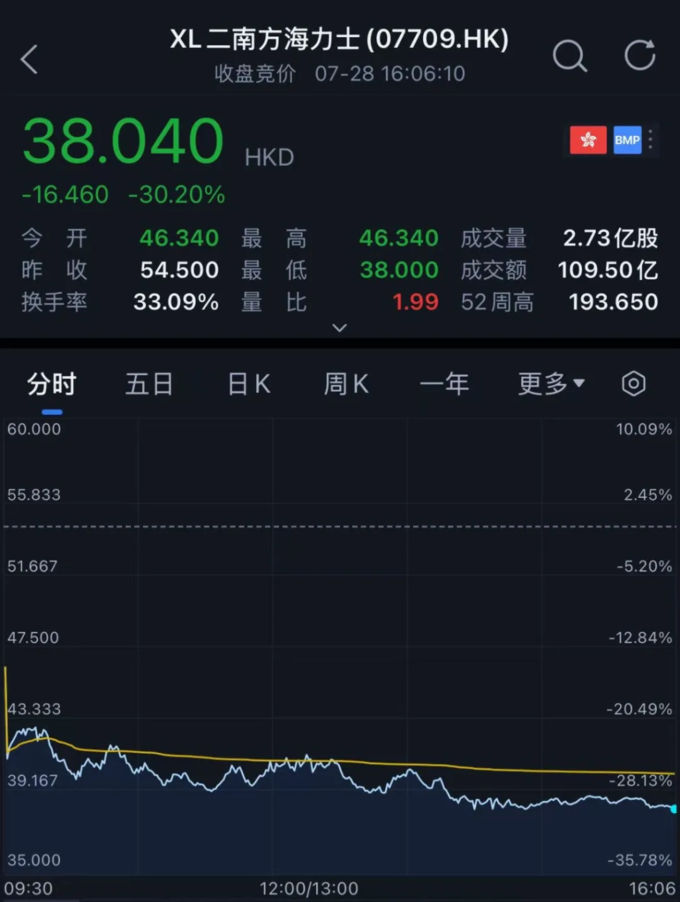


South Korea's leading semiconductor stock fell sharply on July 28, dragging down related leveraged ETFs. In the Hong Kong stock market, the Southern 2x Leveraged SK Hynix and Southern 2x Leveraged Samsung Electronics ETFs fell 30.2% and 26.73% respectively on the same day. Several other South Korean single-stock leveraged ETFs also fell by nearly 30% that day.
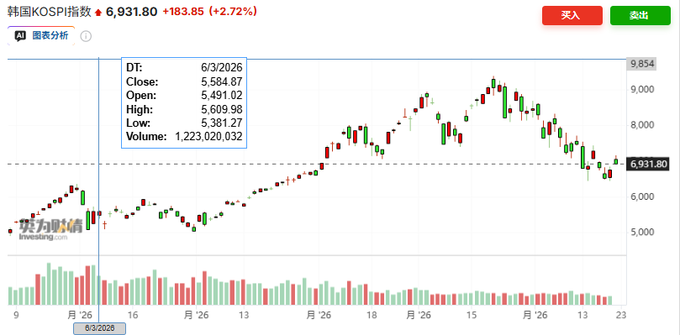
This decline occurred after a period of sustained volatility in the semiconductor sector. Since July, the net asset value and asset size of related products have contracted simultaneously, indicating that highly leveraged funds are rapidly withdrawing. Similar trends have been observed in leveraged semiconductor products in the US stock market, reflecting that this correction has spread from individual South Korean stocks to a broader range of chip trading.
The decline has widened since July.
Based on performance since July, the Southern 2x Leveraged SK Hynix ETF has fallen by 74.48%, and the Southern 2x Leveraged Samsung Electronics ETF has fallen by 63.51%. In the South Korean domestic market, the Samsung KODEX SK Hynix Single Stock Leveraged ETF fell by 28.43%, the Samsung KODEX Samsung Electronics Single Stock Leveraged ETF fell by 26.63%, and the KIM ACE SK Hynix Single Stock Leveraged ETF fell by 28.44%.
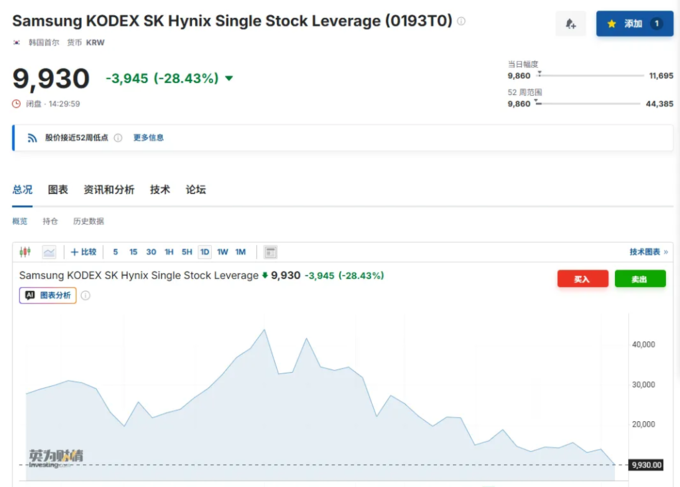
Highly leveraged products typically experience faster net asset value drawdowns when a single underlying asset experiences significant volatility. The simultaneous weakening of Samsung Electronics and SK Hynix in this instance amplified the losses for related ETFs.
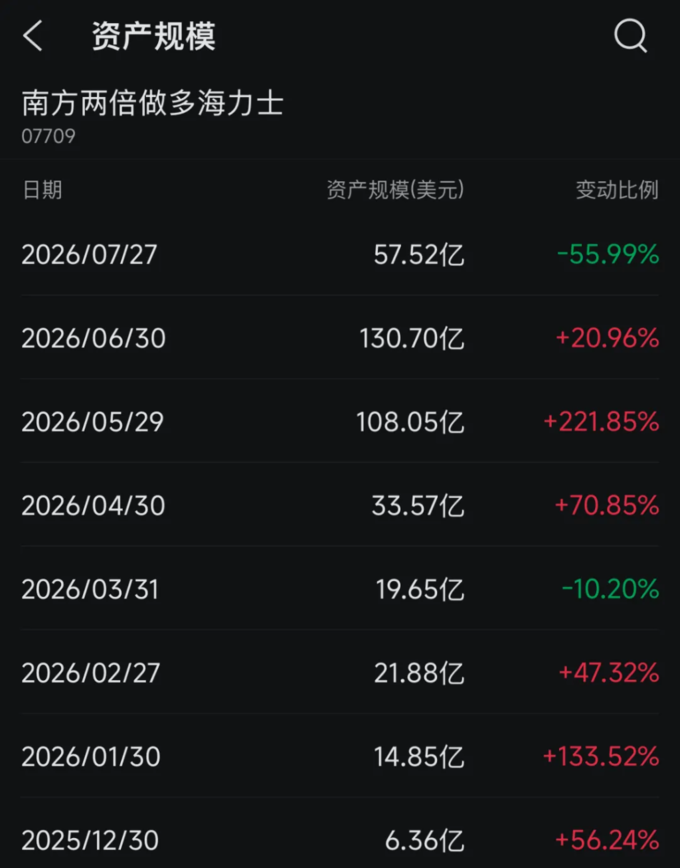
Several products have seen their scale shrink.
Data shows that as of July 27, the assets under management of CSOP's double-leveraged long position in SK Hynix totaled $5.752 billion, a 56% decrease from $13.07 billion at the end of June. The assets under management of CSOP's double-leveraged long position in Samsung Electronics totaled $1.23 billion, a nearly 70% decrease from $3.738 billion at the end of June.
Leveraged semiconductor products in the US stock market also saw a decline in funds. As of July 24, the assets under management of the 3x leveraged semiconductor ETF were $19.835 billion, a decrease of 37.22% from $31.596 billion at the end of June; the assets under management of the 2x leveraged Micron Technology ETF were $4.829 billion, a decrease of 43.55% from $8.554 billion at the end of June.
- Southern Securities double-leveraged long position in Hynix: $5.752 billion
- Southern Securities double-doubles its long position in Samsung Electronics: $1.23 billion
- Triple-Leveraged Semiconductor ETF: $19.835 billion
Institutional disagreements widen
During the sector correction, some institutions chose to further reduce their risk exposure. Michael Barry, the hedge fund manager best known for the film "The Big Short," stated on July 25th that he had further expanded his short positions in Micron Technology, Nvidia, and the Philadelphia Semiconductor ETF (SOXX). He had previously disclosed the establishment of a short position in Micron Technology in early July.
Some active management firms are also reducing their holdings in semiconductor stocks. Edmond de Rothschild Asset Management stated that the semiconductor sector's valuation is relatively high compared to expectations; DWS partially took profits after the previous rise and downgraded the industry rating to neutral; Swiss asset management firm LFG+ZEST also reduced its positions in memory chip and equipment manufacturers, while buying put options on some semiconductor stocks.
However, some institutions believe this decline is more of a valuation correction. BlackRock stated that the recent pullback in tech stocks has been an overreaction, and demand for data centers, network equipment, memory chips, and power infrastructure will continue to grow as companies continue to integrate AI into their products and processes. Morgan Stanley, Bank of America, UBS, and other institutions also believe that this correction is more like a digestion of trading congestion than a reversal of industry trends.