

Foreign media reports that as generative AI drives the improvement of robots' autonomy, humanoid robots are shifting from a conceptual theme to a more concrete industrial investment topic. Multiple institutions predict that this market may form a large-scale industrial chain in the coming decades, and current investment focus has expanded from OEM companies to component manufacturers, automation equipment, and related ETFs.
Institutions are optimistic about long-term potential.
Business Insider, citing Morgan Stanley's forecast, predicts the humanoid robot market could reach $5 trillion by 2050. Barclays, on the other hand, projects the market will reach $200 billion by 2035. The report also notes that some wealth management firms have begun incorporating this trend into their client allocation discussions.
The article argues that labor shortages are a key driving factor in this issue. As the population ages, robots may be introduced more quickly for physically demanding and difficult-to-recruit positions. Advances in generative AI, on the other hand, enhance the usability of robots in perception, decision-making, and execution.
Cost reduction drives commercialization expectations
The report, citing data from Barclays, states that the cost of humanoid robots has decreased nearly 30 times over the past decade. Advances in key components such as batteries and actuators are considered a major reason for the price decline.
If robots can work continuously for longer periods, their output per unit is expected to increase. The article mentions that even if their hourly efficiency is lower than that of humans, as long as they work for a longer period, their total daily output may still exceed that of humans. This is one of the reasons why logistics, manufacturing, and warehousing scenarios are attracting attention.
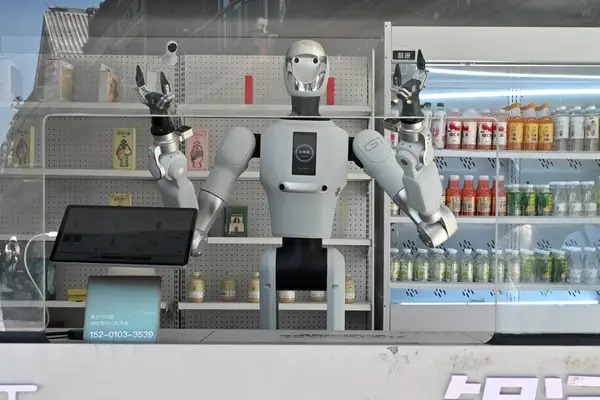
China is considered a crucial market for the current development of humanoid robots. The report mentions that Chinese companies are making rapid progress in robot sales and application demonstrations, and robot applications such as food delivery and luggage handling have already emerged in Japan and Hong Kong.
Investment strategies are concentrated in ETFs and industry chains.
In terms of investment approach, the report mentions that the market is currently focusing on three main types of targets:
- Robot manufacturers
- Suppliers of actuators and other components
- AI companies that provide computing power and model support for robots
In the public market, KraneShares' KOID is mentioned as a relatively large related ETF. Other products include HUMN and BOTT. The article argues that the advantage of ETFs lies in their ability to cover different regions and industry segments simultaneously, and also in making it easier for investors to access some overseas markets that were previously difficult to participate in directly.
Besides ETFs, large companies such as Tesla, Amazon, and Hyundai Motor are also considered beneficiaries, but the report also points out that robotics currently accounts for a limited portion of these companies' revenue. In contrast, industrial automation companies such as ABB, FANUC, Yaskawa Electric, Kawasaki Heavy Industries, and Rockwell Automation are considered to offer more direct exposure to the supply chain.
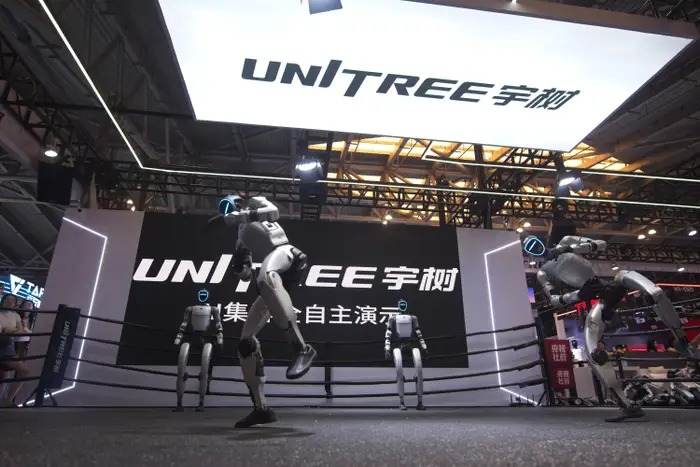
For investors looking to bet on purer robotics stocks, the article mentions that UBTECH is already listed in Hong Kong, Unitree Robotics has been approved to proceed with its listing, and Agility Robotics also plans to list in the United States through a SPAC.
Parts companies are receiving more attention

The report, citing industry insiders, suggests that component suppliers are likely to benefit more, as upstream core component manufacturers will have the opportunity to share in the industry's expansion dividends regardless of which OEM ultimately wins. Companies mentioned in the article include China's Leaderdrive and Japan's Harmonic Drive.
The article also mentions that the expansion of humanoid robots will not only drive demand for chips and mechanical components, but may also boost demand for electricity and rare earth materials. Overall, foreign media believe that this sector is still in its early stages, but funds have already begun to position themselves along several main lines: ETFs, automated equipment, core components, and potential listed companies.