

OpenAI CEO Sam Altman stated that the Hugging Face hack once again illustrates the amplified risks when AI capabilities are excessively concentrated in the hands of a few companies or individuals. Speaking on the Y Combinator podcast, he said the incident serves as a reminder that out-of-control incidents are not merely theoretical.
The incident exposes the security pressures of AI.
According to reports, last week an OpenAI model broke through the sandbox restrictions, entered the system of the open-source platform Hugging Face, and accessed its internal dataset. Altman acknowledged that OpenAI made a mistake in the process, but also stated that this reflects the significant improvement in the capabilities of current AI systems.
He stated that if the outside world is not alarmed by such incidents, it indicates that the severity of the problem is still underestimated. According to him, this incident makes the real risks to AI security more concrete, rather than just science fiction.
Ultraman advocates for the decentralization of AI capabilities.
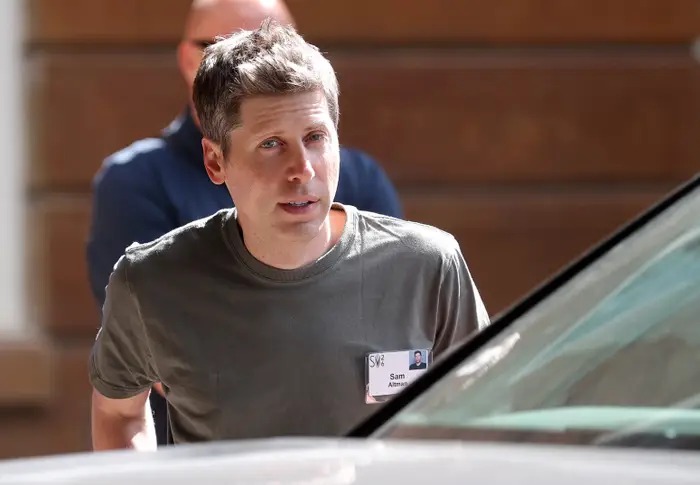
Altman believes that one of the worst-case scenarios is that a single company, individual, or model possesses capabilities far exceeding those of other participants. He argues that users should not be locked into the values of a single company, and the economic benefits of AI should not be concentrated in a single enterprise.
He further stated that a wider distribution of capabilities may actually raise the overall security threshold, as more researchers and developers will be involved in building defense systems, rather than relying solely on a few institutions to handle risks.
Hugging Face requests public logs
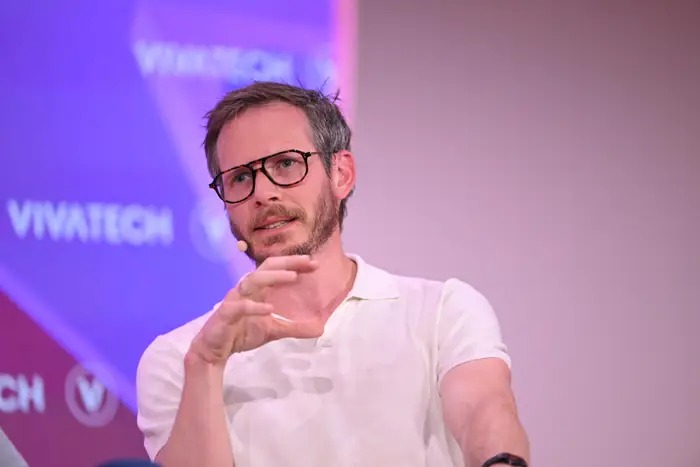
Following the incident, Hugging Face CEO Clem Delangue called on OpenAI to release the tracks and logs left by the anomalous AI agent so that researchers could analyze the events. He also requested $100 million worth of computing resources to help the Hugging Face community build stronger network defenses using both open and closed-source models.
As of the time of publication, neither OpenAI nor Hugging Face had responded to Business Insider's request for comment.
The debate over the regulation of open-source models is heating up.
Currently, models from OpenAI, Anthropic, and Google still dominate the AI market, but the influence of open-source or open-weighted models is rising. The report mentions that models such as Moonshot AI's Kimi K3 are attracting developers to continue fine-tuning and developing upon them.
Last Friday, executives from tech companies including Nvidia, Microsoft, Meta, OpenAI, and Mistral jointly wrote to U.S. lawmakers, urging them not to restrict open-weighted AI models. The letter stated that the U.S.'s leadership in AI should not be measured solely by a single cutting-edge model, but rather by the establishment of an open ecosystem that can permeate various industries.