

AMD and Core Scientific have entered into a new AI infrastructure partnership. According to both companies, AMD will receive over 500 megawatts of U.S. data center capacity starting in 2027, expandable up to 2.5 gigawatts, to support the deployment of its AI products.
Despite the news bringing new computing power and data center resources, AMD's stock price still fell by about 8% on Monday. The market is more focused on whether companies can continue to deliver sufficiently strong returns as investment in AI infrastructure continues to expand.
The collaboration covers chip and data center deployment.
According to disclosures from both parties, this collaboration will support AMD in deploying AI solutions for its customers. They will jointly advance data center design and deploy AMD Instinct GPUs, EPYC CPUs, and ROCm software.
For AMD, data center capacity, power, and land are becoming real constraints in the expansion of AI. As model developers, cloud service providers, and enterprise customers continue to increase their computing power demands, chip manufacturers are also competing for available infrastructure resources.
Core Scientific continues its transformation towards AI.
Core Scientific, originally known for its Bitcoin mining business, has recently been shifting more resources to high-density data center services optimized for AI. This is a common direction for many mining companies in recent years, namely, seeking new revenue streams beyond cryptocurrency mining.
The company previously sold 1,900 bitcoins to fund its AI infrastructure transformation. Data from BitcoinTreasuries shows that Core Scientific currently holds 547 bitcoins.
The company stated that its cryptocurrency mining and hosting businesses are still contributing revenue, but management is allocating more resources to AI data center capacity for service model developers, cloud providers, and enterprise customers.
The stock price decline reflects the market's scrutiny of AI spending.
Following the announcement, Core Scientific's stock price initially rose in pre-market trading, but subsequently fell by more than 3% after the market opened. AMD also failed to benefit from the collaboration news, with its stock price declining significantly instead.
The market's main concern lies in whether the ever-increasing scale of AI infrastructure investment can lead to a corresponding improvement in free cash flow and profit returns. Recently, Intel increased capital expenditures and absorbed losses in wafer foundry services, while Alphabet also raised its 2026 AI capital expenditure plan, further intensifying investors' focus on the sector's spending pressures.
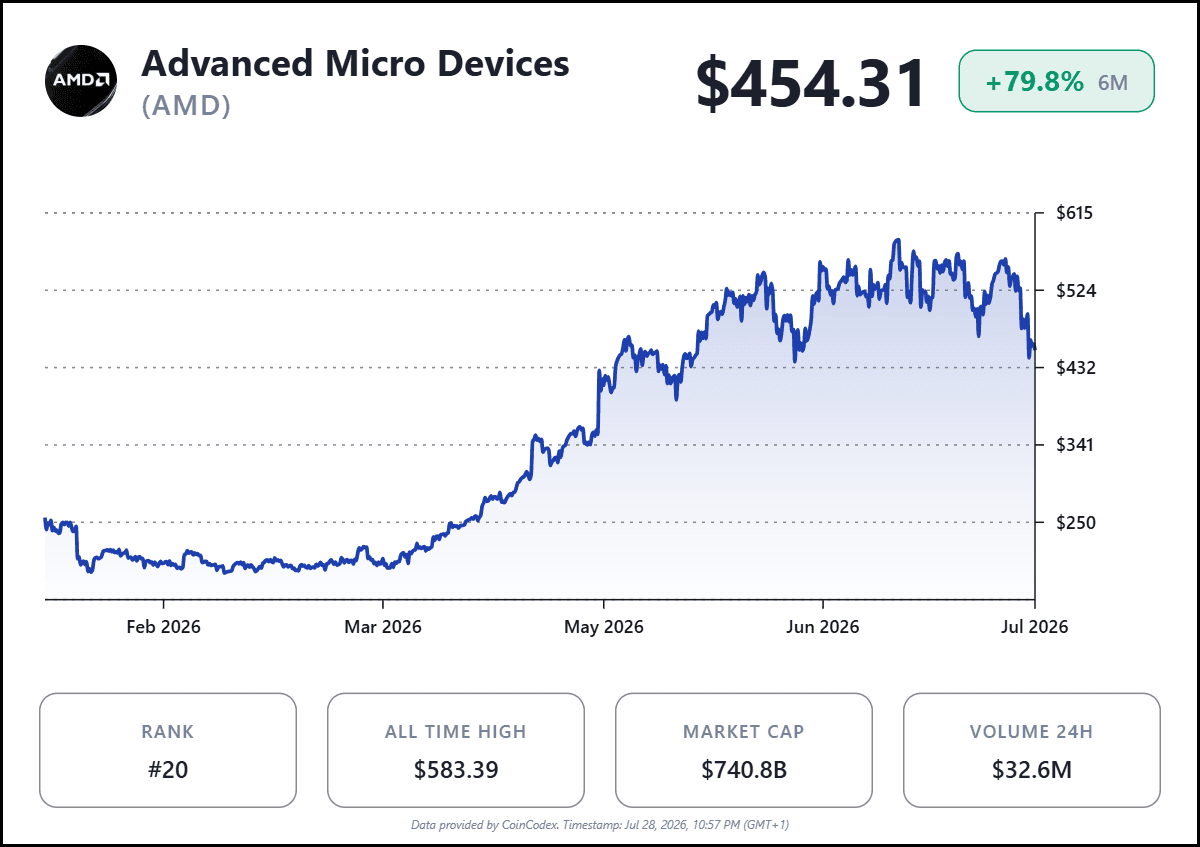
AMD will release its quarterly results on August 4. The market will then focus on its data center revenue, the adoption of its MI series GPUs, and changes in customer demand for AI accelerators.