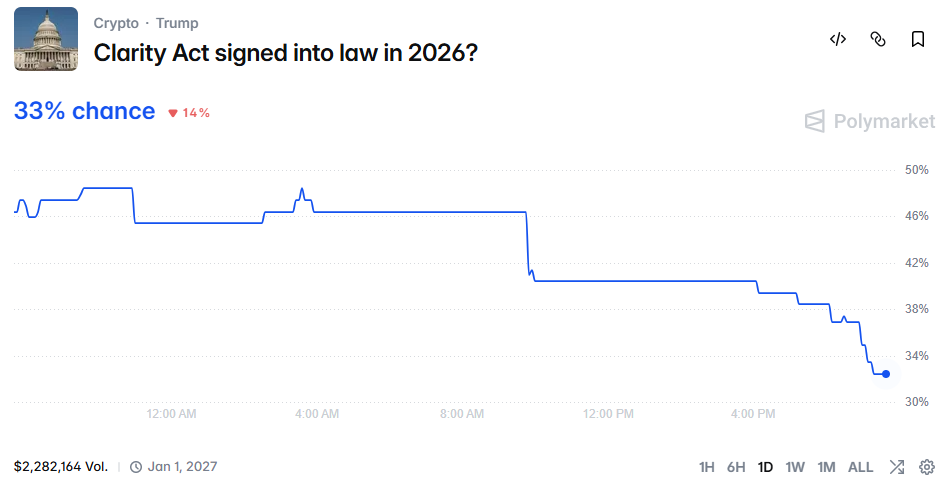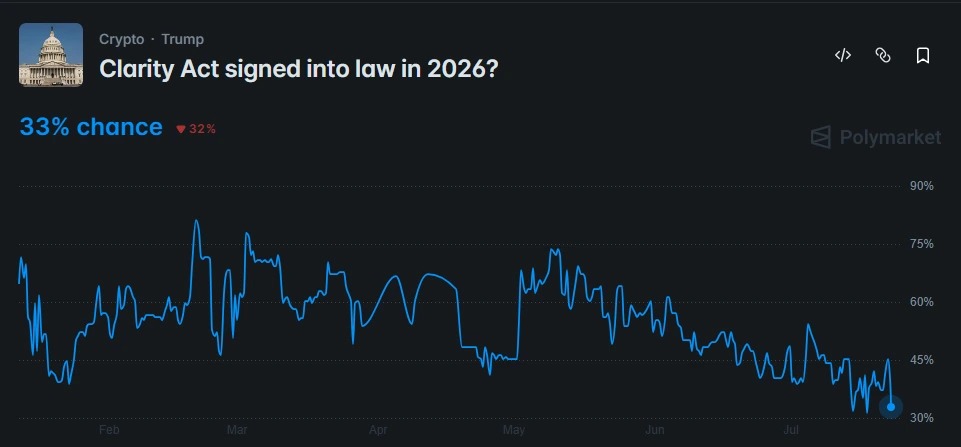


The US Senate recently prioritized federal nominees and sanctions bills against Russia and Iran, further narrowing the path for the CLARITY Act, the cryptocurrency market structure bill, before the August recess. Lawmakers supporting the bill argue that continued delays could cause the US to lose its appeal to cryptocurrency companies and related investments.
The House version has gained bipartisan support.
Florida Republican Representative Mike Haridopolos defended the CLARITY Act again in a television interview on July 28. He stated that the bill's goal is to keep digital asset businesses in the U.S. market, rather than allowing them to move overseas.
Haridopolos is a member of the House Financial Services Committee. He voted in favor of the House version in July 2025. According to committee data, the version passed with 294 votes in favor and 134 against, with 78 Democratic members and 216 Republican members voting in favor.
The core of the bill is to clearly define the regulatory responsibilities of the U.S. Securities and Exchange Commission (SEC) and the Commodity Futures Trading Commission (CFTC). Supporters believe this will provide exchanges, token issuers, and blockchain developers with a clearer path to compliance.
Senate voting time squeezed by other agenda items
Currently, Senate Majority Leader John Thune is prioritizing the voting on the 74 federal nominees and the 2026 Russia and Iran Sanctions Act. This means the Clarity Act is unlikely to quickly proceed to a vote in the final stages of this legislative session.
According to the Senate schedule, the summer recess will begin after August 7, with the state working period running from August 10 to September 11. Thune indicated that procedural steps may still be taken before the recess, but only if sufficient votes are confirmed.
- The Senate Banking Committee passed the bill in May by a vote of 15 to 9.
- At least eight Democratic senators are needed.
- Two Democratic committee members stated that the text still needed to be revised.
Disagreements remain regarding restrictions on officials' currency holdings and state enforcement powers.
One of the current focal points of the negotiations is the restriction on the relationship between elected officials and digital assets. The Senate draft bill proposes to temporarily prohibit certain officials, including the president and vice president, from issuing or sponsoring crypto assets until January 2029.
The draft bill also delegates enforcement responsibility to the U.S. Department of Justice. Democrats' main objection is that state attorneys general will be unable to intervene if the federal government does not initiate proceedings. New York Attorney General Letitia James also argued that the bill could weaken existing state digital asset rules and limit local capacity to combat crypto fraud.
The delay in the bill will not immediately change the legal status of crypto assets, nor will it directly affect the operation of US exchanges or spot crypto ETFs. However, how the SEC and CFTC will divide the responsibilities for token trading, financing, and the digital goods market will remain undecided.
Additional information:Industry institutions including Coinbase, Ripple, and Digital Chamber previously supported the House version. Goldman Sachs CEO David Solomon recently stated that despite the Senate version's imperfections, progress should continue. If the current Congress fails to achieve Senate passage, bicameral reconciliation, and final approval, relevant market structure legislation could be delayed until 2027.