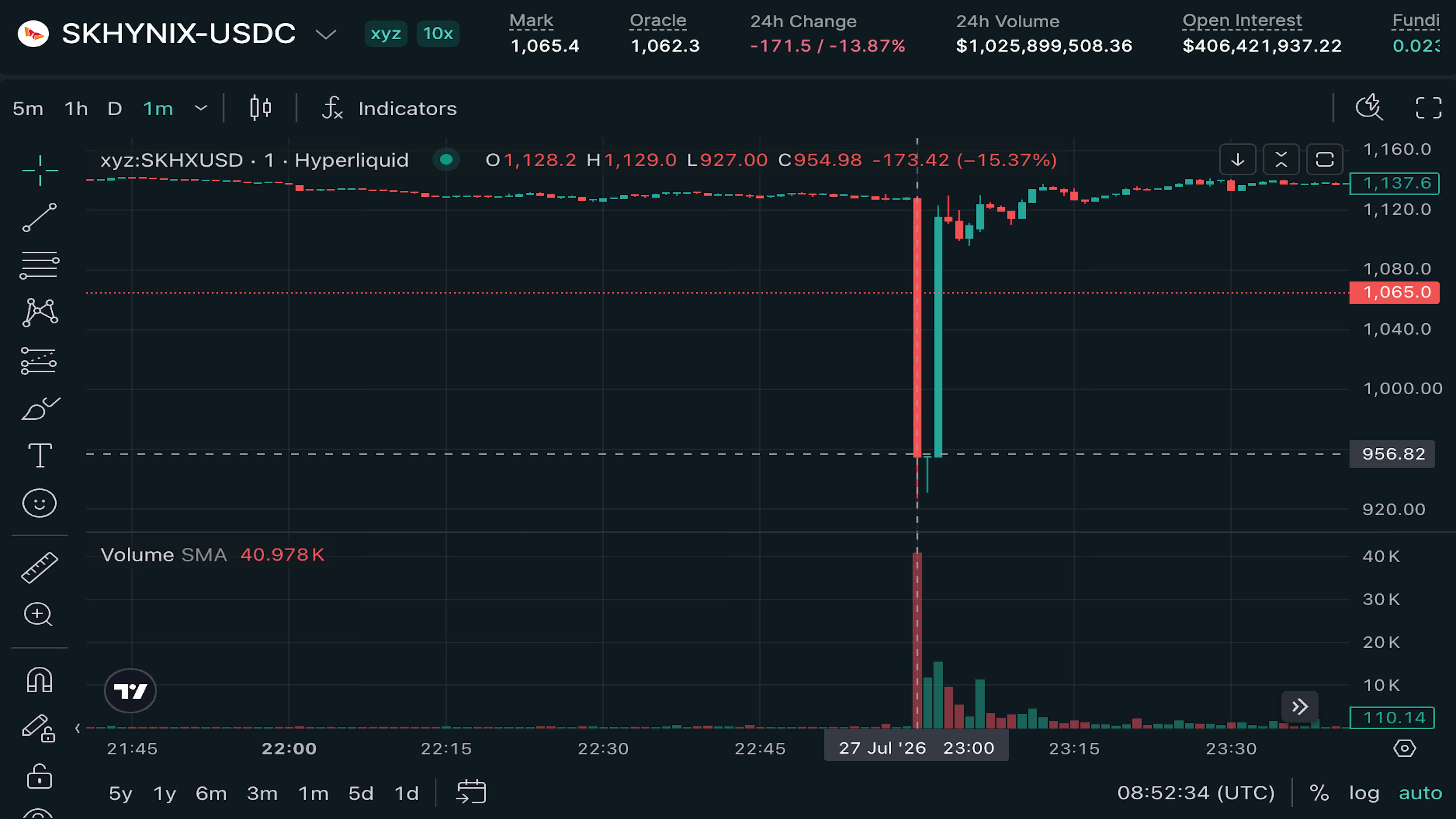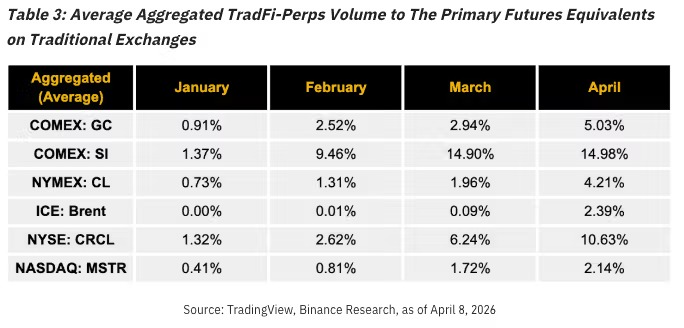


CryptoQuant reports that perpetual contracts for traditional assets, such as stocks, metals, and crude oil, are becoming one of the fastest-growing derivatives segments on crypto exchanges. Since late May, open interest in these products has risen from approximately $350 million to $500 million in the spring to over $2 billion in July.
These products allow traders to continuously trade traditional assets on crypto platforms without waiting for the stock or commodity markets to open. Unlike regular futures, perpetual contracts do not have a fixed expiration date and typically use funding rate mechanisms to keep the price close to the underlying asset.
The three platforms hold the majority of the market share.
According to CryptoQuant data, Binance currently has approximately $720 million in open interest in traditional asset perpetual contracts, accounting for about 35% of the entire market. Bybit and Gate each have approximately $381 million, and the three platforms together control about 70% of the market share.
This pattern is quite similar to that of the crypto perpetual contract market. The report shows that Binance's open interest in the crypto perpetual contract market is approximately $22.86 billion, also accounting for about 35%. Bybit's is approximately $9.67 billion, and Gate's is approximately $8.61 billion.
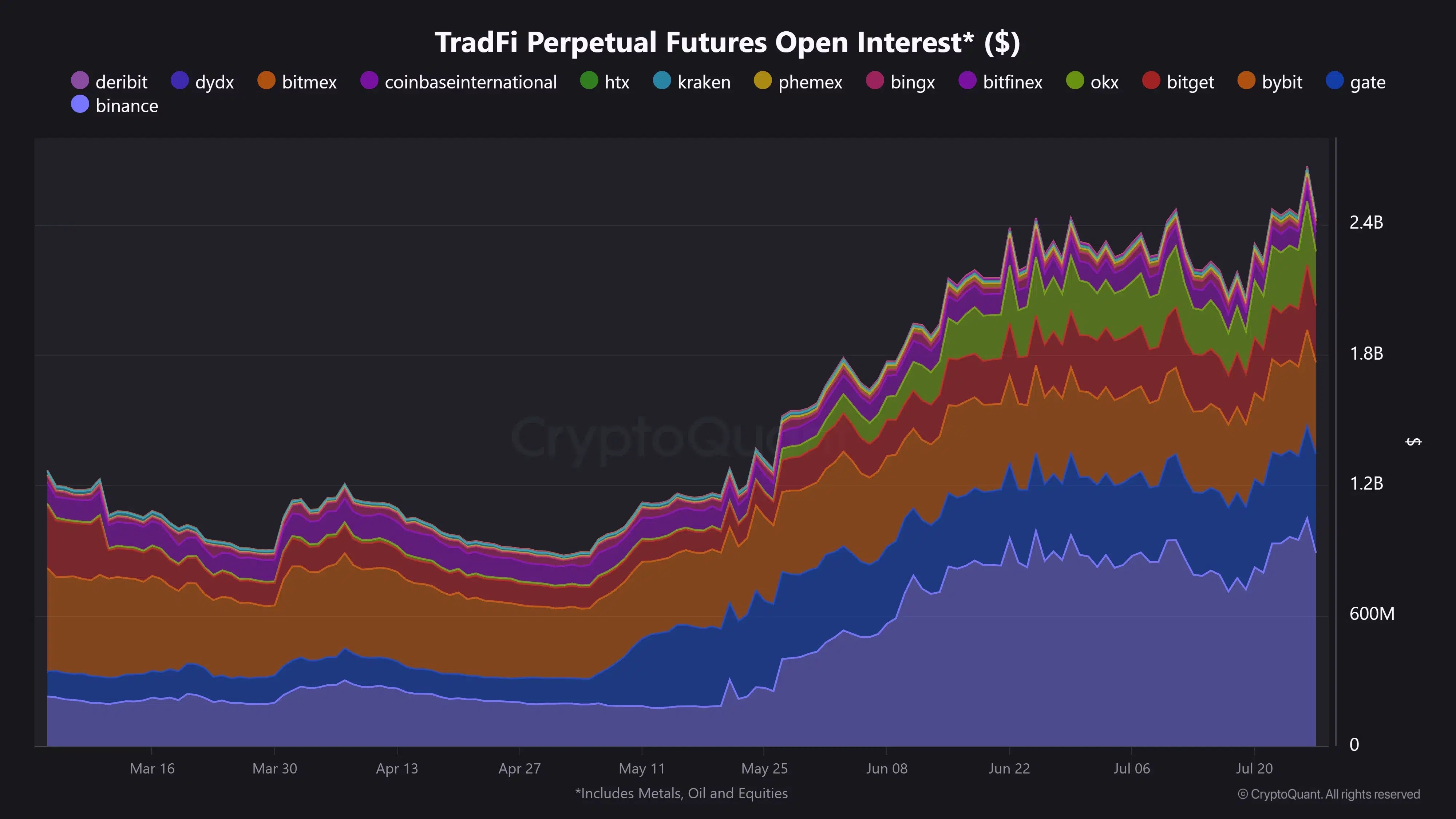
- Open interest in traditional asset perpetual contracts: over $2 billion
- Crypto perpetual contract open interest: approximately $65 billion
- The top three platforms account for approximately 63% of the crypto perpetual market.
The size is still far smaller than the crypto perpetual market.
Despite rapid growth, traditional asset perpetual contracts currently only account for about 3% of the crypto perpetual market. CryptoQuant believes this indicates that exchanges are adding new trading categories, but it is not enough to change the overall funding structure of the derivatives market.
The report also noted that the total open interest in crypto perpetual contracts has increased five to six times from approximately $12 billion to $15 billion at the beginning of 2023. However, after reaching nearly $80 billion in September 2025 and early 2026, this figure has recently fallen back to approximately $65 billion, a decrease of about 20% from its previous high.
CryptoQuant interprets this decline as deleveraging or capital outflow, rather than a continued influx of new funds into the crypto derivatives market. In contrast, the growth of perpetual contracts for traditional assets reflects exchanges expanding their business from digital assets to a wider range of underlying assets.
The US market is moving towards regulated products.
In the United States, similar products are entering the market through different regulatory pathways. Coinbase Financial Markets has already offered US clients perpetual-like futures products regulated by the Commodity Futures Trading Commission (CFTC). These contracts trade almost 24/7, but unlike the no-expiration-date structure common in offshore markets, they have a 5-year term and are closely tied to the spot price through a payment mechanism.
In May of this year, the CFTC also approved Kalshi's cash-settled Bitcoin perpetual futures contract. This product has no fixed expiration date and can be traded continuously. However, the regulator stated at the time that the evaluation was conducted on a contract-by-contract basis and did not automatically apply to perpetual products linked to non-crypto assets.
Overall, perpetual contracts for traditional assets remain a small segment of the crypto derivatives market, but their growth indicates that traders' demand for continuous trading of traditional assets is rising, and crypto exchanges are using this to engage in more direct competition with traditional trading platforms.