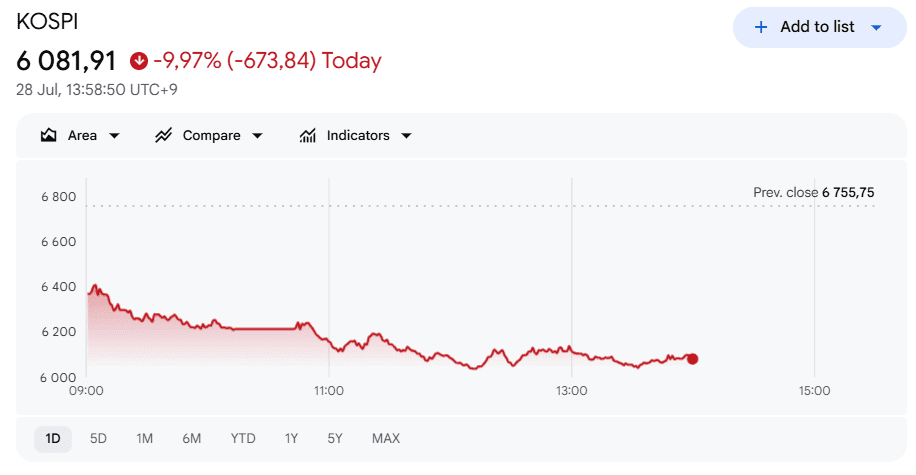


South Korean stocks extended their losses on Wednesday, with the benchmark Kospi index falling more than 9% intraday and hitting its lowest level since April. The index had already plunged 10.84% in the previous trading day. The sell-off remained concentrated in semiconductor and technology stocks, with foreign selling also amplifying volatility.
Samsung and other heavyweight stocks continued to be under pressure.
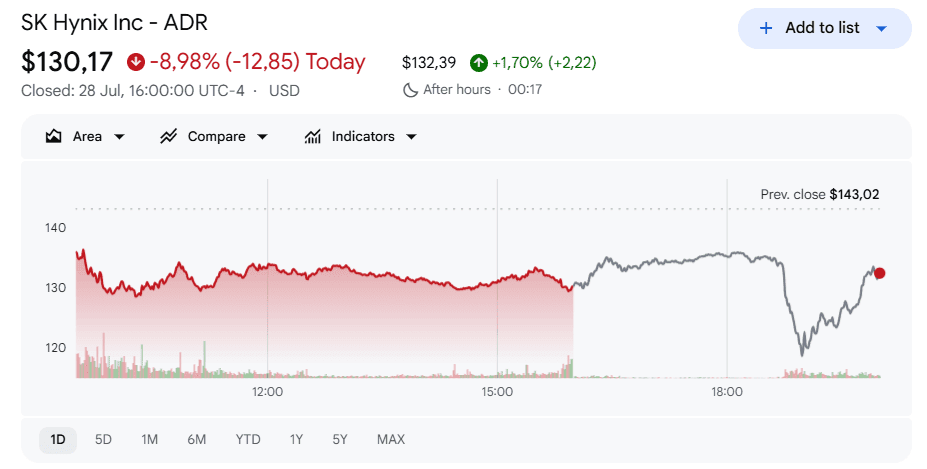
In this round of decline, the semiconductor sector remains the main source of pressure. Samsung Electronics fell more than 8% intraday, LG Innotek fell about 15%, and Seoul Semiconductor fell about 10%. In the previous trading day, SK Hynix had already fallen 14.7%, and Samsung Electronics fell 14.4%.
Although Samsung reported a quarterly operating profit of approximately 60.5 trillion won, representing a year-on-year increase of over 550%, it still fell short of market expectations of approximately 64 trillion won. This discrepancy failed to alleviate investor concerns about the valuation and profit prospects of the chip sector.
Selling pressure spreads to Asian chip sector
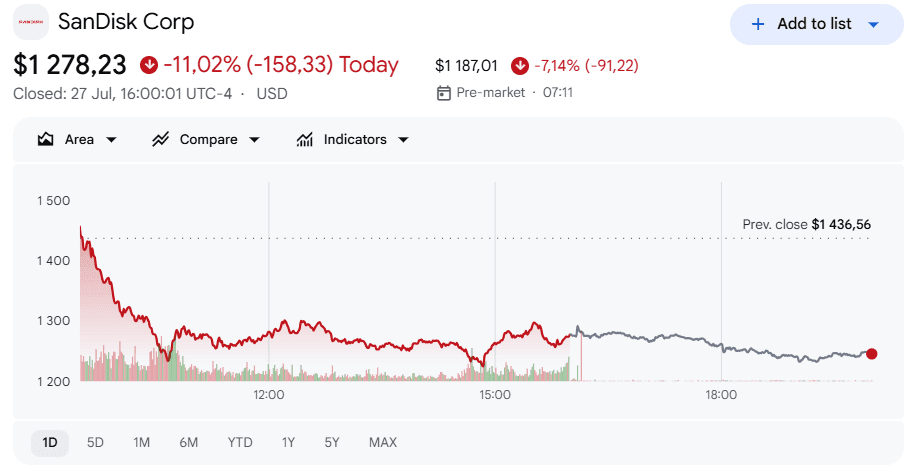
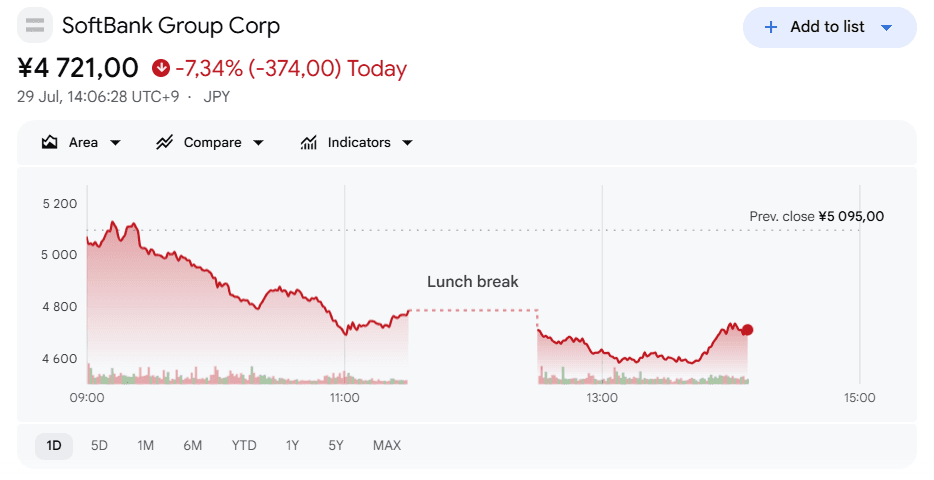
Following the weakness in South Korean stocks, selling pressure quickly spread to other Asian markets. Japanese memory chip maker Kioxia fell by about 14%, Tokyo Electron fell by 5%, and SoftBank Group, which holds shares in Arm and is considered a significant exposure to AI, fell by nearly 8%.
Taiwan Semiconductor Manufacturing Company (TSMC) fell by about 3.9%, the Hong Kong Hang Seng China Semiconductor Chip Index fell by more than 6%, and the ChiNext 300 Index, which favors technology growth stocks in mainland China, fell by 0.63%. The simultaneous decline in chip and technology stocks within the region indicates that market risk appetite is still contracting.
AI investment returns become a focus
Market sentiment weakened, partly due to the previous day's decline in US chip stocks. AMD closed down 8.12%, and Micron Technology fell 8.95%. Investors are beginning to reassess the massive investments in AI infrastructure, paying particular attention to debt financing arrangements for data center construction and the pressure from intensifying competition from Chinese semiconductor companies.
From a funding perspective, foreign investors sold approximately 5 trillion won worth of South Korean stocks in the previous trading day, further exacerbating volatility in the South Korean stock market. Current market focus has shifted from individual company performance to the capital expenditures, profit realization speed, and regional competitive landscape of the entire chip industry.