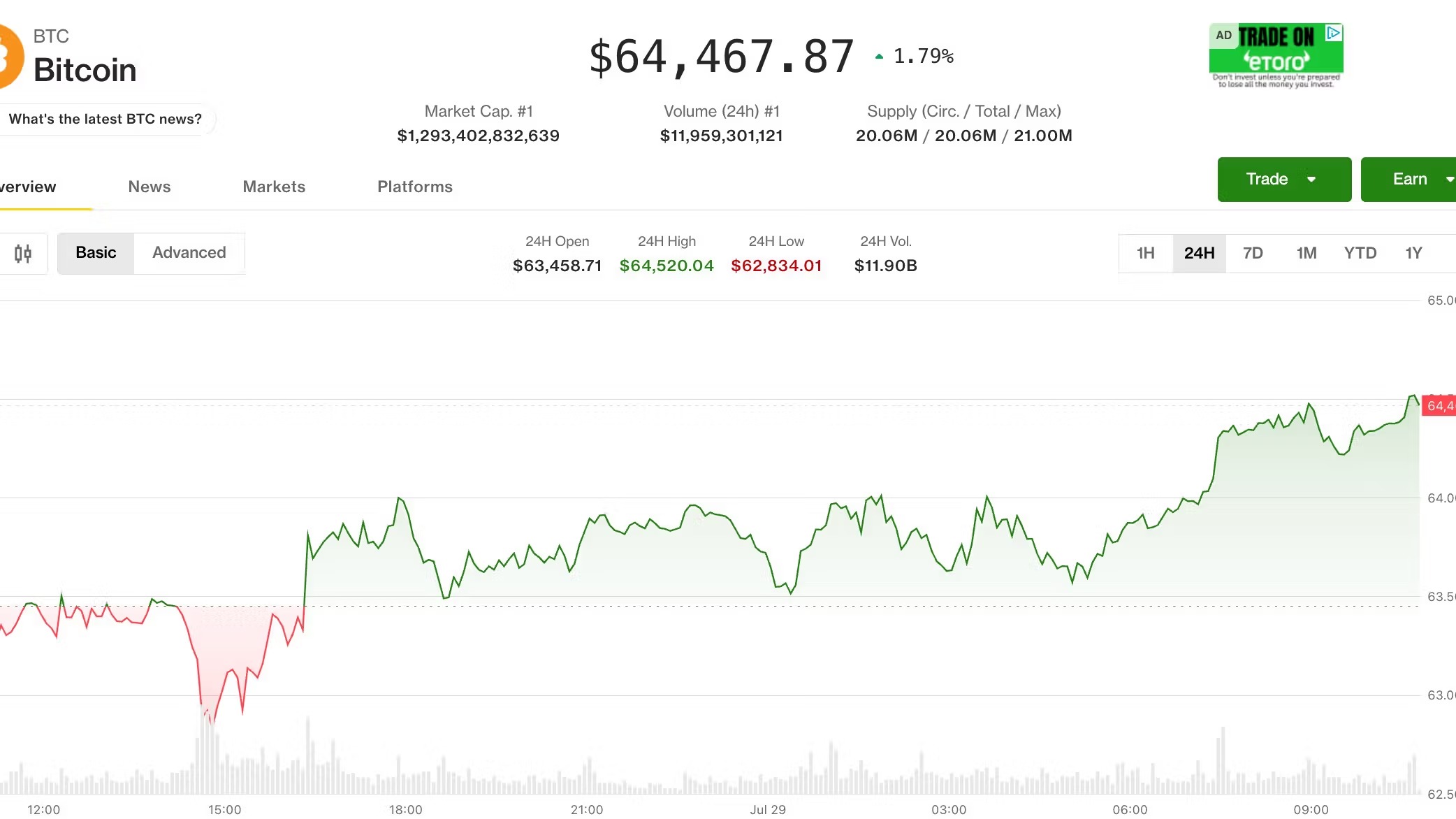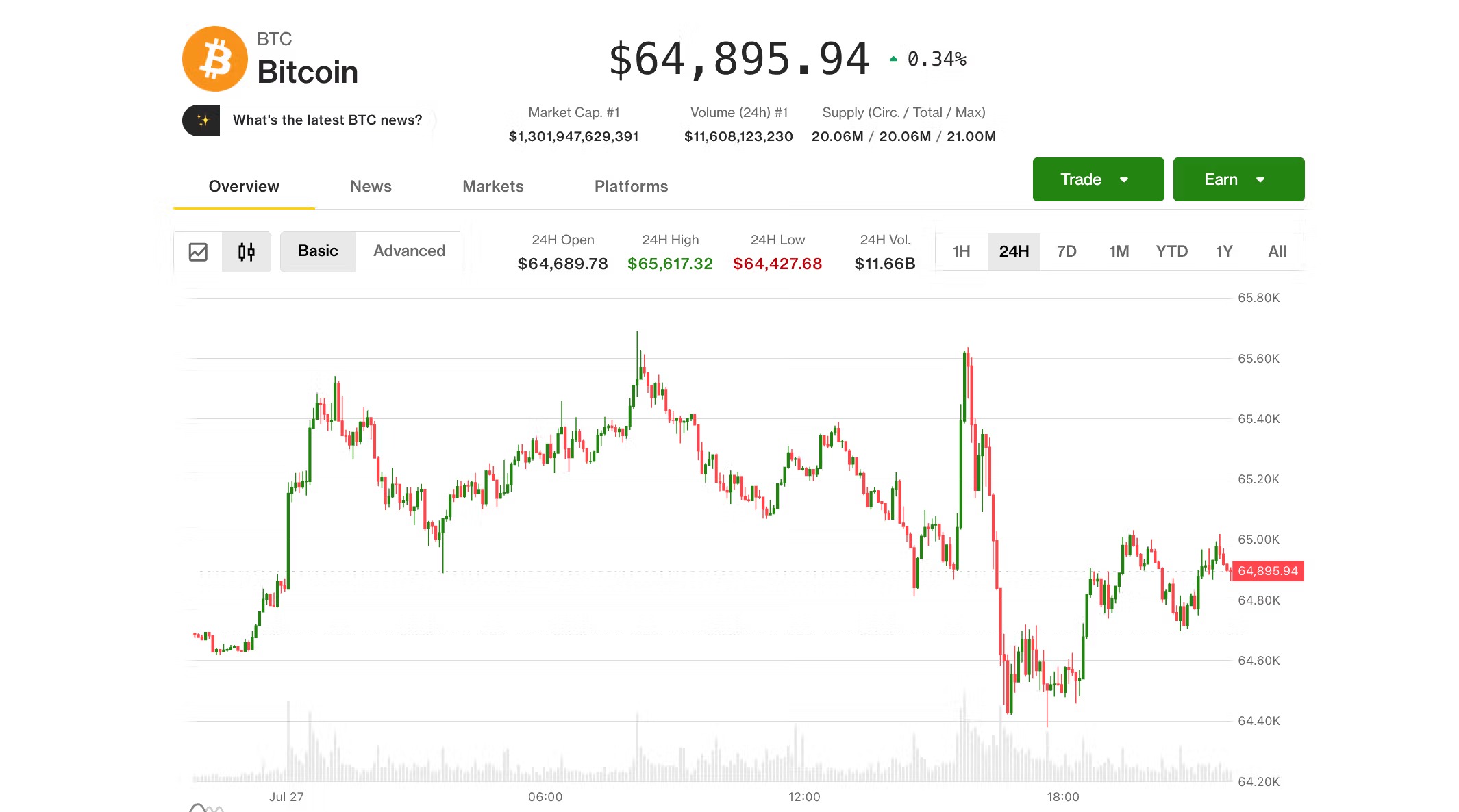


Bitcoin rebounded ahead of the Federal Reserve's interest rate decision, recovering from an intraday low of $62,850 to around $64,650 on July 29. This followed several days of pressure on crypto assets and tech stocks, with funds reallocating positions ahead of the rate decision.
The area around $65,000 remains a short-term resistance level.
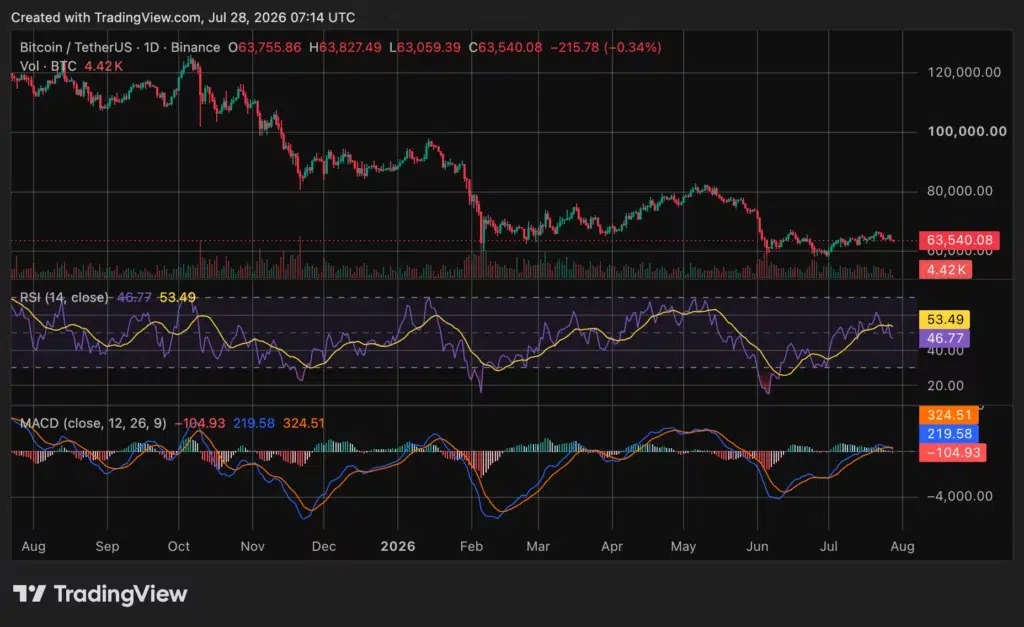
This rebound occurred after Bitcoin touched near its 200-day exponential moving average. The market generally considers $62,850 a key short-term support level, and buying interest entered at this level, prompting some short covering and driving the price back quickly to around $64,500.
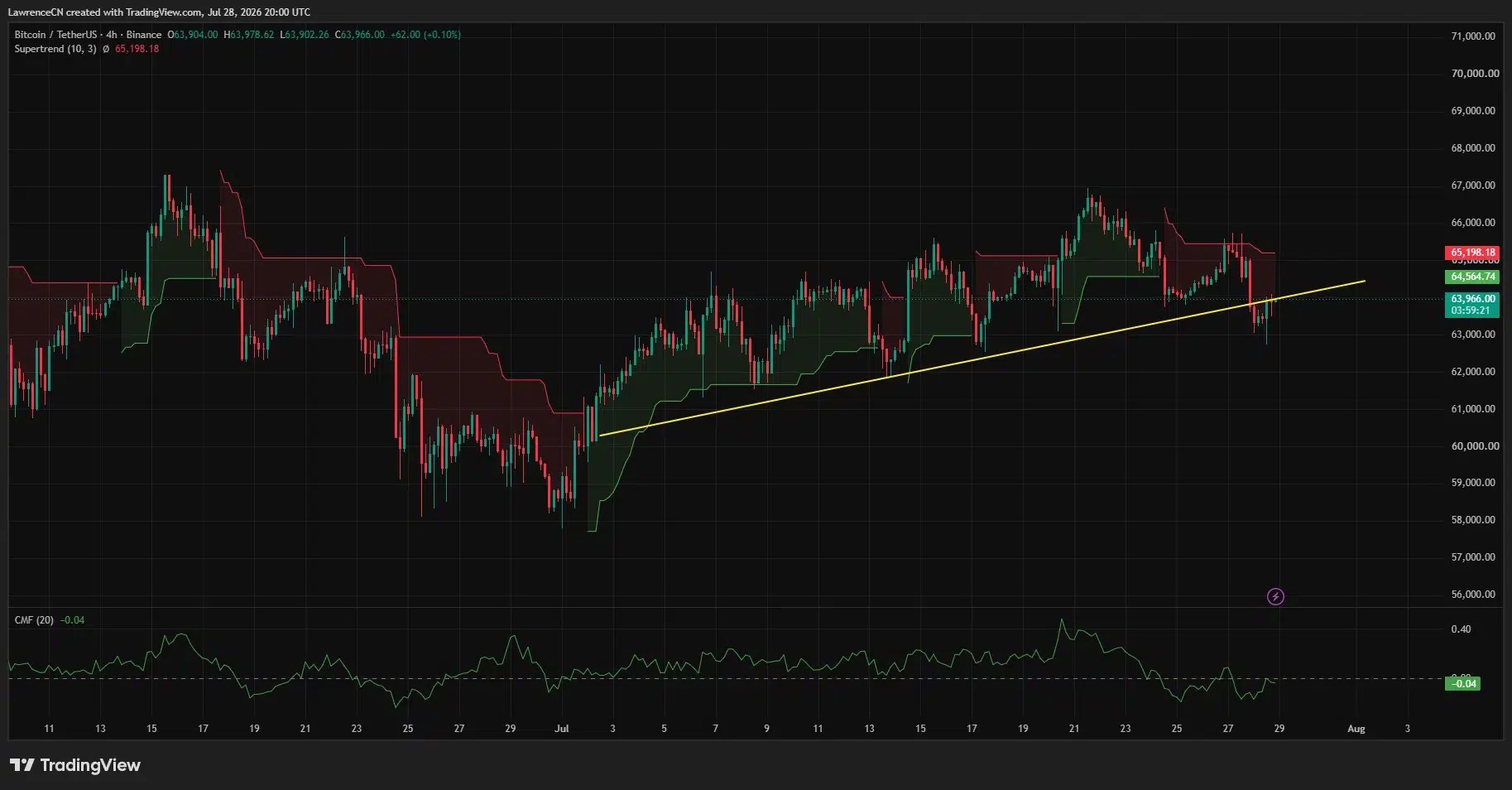
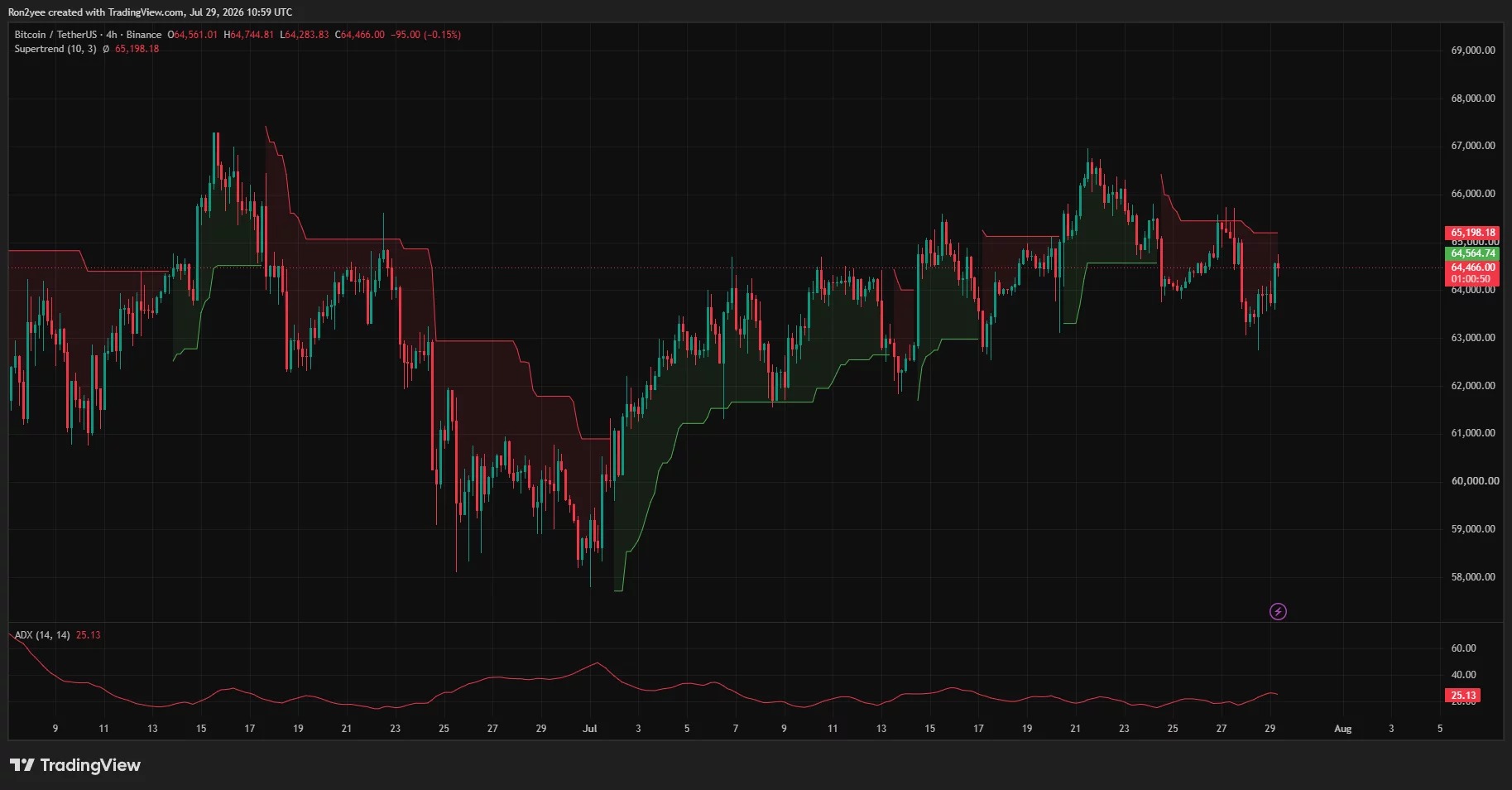
From a short-term perspective, Bitcoin has not yet fully reversed its weakness. The 4-hour chart cited in the article shows that $65,000 to $65,200 remains the first key resistance zone, and the price is currently still below this area.
If Bitcoin can effectively hold above $65,200, the next target could be the $65,800 to $66,200 range, before potentially retesting last week's high of $66,700. Conversely, if it encounters resistance below $65,000 again, the market could revisit $64,000, with further support at $62,000 to $62,500.
The market awaits a clear signal from the Federal Reserve.
The core catalyst for this round of volatility remains the outcome of the Federal Reserve's interest rate decision. The market currently widely expects the federal funds rate to remain unchanged, but prior to the announcement of the decision, interest rate swap pricing still reflected some expectations of a rate hike.
If the Federal Reserve signals a hawkish stance, the dollar and Treasury yields could strengthen, putting greater pressure on risk assets, and Bitcoin could also come under renewed pressure. If interest rates remain unchanged and the statement and the chairman's speech do not further reinforce inflation concerns, market risk appetite is expected to ease somewhat.
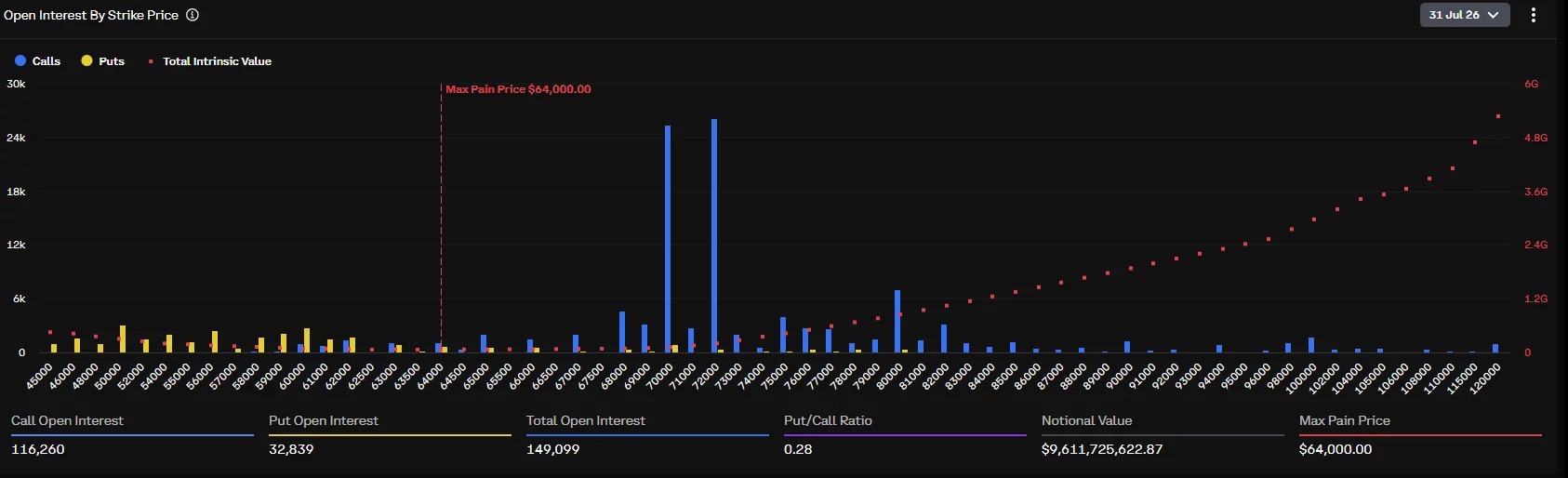
The article also mentions that the July 31st options expiration is a significant variable this week. Currently, the notional open interest in Bitcoin options is approximately $9.61 billion, with the biggest resistance level around $64,000. Call options account for a relatively high proportion, but this doesn't necessarily mean the price will continue to rise; if resistance levels are broken, market maker hedging and short covering could amplify volatility.
ETF outflows weaken support for spot markets
Besides macroeconomic factors, fund flows in US spot Bitcoin ETFs are still considered a drag on the current market. The report mentions that these products have seen net outflows for four consecutive trading days, with a cumulative outflow exceeding $500 million, weakening the spot buying that had previously supported price increases.
On-chain and derivatives data also show concentrated liquidation liquidity around $64,400 to $64,700, and a short-selling sensitive area above $65,000 to $65,300. This suggests that Bitcoin prices may continue to fluctuate significantly around the time of the Fed's decision.
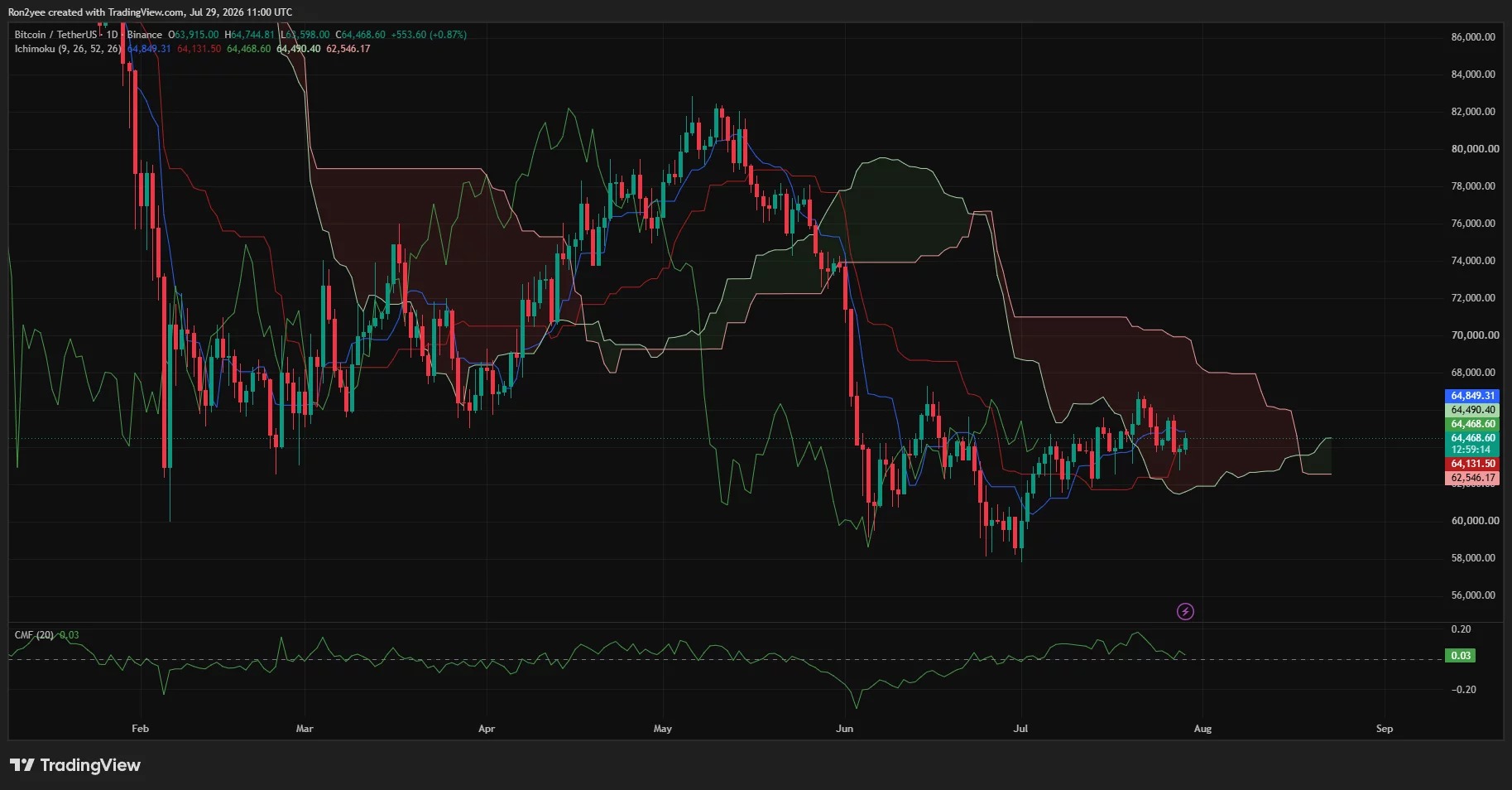
Overall, if the Federal Reserve does not deliver an unexpectedly hawkish outcome and Bitcoin can hold above $65,200, the short-term rebound still has room to continue. However, if ETF outflows persist and the price fails to break through resistance, the $62,500 level may face another test.