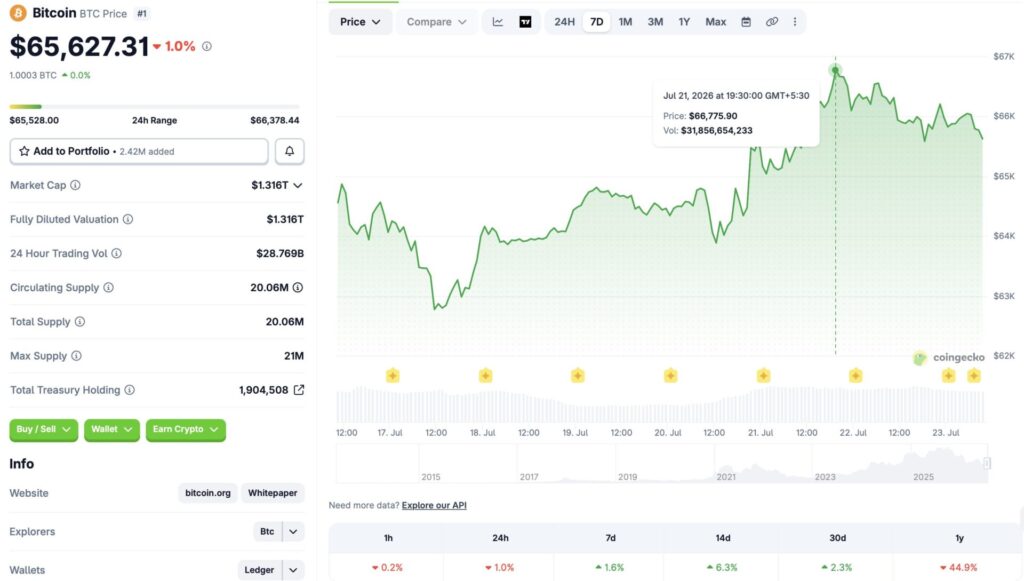


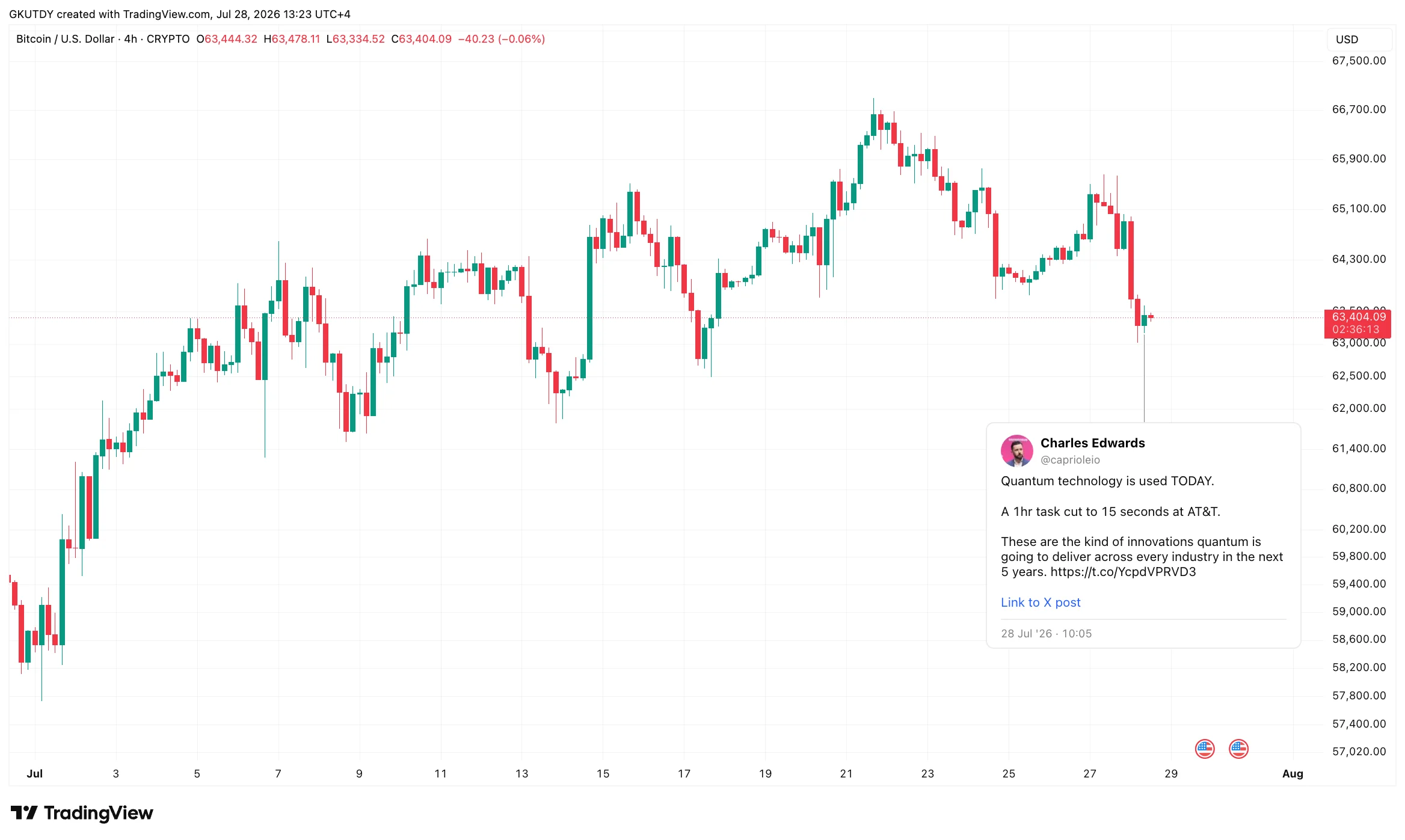
Foreign media reports that after Bitcoin fell back to around $63,000, market discussions have shifted beyond the price drop itself to the potential cryptographic security challenges posed by quantum computing. The article argues that as quantum technology gradually enters commercial applications, the so-called "Q-Day" is being discussed more frequently.
Bitcoin price drop accompanied by large-scale liquidation
The report noted that when Bitcoin fell towards $63,000, there were approximately $100 million in forced liquidations. This pullback was not driven by a single factor; weakness in the South Korean KOSPI index, a sell-off in the semiconductor sector, and market anticipation of the Federal Reserve meeting results were all considered sources of short-term pressure.
Against this backdrop, quantum computing has once again come into focus in the crypto market. The article cites some industry insiders who say that decentralized networks rely on public-key cryptography, and if quantum computing capabilities continue to improve, blockchain protocols may be among the first to face pressure.
AT&T's partnership with D-Wave sparks discussion
The immediate trigger for this round of discussions was the expanded collaboration between AT&T and D-Wave Quantum. According to reports, AT&T has already applied quantum annealing technology to network optimization algorithms. The article uses this to emphasize that quantum computing is moving from laboratory research to real-world commercial applications, and is no longer just a distant concept.
The report argues that such commercial applications will accelerate market attention to quantum security issues, especially in the realm of crypto assets. This is because the security of blockchain networks like Bitcoin is built upon existing cryptographic assumptions; if these underlying assumptions are breached, the impact could be far-reaching.
The "Q-Day" schedule has been brought forward further.
- Google researchers have reportedly lowered their computing power estimates by about 20 times.
- New estimates suggest that the required physical qubits could be less than 500,000.
- The U.S. Department of Energy anticipates that more powerful quantum computers may emerge within the next three years.
Furthermore, companies like IBM and Microsoft are also mentioned as preparing for quantum systems with more practical cryptographic significance around 2029. Based on this, the article argues that the market's concern is no longer just whether the technology will emerge, but whether the crypto community can push forward with cryptographic upgrades before the risks actually materialize.