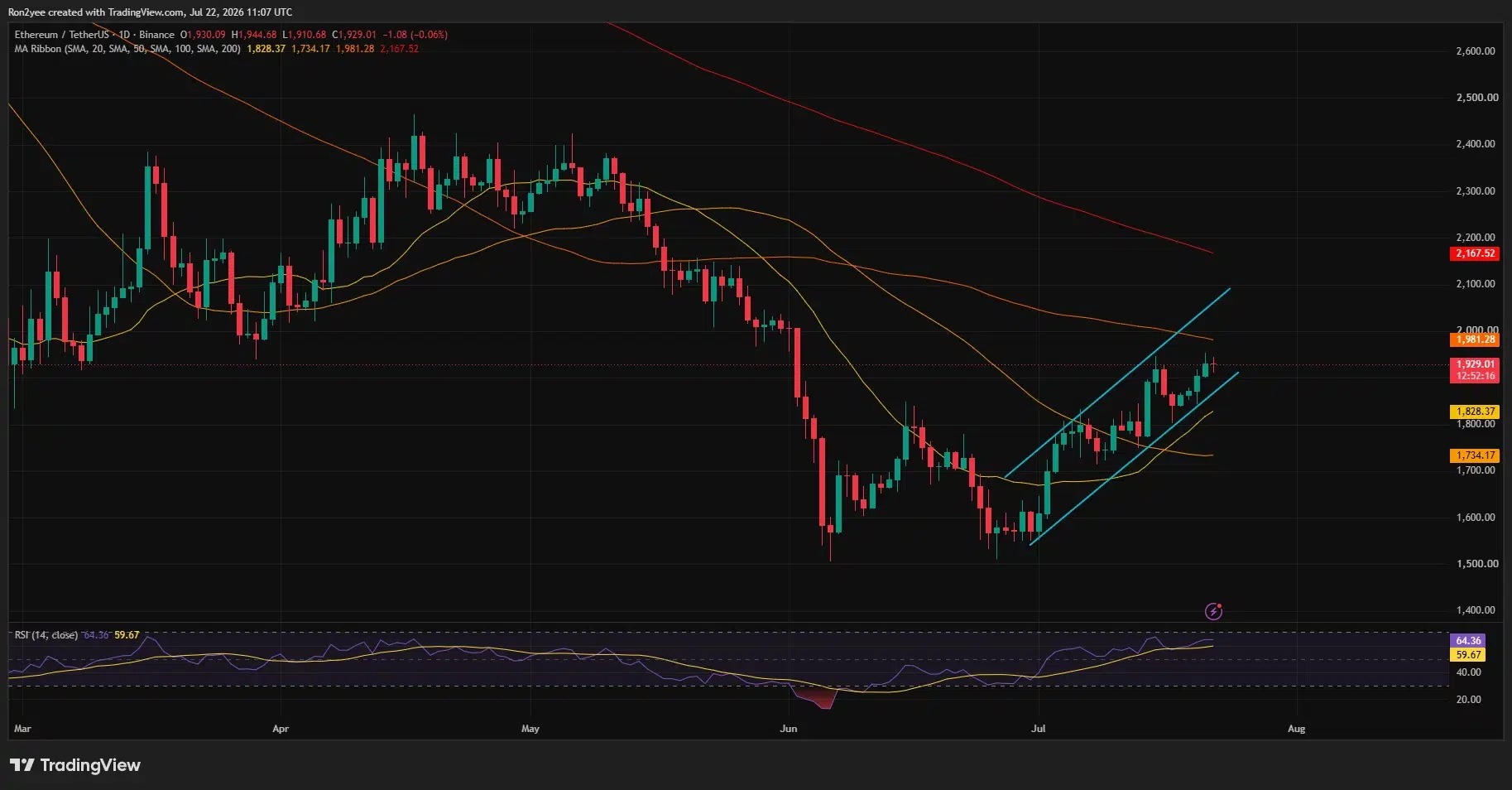


Since rebounding from around $1,500 in early July, Ethereum has seen a cumulative increase of nearly 25%, recovering more than $400 in a month. The current price has climbed back above $1,800 and is gradually approaching the $1,900 to $2,000 resistance zone. The market is watching to see if this range can be effectively broken.
After rebounding in July, it has returned to the key range.
From a daily chart perspective, ETH has recently continued its trend of rising highs and higher lows, indicating that the rebound is still ongoing. During previous pullbacks, bulls repeatedly found support at higher levels, pushing the price along the upward trend line.
The report mentions that the $1900 to $2000 area is currently the most immediate resistance zone. This range previously served as support, but after being breached, it has become resistance, making it crucial for future price movements. If the price effectively breaks above this range on the daily chart, the $2000 psychological level will once again become the focus of the market.
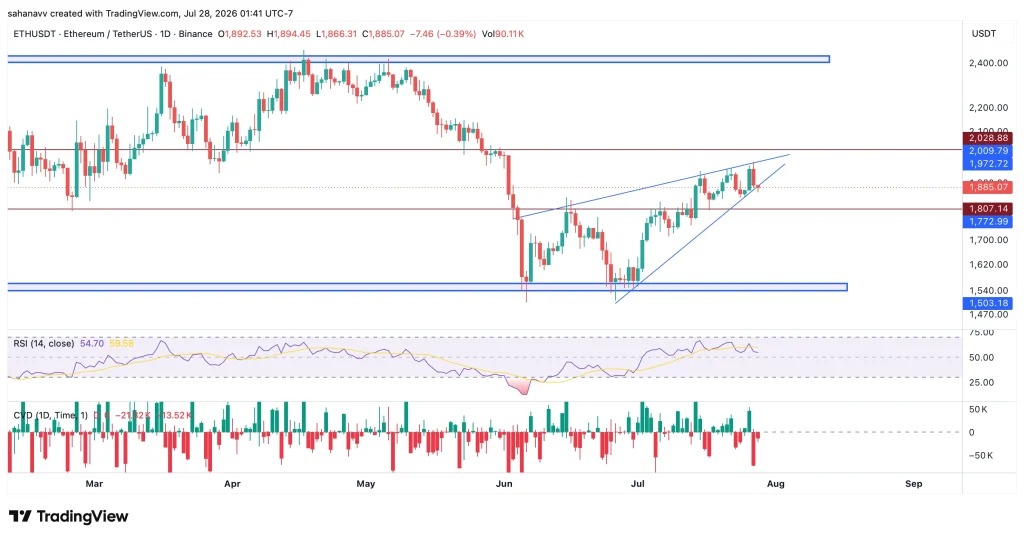
$1807 is a short-term support level.
In the short term, $1807 is considered the first major support level. As long as the price remains above this level and the upward trend line, the existing rebound structure remains largely intact.
- Resistance levels: $1900 to $2000
- Higher supply zone: $2380 to $2420
- Key support level: around $1500
If the $1900 to $2000 range continues to suppress prices, ETH may experience a short-term pullback before choosing its next direction.
Momentum remains strong, but trading volume still needs to follow suit.
In terms of technical indicators, the Relative Strength Index (RSI) remains above the neutral line, indicating that the current upward momentum has not weakened significantly and has not entered an overheated zone. In other words, prices still have room to rise further, but there are no signs of extreme congestion yet.
However, the cumulative volume difference (CVD) remains weak, indicating that the recent rebound has not yet received strong support from active buying. If trading volume increases simultaneously, the probability of breaking through the resistance zone will improve; if volume remains insufficient, the possibility of prices fluctuating repeatedly near the resistance level will also increase.