

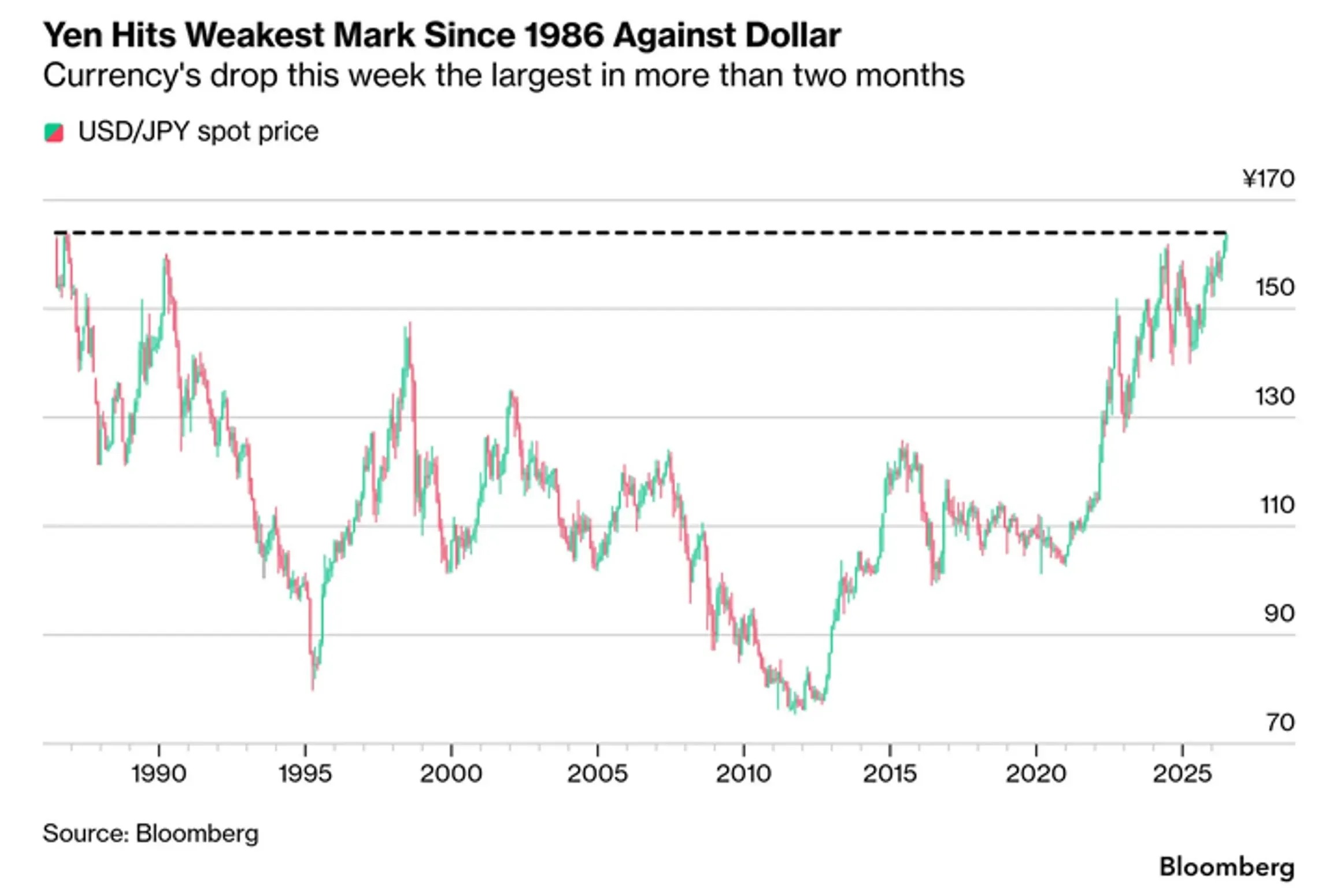
The yen fell below 163 against the dollar, hitting a multi-decade low, intensifying market attention on the Bank of Japan's next move. Analysts believe that the continued weakness of the yen is beneficial for global low-cost financing in the short term, but if the exchange rate rebounds rapidly or Japan accelerates interest rate hikes, risk assets such as Bitcoin may face a new round of deleveraging pressure.
The yen's decline continues
According to an analysis by Global Markets Investor cited by Coinpaper, the US dollar has risen to near its highest level against the Japanese yen since 1986. Factors driving the yen's weakness include the still large interest rate differential between the US and Japan, high energy import costs, and market concerns about Japan's fiscal situation.
Data from the U.S. Commodity Futures Trading Commission (CFTC) also shows that hedge funds' bearish bets on the yen have increased to 114,030 contracts, with a notional value of approximately $8.7 billion, approaching the highest level since 2008. This indicates that the market is still betting on continued yen weakness.
The Bank of Japan becomes the short-term focus.
The Bank of Japan had previously raised its benchmark interest rate to 1%, a 31-year high, but the market widely expects it to hold the rate steady at its July 31 meeting. Nevertheless, central bank officials have acknowledged that a weaker yen will push up inflation by increasing import costs, and have indicated that the pace of rate hikes is not necessarily fixed at once every six months.
This means that while policy may not shift immediately in the short term, the market will still be closely watching changes in the central bank's rhetoric. If the government releases a more hawkish tightening signal, the yen's exchange rate and global risk appetite could both be affected.
Why is Bitcoin affected?
The reason why the weakness of the yen has spread to the crypto market is that it has long served as a funding currency for global carry trades. Investors typically borrow yen at lower interest rates and then invest the funds in assets with higher returns or greater volatility, including stocks, bonds, and crypto assets such as Bitcoin.
With the yen remaining weak and borrowing costs low, such transactions often help support demand for risky assets and make leveraged funds more willing to stay in the market.
However, the risk lies in adverse price movements. If the Bank of Japan accelerates interest rate hikes or the yen suddenly appreciates significantly, carry trades may be forced to unwind. Investors would need to sell risky assets, repay yen financing, and simultaneously reduce their leveraged positions.
A similar situation occurred in August 2024. At that time, the yen rebounded rapidly, triggering the unwinding of carry trades, and both stocks and crypto assets experienced a relatively sharp decline that year.
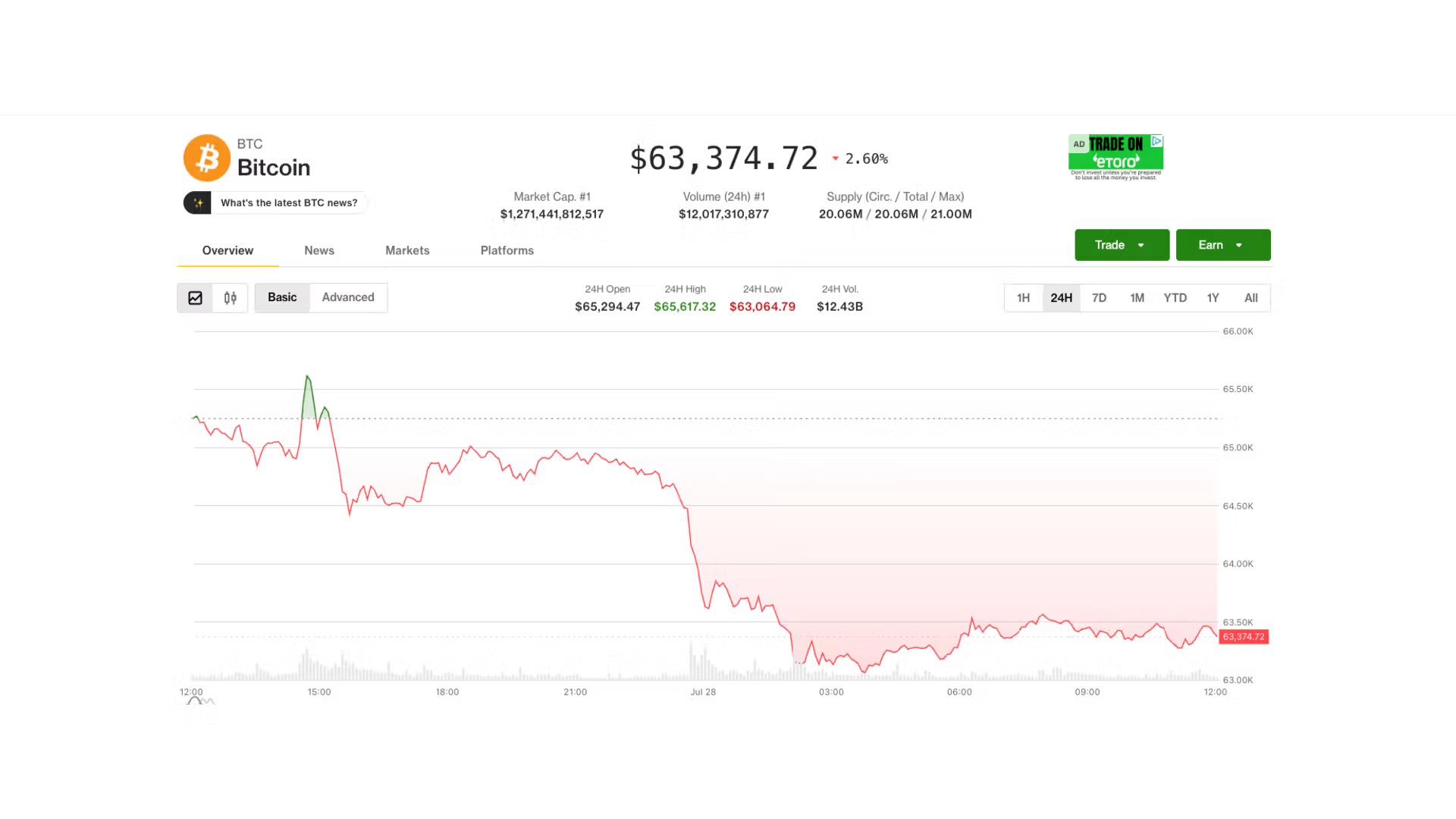
There are no clear signals of a new round of large-scale liquidation in the market yet, but the Bank of Japan's decision on July 31 has become an important point of observation for Bitcoin and broader risk assets.