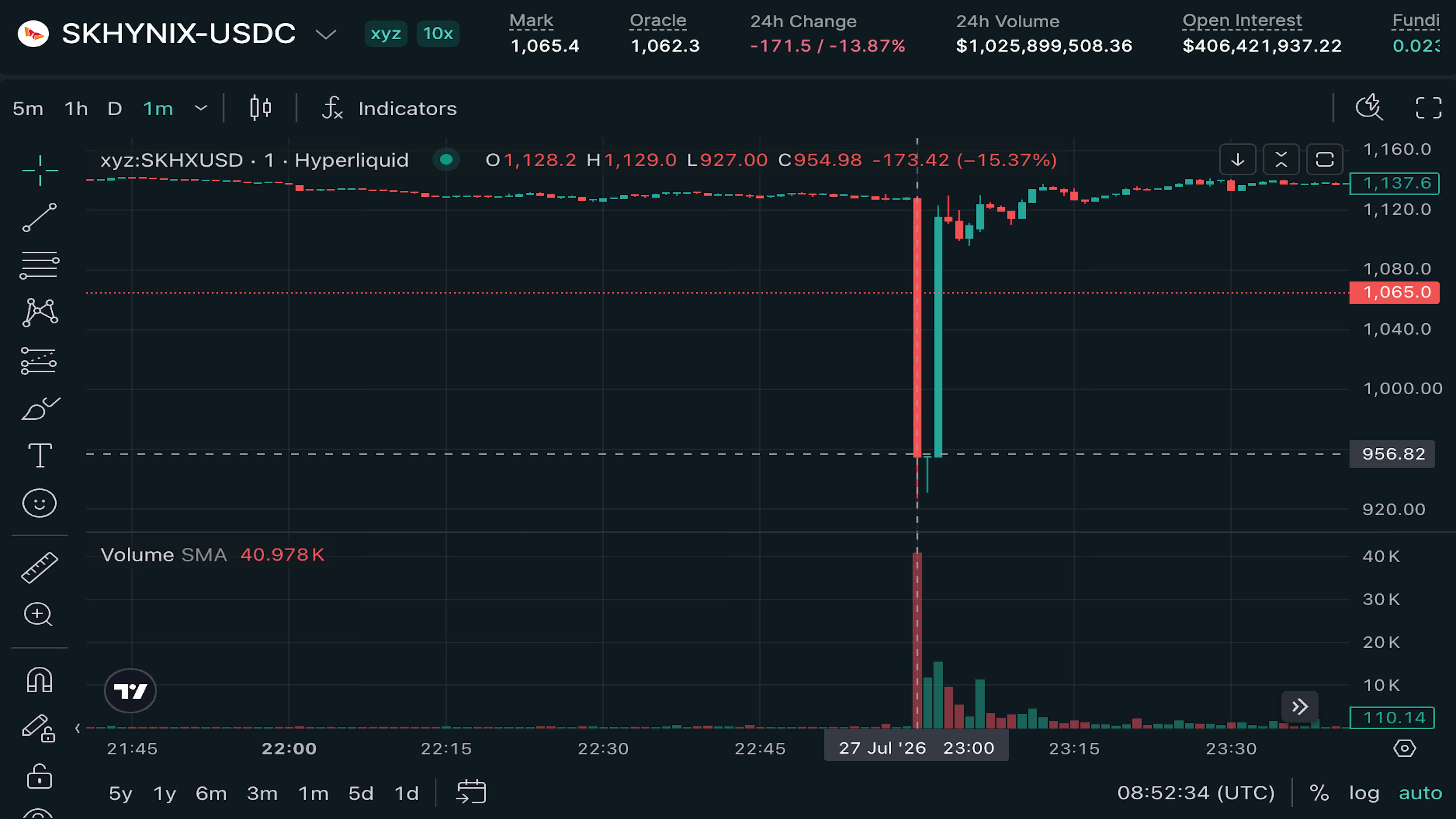


Hyperliquid is expanding its perpetual contract trading capabilities from a single decentralized exchange into an underlying liquidity infrastructure that can be accessed by external applications. As more wallets, trading platforms, and developers connect, its order book depth and the range of tradable assets continue to grow.
HyperEVM directly connects to the order book.
Launched in early 2023, the platform was created by Jeff Yan and a developer using the pseudonym iliensinc. The article states that Hyperliquid's Ethereum-compatible execution environment, HyperEVM, is directly connected to its self-built chain, HyperCore, allowing external applications to directly invoke its matching and execution capabilities without needing to build their own liquidity.
This means that wallets or other trading platforms can use Hyperliquid as a backend to provide users with services such as perpetual contracts, without having to maintain their own independent order books. For on-chain trading markets, this model helps reduce liquidity fragmentation.
- Hundreds of developers have already integrated builder codes.
- Access providers include MetaMask, Phantom, and VALR.
- The developers have earned a total of approximately $90 million.
MetaMask now offers perpetual transactions within the wallet.
Matthieu Saint Olive, Product Lead at MetaMask, stated that MetaMask has provided users with access to self-custodied perpetual contract trading within the wallet since October 2025. Users can trade directly using tokens already held in their wallet without needing to connect to a separate dApp.
He stated that MetaMask integrates front-end capabilities such as account systems, social login, and copy trading with Hyperliquid's order matching, oracles, and margin engine, with the latter handling the underlying execution. MetaMask currently charges a fixed 0.1% builder fee and claims it will not charge through hidden spreads.
MetaMask also stated that demand for perpetual contracts on its platform is expanding from crypto assets to commodities and stocks. According to them, real-world asset-related markets, which accounted for only a small proportion in early 2026, have now risen to approximately a quarter of perpetual contract trading volume.
VALR abandons its self-built liquidity strategy
The article also mentions that the South African exchange VALR has also chosen to integrate with Hyperliquid. VALR CEO and co-founder Farzam Ehsani stated that the company had previously built its own infrastructure for spot, leveraged spot, and perpetual contracts, including risk control and clearing engines, but the trading volume and liquidity of its own order book remained limited.
He stated that VALR does not engage in wash trading, therefore its trading volume primarily depends on its user base. After witnessing Hyperliquid's aggregation of a large number of global trading participants, the team decided to integrate with its perpetual contract order book instead of continuing to maintain liquidity independently.
The article argues that if more platforms enter the perpetual contract market in the future, cross-platform arbitrage and funding rate discovery mechanisms may also increase. For Hyperliquid, if more front-ends continue to use it as their trading backend, its role as infrastructure in the on-chain derivatives market will be further strengthened.