

Market concerns about the returns on AI investments are weighing on US tech stocks. The Nasdaq 100 fell 1.56% intraday, down 10% from its previous record high, nearing a technical correction. The Philadelphia Semiconductor Index also fell more than 5% on the same day, dropping to a two-month low, with chip stocks generally under pressure.
Semiconductor sector declines widen
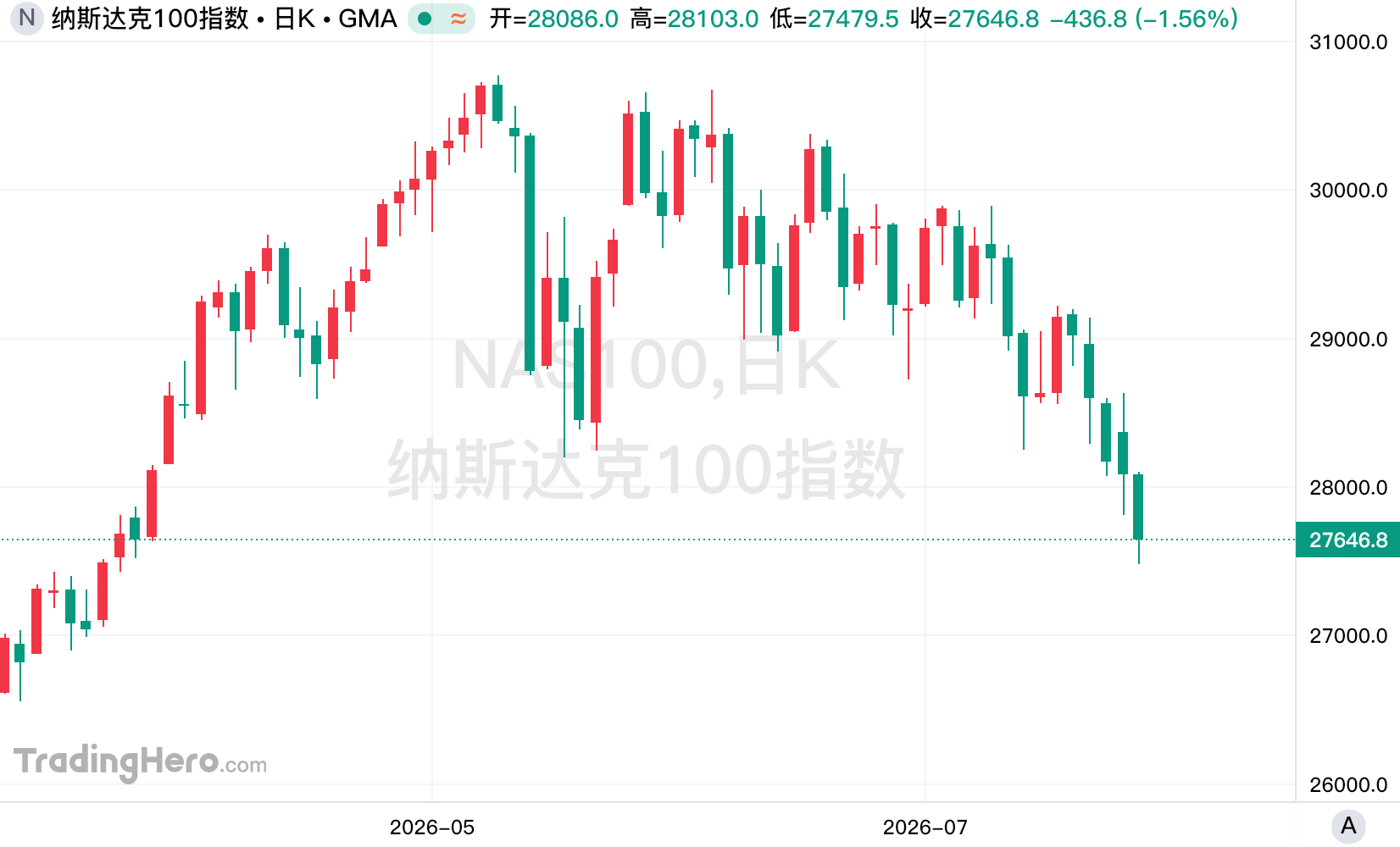
In terms of individual stocks, Micron Technology fell nearly 9%, SanDisk and Western Digital fell over 12%, AMD fell over 8%, Intel fell over 6%, Broadcom fell 2.8%, and Nvidia also saw a decline. Unlike the slow and prolonged weakening after the October 2025 high, this round of decline in the Nasdaq 100 took only 38 trading days, a significantly faster correction.
The market is starting to re-evaluate the return on AI spending.
A direct factor contributing to the weakening sentiment was the continued expansion of AI capital expenditures by large tech companies. The report stated that after Alphabet released its earnings report last week, although its cloud business performed reasonably well, its free cash flow turned negative for the first time due to excessive investment in AI infrastructure. Management subsequently signaled continued increased spending, which triggered a negative market reaction, resulting in the stock price experiencing its largest single-day drop in over a year.
This week, Microsoft, Meta, and Amazon will also release their earnings reports. Investors are shifting their focus from the AI narrative itself to when these investments will translate into profits and cash flow. If returns are slow to materialize, tech stock valuations may continue to be under pressure.
High-leverage ETFs are being liquidated more quickly.
Amidst rising volatility, leveraged and inverse ETFs, which initially expanded by capitalizing on the AI trading boom, are facing even greater pressure. Data shows that as of July 23, 73 such funds in the US have closed this year, far exceeding the 22 closed in all of 2025, accounting for over 40% of all ETF liquidations in the US.
Besides the pressure from declining underlying assets, these products also suffer from long-term holding losses. Since leveraged ETFs primarily track daily returns, if the market continues to fluctuate significantly, their net asset value will be continuously eroded by repeated rises and falls, making it easier for high-risk funds to exit.