

South Korean regulators have begun reviewing the pace of launching single-stock leveraged ETFs. Following a sharp correction in the South Korean stock market over the past month, retail investors chasing chip stocks have suffered rapidly increasing losses. The Finance Minister has publicly apologized in the National Assembly, and financial regulators are also considering tightening entry requirements for related products.
Finance Minister apologizes in Parliament
South Korean Finance Minister Koo Yun-cheol said during a parliamentary inquiry on Wednesday that he accepted lawmakers' demands and publicly apologized for the hasty listing of a single-stock leveraged ETF without sufficient due diligence.
On the same day, Lee Eog-weon, chairman of the Financial Services Commission of South Korea, said that regulators are considering raising the investment threshold for such products to the level of professional investors and studying the possibility of lowering the existing leverage ratio.
Chip-related products saw the largest declines.
The losses were primarily concentrated in leveraged ETFs linked to single stocks, Samsung Electronics and SK Hynix. These products were popular with retail investors when semiconductor and AI trading was booming, but their declines amplified rapidly after the market correction.
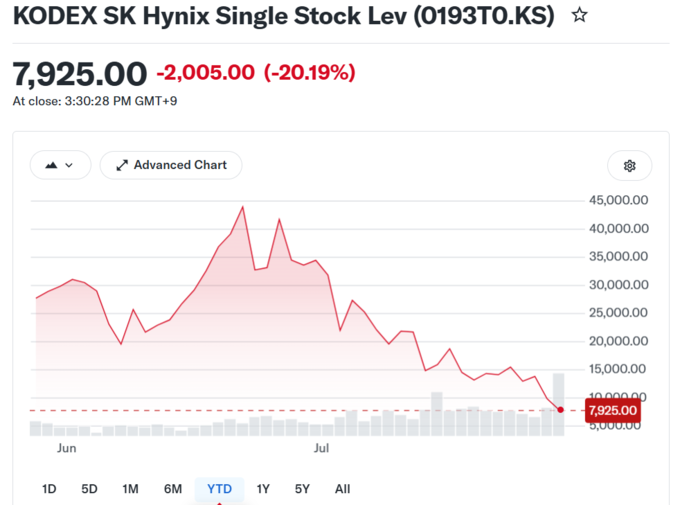
According to reports, the double-leveraged ETF tracking SK Hynix has fallen more than 80% since its high on June 23; a similar product tracking Samsung Electronics has fallen nearly 75% since its high on June 3.
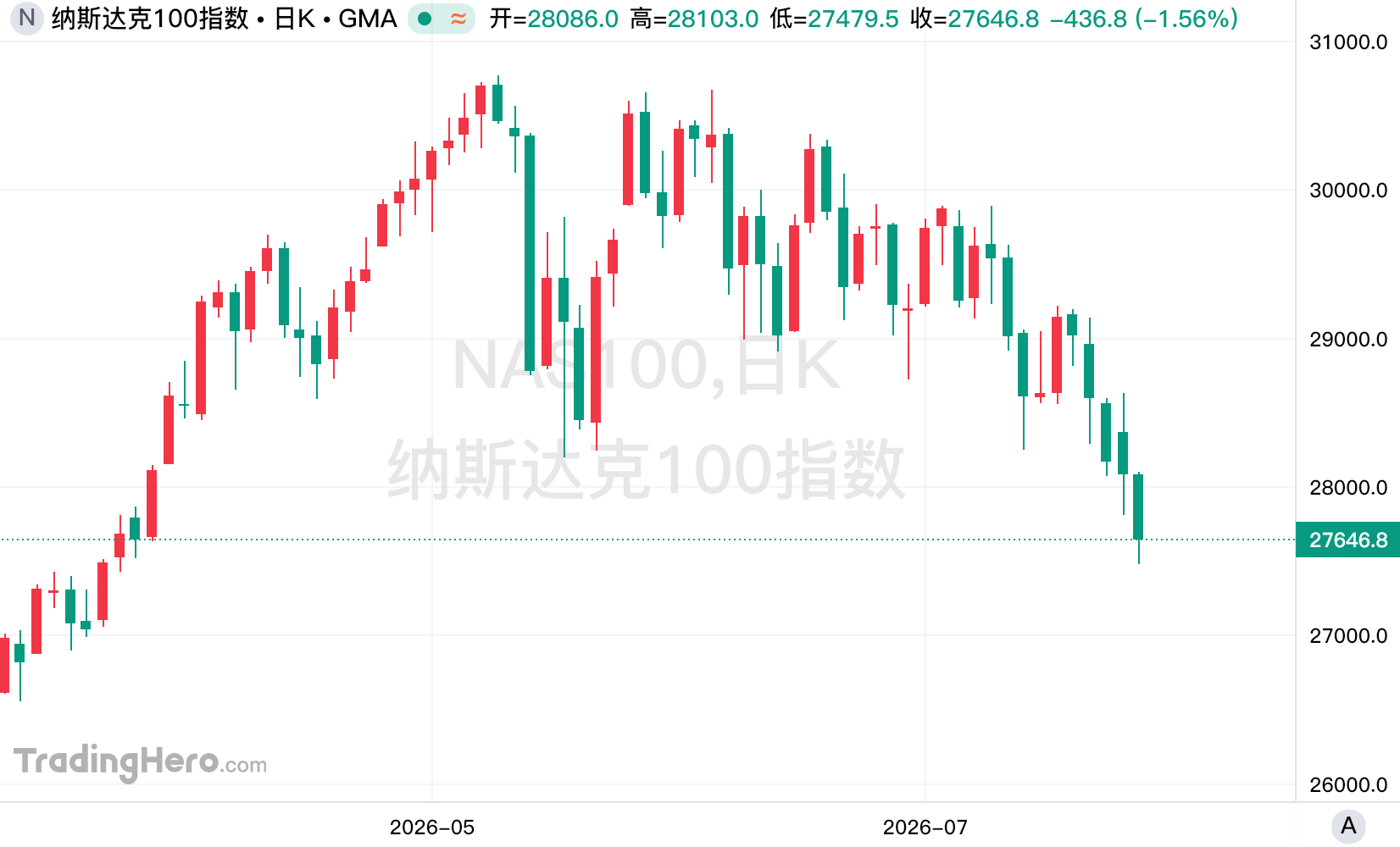
Double leverage amplifies gains during upward trends, but it also amplifies losses during stock price pullbacks. The South Korean KOSPI index has fallen nearly 35% in the past month, putting even greater pressure on the net asset value of such products.
Retail investors' buying power far exceeded that of foreign investors.
According to data from KB Financial Group, since the launch of single-stock leveraged ETFs on May 27, South Korean retail investors have made net purchases of 14 trillion won, equivalent to approximately US$9.7 billion; foreign investors have made net purchases of approximately 2 trillion won during the same period.
This structure indicates that the relevant risks are primarily concentrated in the hands of local retail investors. The restrictions currently being discussed by regulators may not only narrow the investor pool but also alter the leverage design of the products themselves.
If entry requirements are raised or leverage ratios are lowered, the liquidity and investor base of related ETFs may shrink. For investors who already hold these products, subsequent adjustments will not only affect paper losses but also whether the product's trading conditions will change.