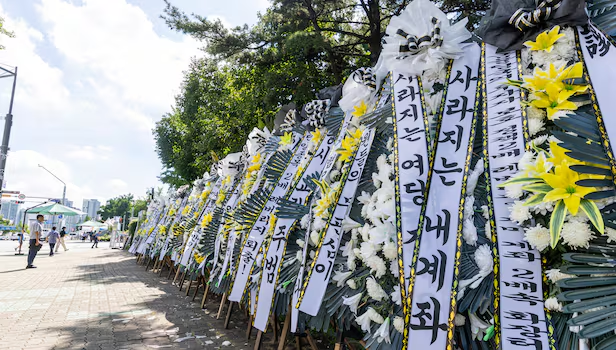


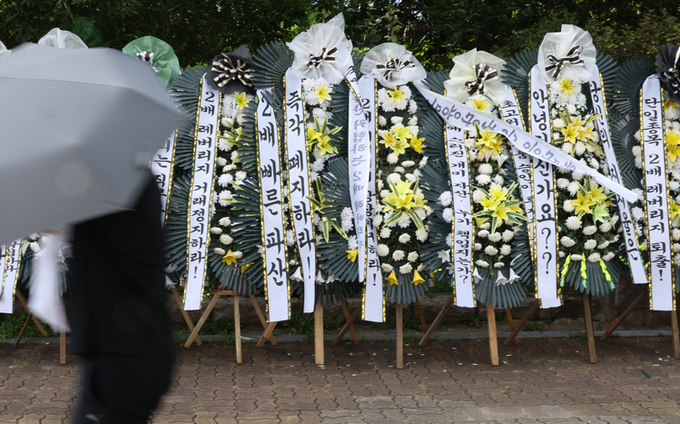
Following two consecutive days of sharp fluctuations in the South Korean stock market, controversy surrounding leveraged single-stock ETFs has rapidly intensified. On July 29, dozens of wreaths appeared in front of the National Assembly building in Yeouido, Seoul, with protesters demanding the abolition of highly leveraged products linked to Samsung Electronics and SK Hynix, arguing that such instruments amplify losses for retail investors during market downturns.
Controversy erupts after two days of sharp decline
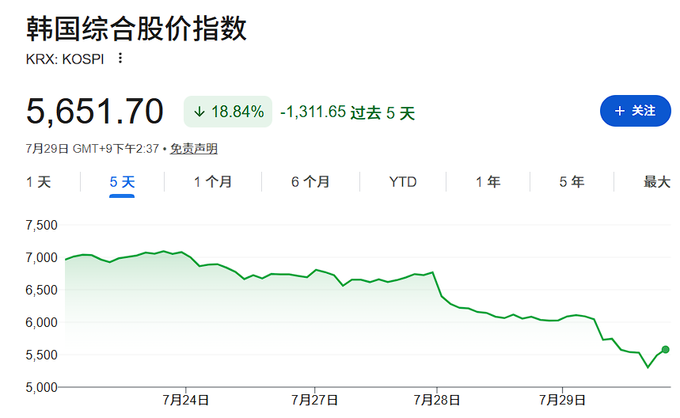
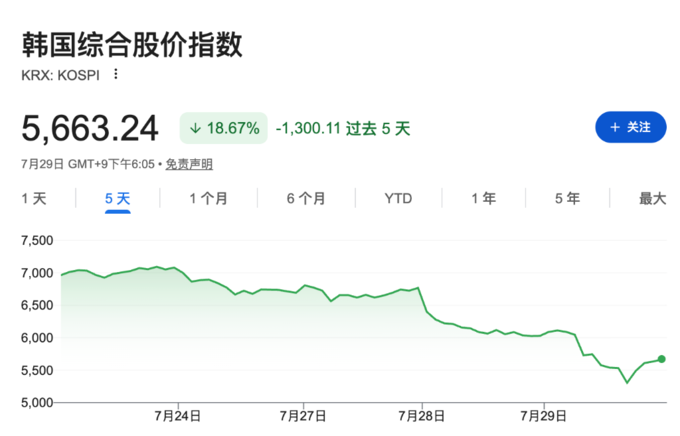
South Korea's KOSPI stock index fell more than 8% on July 28, triggering a circuit breaker. On July 29, it fell another 12.63% intraday, closing down 5.98%. This marked the first time the South Korean stock market had triggered circuit breakers for two consecutive trading days.
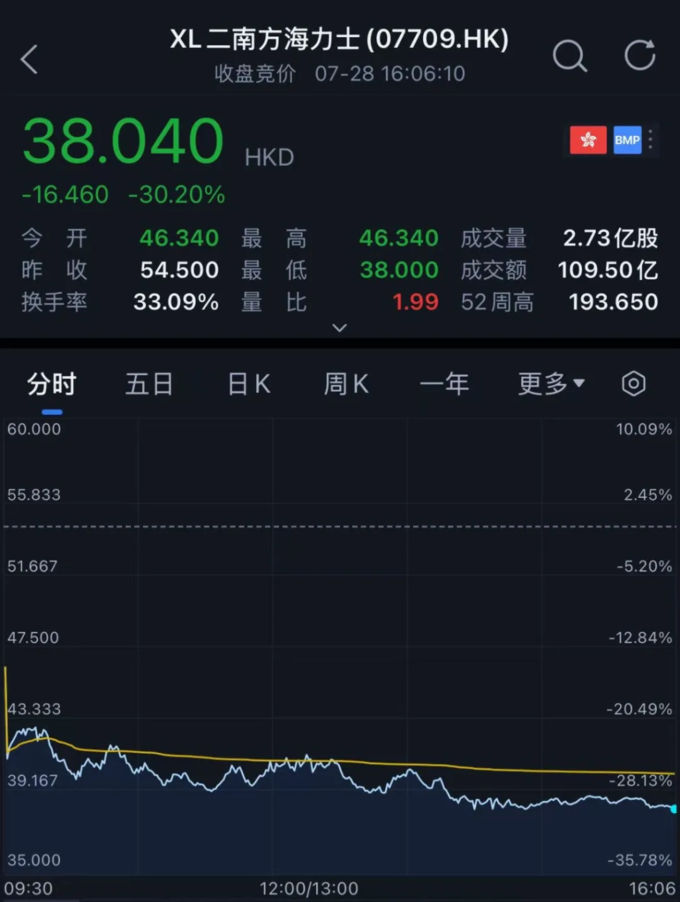
In this downturn, single-stock leveraged ETFs tracking Samsung Electronics and SK Hynix saw further amplified losses. Because these products are typically designed to yield double the daily return, their net asset value (NAV) falls even faster when the underlying stocks experience sharp intraday declines, with some products experiencing intraday drops of around 25%.
The risks stem from leverage and daily resets.
A single-stock leveraged ETF uses a single stock as its underlying asset and amplifies daily price fluctuations through derivatives. When the underlying stock rises, gains are magnified; when the underlying stock falls, losses are also amplified.
The risks of these products extend beyond leverage. Because positions are adjusted daily, if the underlying asset fluctuates continuously, even if the stock price later returns to its original level, the product's net asset value may fall below its initial value due to volatility attenuation. Compared to traditional diversified ETFs, these products have a more concentrated risk.
The threshold will be raised starting July 31.
South Korean financial authorities have decided to require individual investors who purchase or make additional purchases of single-stock leveraged products to deposit 30 million won in cash, equivalent to approximately 160,000 yuan, starting July 31.
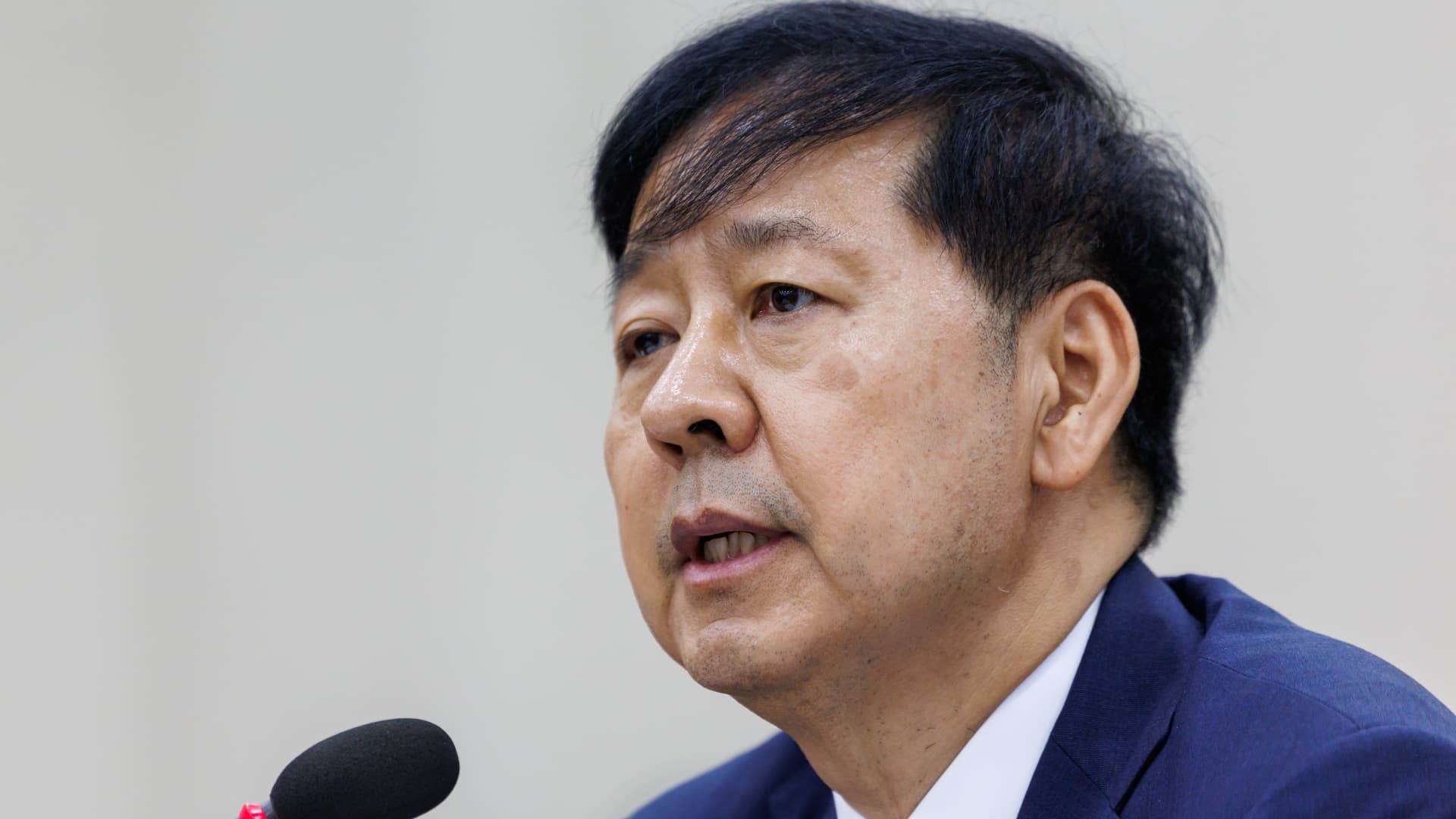
South Korean Financial Services Commission Chairman Lee Eok-won stated that this measure is expected to reduce the number of related trading accounts from approximately 100,000 to 10,000, decreasing trading volume by more than 60%. Regulators are also considering further measures, such as lowering leverage ratios, restricting the participation of professional investors, and setting limits on individual purchases.
The political circles and the Presidential Office have expressed differing opinions.
The South Korean individual investor group that launched the protest believes that regulators have allowed high-risk products to be sold to ordinary investors without adequately protecting their interests, and therefore demanded the abolition of single-stock leveraged ETFs.
The South Korean presidential office stated that while leveraged ETFs may amplify volatility, the current market downturn cannot be entirely attributed to this product. Presidential Policy Chief Kim Yong-beom stated that market concerns about AI investment returns, competitive pressure from overseas semiconductor companies, and the high weighting of two leading companies in the South Korean stock market were all significant contributing factors to the decline.