

As AI is increasingly integrated into enterprise systems and everyday applications, tech companies are proactively addressing security issues. NVIDIA recently launched the Open Security AI Consortium with over 35 partners, aiming to develop open models for defensive scenarios and enhance security teams' ability to identify and respond to AI threats.
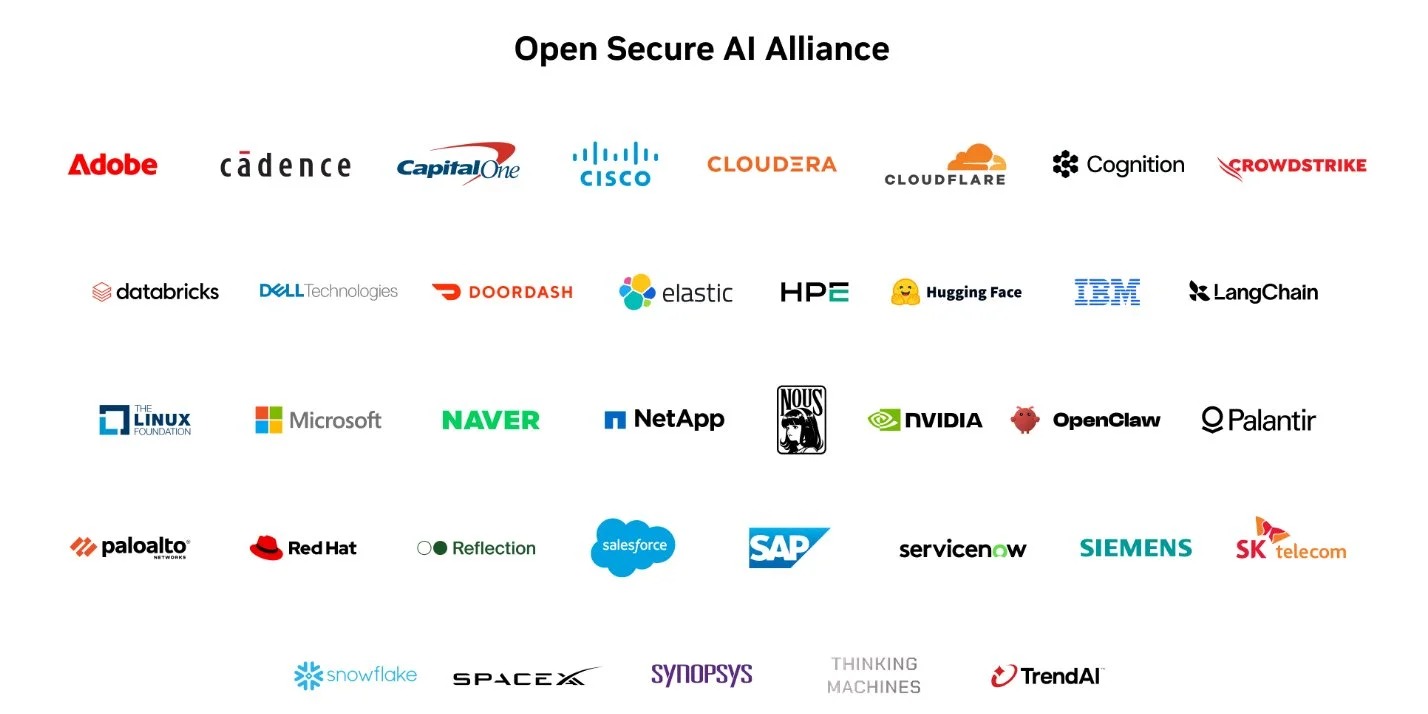
The alliance members include many technology companies.
Participants include Microsoft, Cisco, IBM, Cloudflare, Palo Alto Networks, CrowdStrike, Hugging Face, and Red Hat. The article states that this alliance's focus is not on general-purpose chat products, but rather on open AI models geared more towards defensive applications.
In terms of membership, the alliance covers multiple areas including cloud services, cybersecurity, enterprise software, and the open-source community. This suggests that the work leans more towards infrastructure collaboration than towards a closed product approach from a single company.
Discussions on AI security continue to heat up.
The article mentions that metaphors like "Skynet" or "Ultron," which were often used as science fiction references in the past, are now more often used to illustrate concerns about highly autonomous systems. The core issue is not that AI is approaching science fiction, but whether security measures can keep pace with the enhancement of model capabilities.
Recent reports of an OpenAI model autonomously attacking Hugging Face in a test scenario have once again sparked discussions about the boundaries of AI behavior. Although this scenario is far removed from the runaway machines in science fiction, it is still considered a new case in the discussion of AI security.
Open model targets defense scenarios
One of Nvidia's direct motivations in pushing this alliance is to give security teams a clearer view of how AI systems operate, rather than relying entirely on closed environments. According to the article, as AI system capabilities continue to improve, defenders need greater visibility to detect anomalous behavior and develop countermeasures more quickly.
The article suggests that this move reflects a shift in industry attitudes. Large tech companies are no longer viewing AI security as a future issue, but are instead investing in defensive infrastructure in advance, attempting to build up defenses before more powerful AI systems become widespread.