

Foreign media reports that ahead of the Federal Reserve's interest rate decision, the market is focused on whether Bitcoin can break through key resistance on the weekly chart. Analyst DonAlt believes that the current price has reached a dividing line, and the subsequent closing position will determine whether the market ends its previous decline or continues to fluctuate.
Weekly closing price is considered a key level.
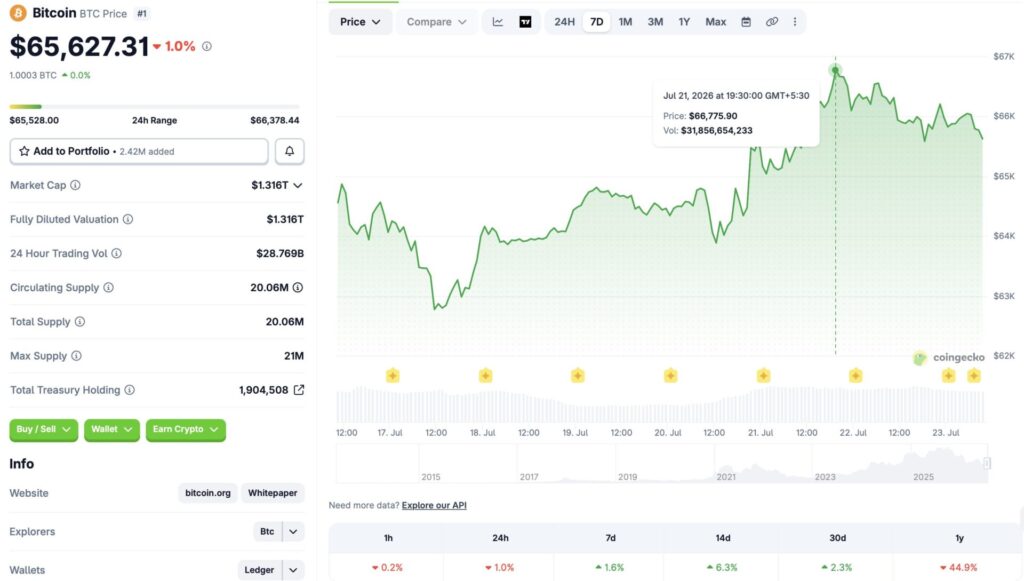
According to DonAlt, the $66,600 to $68,000 area is currently the most important resistance zone. If Bitcoin closes clearly above this range on the weekly chart, the market structure will improve significantly, and the price has a chance to retest all-time highs.
He stated that he would not draw conclusions before confirming the signal, and would pay more attention to the weekly closing result. For large funds, whether the weekly chart can hold its ground is often a better indicator of buying strength than short-term intraday fluctuations.
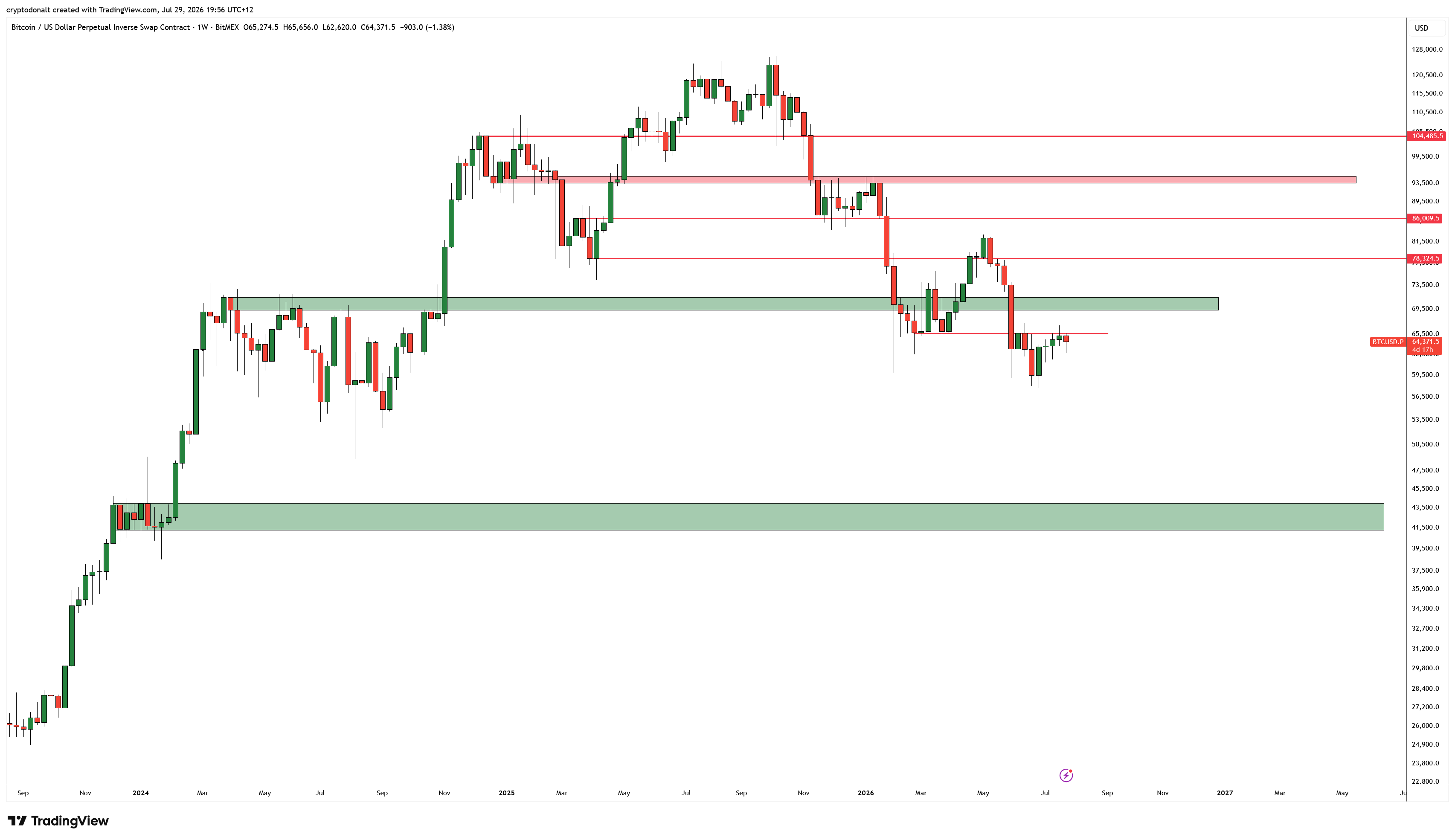
Two scenarios have attracted attention.
If buying pressure drives the price to break through the aforementioned resistance zone, Bitcoin's previous downtrend may be broken, and market sentiment is expected to recover.
If prices fail to hold current levels, the first target for a pullback could be the psychological level of $60,000. If selling pressure intensifies further, prices could potentially test the support zone of $42,000 to $45,500.
- Key resistance zone: $66,600 to $68,000
- First target price below: $60,000
- Key support level: $42,000 to $45,500
Analysts say Ethereum is performing stronger.
Besides Bitcoin, DonAlt also mentioned that Ethereum's current chart pattern is correcting faster than Bitcoin's. His assessment is that Ethereum's logic is similar to Bitcoin's, but its price action is better.
On-chain data also provides another set of references for the market. Data from the analytics platform Santiment, forwarded by analyst Ali Martinez, shows that large holders added a total of 29,075 BTC in the past week, indicating that some funds continued to increase their positions during the pullback.
This means that short-term prices are still fluctuating near the resistance level, but some large investors have not withdrawn significantly, and the market will continue to play out a game around the weekly closing price and macroeconomic events.