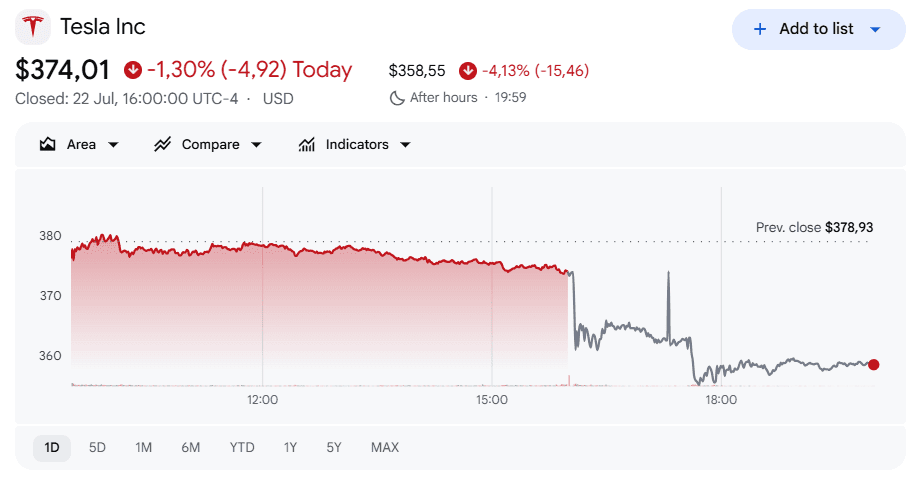


Robinhood's latest quarterly results show a significant slowdown in its crypto trading business. The company disclosed that second-quarter crypto trading revenue was $100 million, a 38% year-over-year decrease, below the $160 million in the same period last year. Following this data, Robinhood's stock price fell by approximately 4%.
However, the earnings report wasn't entirely weak. Active trading in options, stocks, and prediction markets drove growth in trading-related revenue, partially offsetting the decline in crypto business. This also reflects Robinhood's efforts to expand its revenue streams to include more retail trading products.
Crypto revenue drops to $100 million
The company disclosed that cryptocurrency trading revenue saw a significant decline this quarter, which was the main factor impacting its performance. In contrast, other trading businesses performed stronger, helping to maintain overall revenue resilience.
Robinhood CEO Vlad Tenev stated that the company's current product development focus is on enabling more users to access and hold various assets. In addition to its traditional brokerage business, Robinhood has also been accelerating its on-chain and AI product development in recent quarters.
Robinhood Chain supports tokenized US stocks
In the second quarter, Robinhood launched Robinhood Chain, a blockchain network for qualified European customers that enables tokenized trading of U.S. stocks and represents a significant step for the company in bringing its traditional financial assets onto the blockchain.
The company stated that the network has experienced rapid growth since its launch, with daily trading volume on the decentralized exchange reaching hundreds of millions of dollars. Currently, the most actively traded real-world assets include tokenized shares of companies like GameStop, Nvidia, and SpaceX.
Simultaneous release of AI trading tools
Robinhood also launched Agentic Trading at the same time. This is a suite of AI tools that allows users to connect third-party AI assistants to their brokerage accounts to monitor the market and execute trades according to user-preset instructions.
The company stated that these tools retain user control, including separate trading accounts, spending limits, and the option for manual confirmation. Robinhood is attempting to use this to bring automated trading capabilities to the retail sector while mitigating the risks of complete decentralization.

Additional information:Since both Robinhood and Coinbase heavily rely on retail transaction activity and crypto market sentiment, the market is also viewing Robinhood's recent transaction revenue change as a signal that Coinbase will release its financial report soon.