

NVIDIA's latest financial report and performance guidance have reignited market enthusiasm for AI trading. On Thursday, before the U.S. stock market opened, NASDAQ 100 futures and S&P 500 futures rose, but Dow Jones index futures performed weaker, indicating that this round of gains is still mainly driven by large tech stocks.
Tech stocks led the gains in pre-market trading
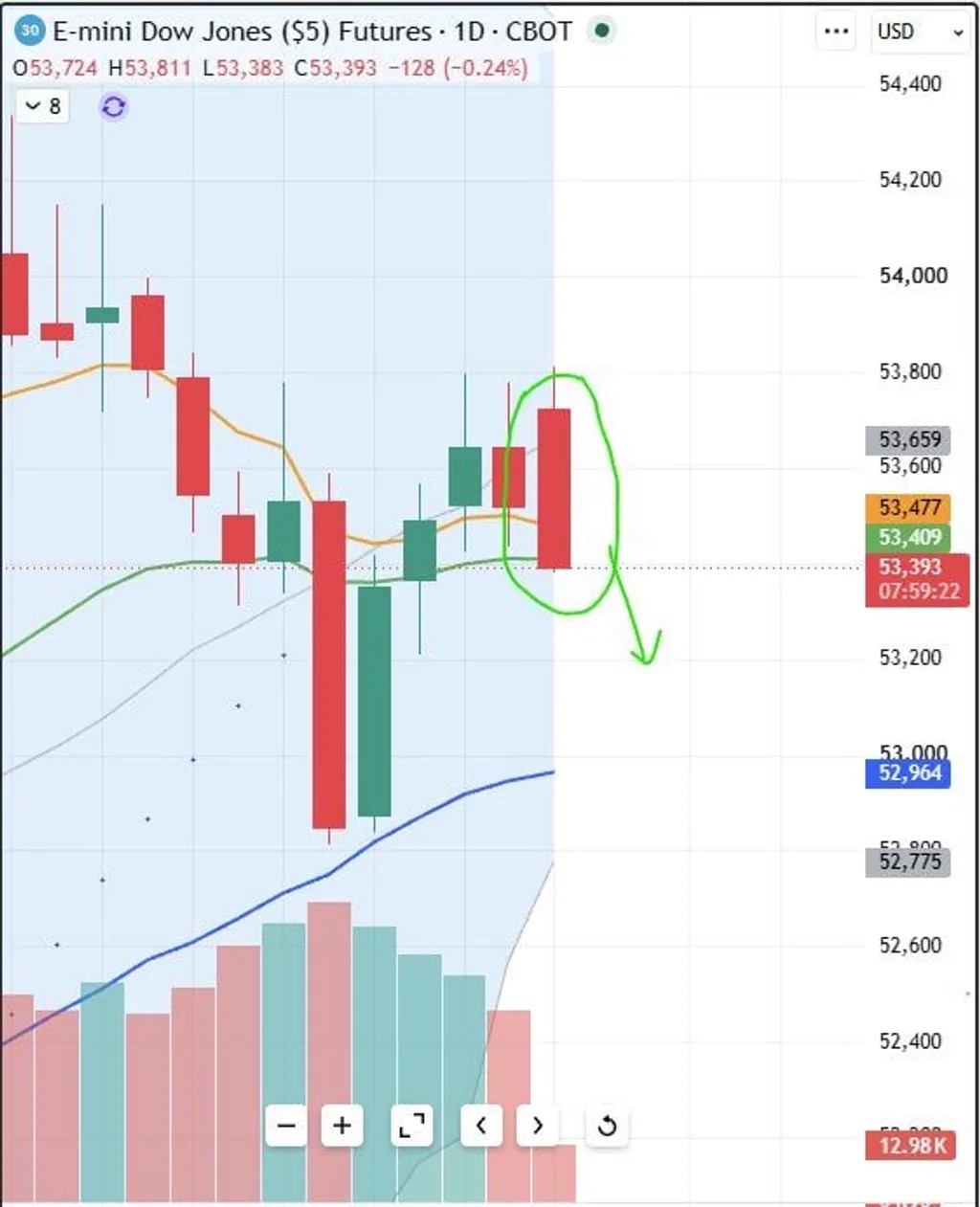
According to Reuters data, as of 8:35 a.m. Eastern Time on Thursday, the S&P 500 index futures rose by 0.37%, Nasdaq 100 index futures rose by 0.95%, and Dow Jones futures fell by 0.12%. The divergence in the market indicates that funds are still flowing predominantly towards a few leading technology companies.
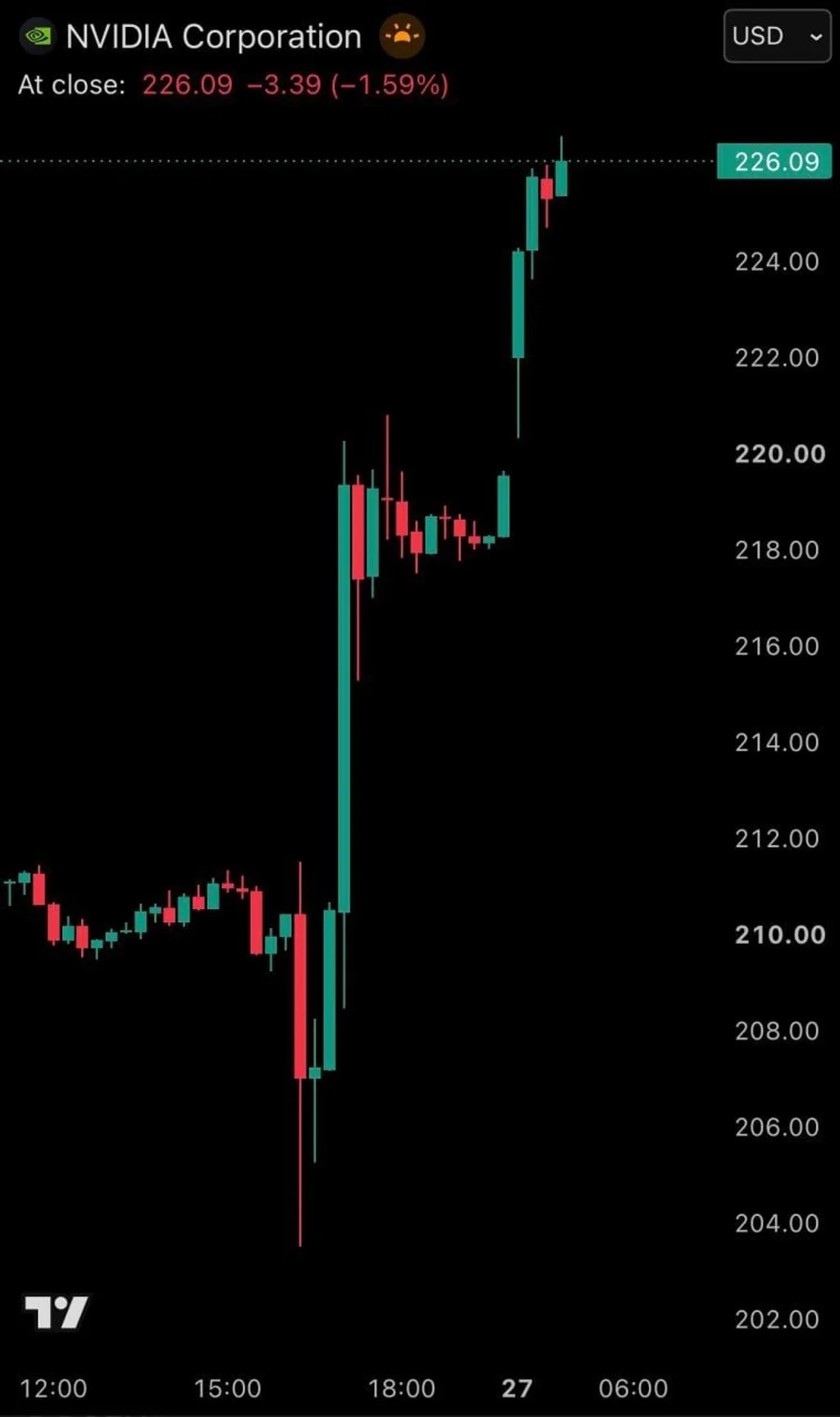
NVIDIA continues its upward trend following the financial report, with its stock price rapidly rising from around $210 to above $226. The Kobeissi Letter estimates that NVIDIA's stock price once rose by more than 8% during trading, corresponding to an increase in market value of over $400 billion. However, this figure is based on the high point during trading and not the closing market value.
NVIDIA's strength also drove the semiconductor sector upward. Micron Technology and Marvell Technology both rose by about 4% at the current time, while Sandisk and Western Digital also had increases of over 4%. In addition, Salesforce rose 10.5% after raising its full-year revenue and profit forecasts, and CrowdStrike rose 9.4% after increasing its revenue outlook.
Dow futures underperform
Compared to the strength of the Nasdaq, the Dow Jones futures are sending out different signals. Market analysts believe that the recent stabilization trend of the Dow Jones is still not solid, and if the intraday rebound cannot be sustained, a weaker structural trend may be further confirmed.
This means that, although tech stocks continue to support the overall market, risk appetite has not yet spread to a wider range of sectors. In other words, the current upward trend is more driven by a few heavyweight stocks rather than a general increase across the board.
Equal-weight indicators show that the market remains relatively concentrated.
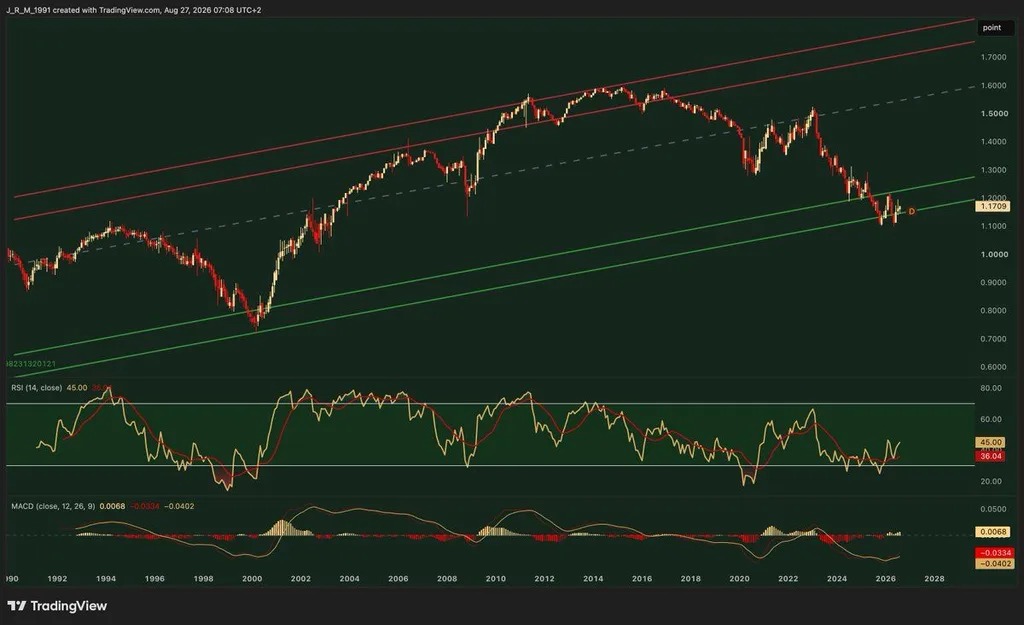
Another indicator reflecting market breadth also supports this point. The ratio of the equal-weight S&P 500 Index ETF ( RSP ) to the market-cap weighted S&P 500 ETF ( SPY ) , which is tracked by Value Seeker , remains at a lower level within its long-term range.
This ratio has been weakening continuously previously, indicating that equities with equal weights have underperformed large-cap stocks over the long term. Although there are signs of stabilization in recent technical indicators, if this ratio cannot continue to rise, the market will still maintain a pattern dominated by a "few giants."
Value Seeker believes that this ratio is already significantly lower than the long-term trend. If it returns to a higher range in the future, equities with equal weights may experience relative rebounding. However, this judgment is based on model extrapolation and is not yet a realized market outcome. In the short term, what is more worth paying attention to is whether funds are beginning to spread from ultra-large market capitalization technology stocks to a wider range of sectors.
Yield becomes the next variable alongside Jackson Hole
The upward movement driven by this round of financial reports was not without resistance. On Thursday morning, the yield on 10-year U.S. Treasury bonds was around 4.67%. Previously released data for July PCE showed inflation slightly higher than expected, with the overall PCE year-on-year at 3.7% and the core PCE year-on-year at 3.3%.
Meanwhile, as of the week ending August 22, the number of initial jobless claims in the United States dropped to 203,000, below the 208,000 expected by economists surveyed by Reuters, indicating that the labor market still has resilience.
Next, markets will turn their attention to the first speech of Federal Reserve Chairman Kevin Warsh at the Jackson Hole Conference on Friday. NVIDIA has provided new momentum for the Nasdaq and the S&P 500, but the weak performance of the Dow Jones Industrial Average and its equal-weight index indicates that whether this rebound can spread from technology leaders to a broader market remains a key point to watch in the coming days.