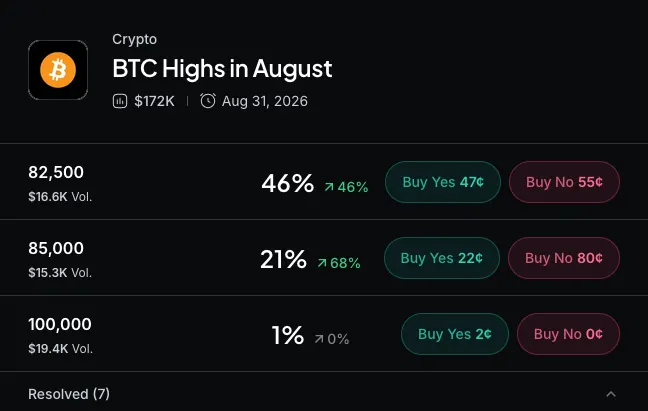


Foreign media analysis suggests that after Bitcoin rose from around $63,000 to over $80,000 in just a few days, it has entered a more sensitive range. The article argues that the overall structure of BTC has significantly improved since early August, but after the rapid increase, market momentum is now at a relatively high level, making it more likely for the market to enter a consolidation phase in the short term.
Bitcoin enters the range of $80,000 to $82,000
It was mentioned in the text that Bitcoin once broke through $80,000, before returning to around $79,400. The range of $62,000 to $65,000 that had been suppressing prices for a long time was finally broken through, and the main moving averages on the daily chart were also re-established above that level.
Among them, the 200-day moving average of approximately $72,100 is considered an important change in this round of rebound. The article states that Bitcoin had been operating below this level for several months prior, and now that it has once again surpassed it, the support structure below has significantly strengthened.
- Current main resistance range: $80,000 to $82,000
- Near-term observation range: $76,000 to $77,000
- Deeper pullback level: approximately $72,000
The article also points out that the RSI of BTC has risen into the overbought zone, around 77. This means that although the price is still high, continued one-way upward movement will require new trading volume to support it; otherwise, it is more likely to consolidate at the high levels first.
XRP rose above the 200-day moving average before pulling back for consolidation
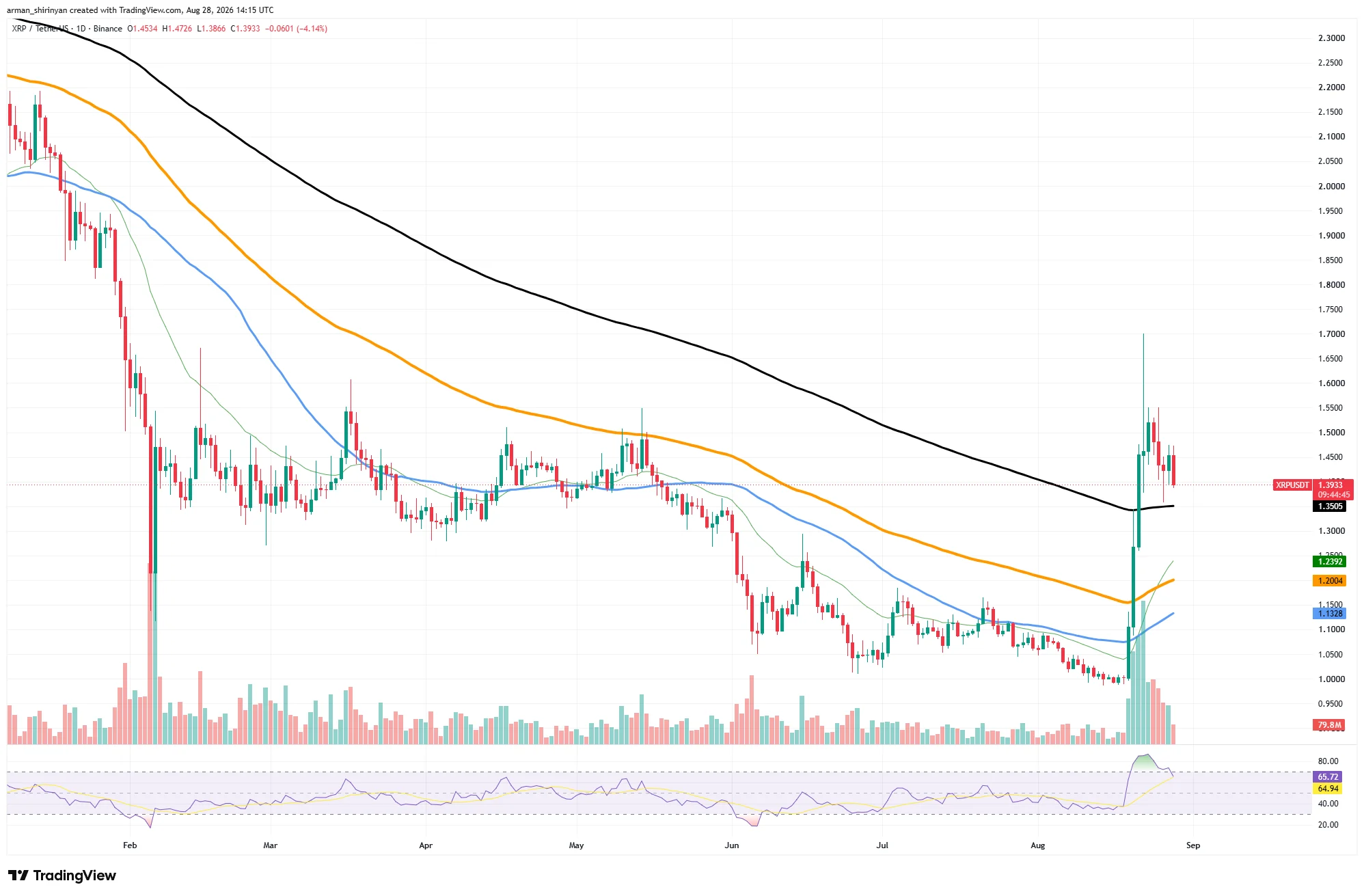
Among several tokens, XRP is considered one of those that has seen the most significant structural improvements in this round. The article states that XRP surged rapidly in August, reaching a high of $1.70, and has now returned to around $1.42, but it is still above several key moving averages.
Among them, the 200-day moving average of around $1.35 is considered the most important support at present. As long as the price remains above the range of $1.35 to $1.40, the previous breakout structure has not been breached. The short-term resistance above is concentrated at $1.50; if the price reclaims this level, the market will once again focus on $1.60 and the previous high of $1.70.
The article also mentions that XRP saw a significant increase in trading volume during the breakout phase over several months, but after entering a consolidation period, the trading volume has since declined. RSI has also dropped from a high level to around 69, indicating that the short-term overheating condition is beginning to ease.
SHIB and XLM are still testing key positions.
Compared to XRP, the repair progress of SHIB is relatively lagging behind. The article states that after SHIB rebounded from its August low, it once rose to $0.00000620 and is currently back around $0.00000530. The 200-day moving average at approximately $0.00000572 is still above the current price level, posing the main pressure at present.
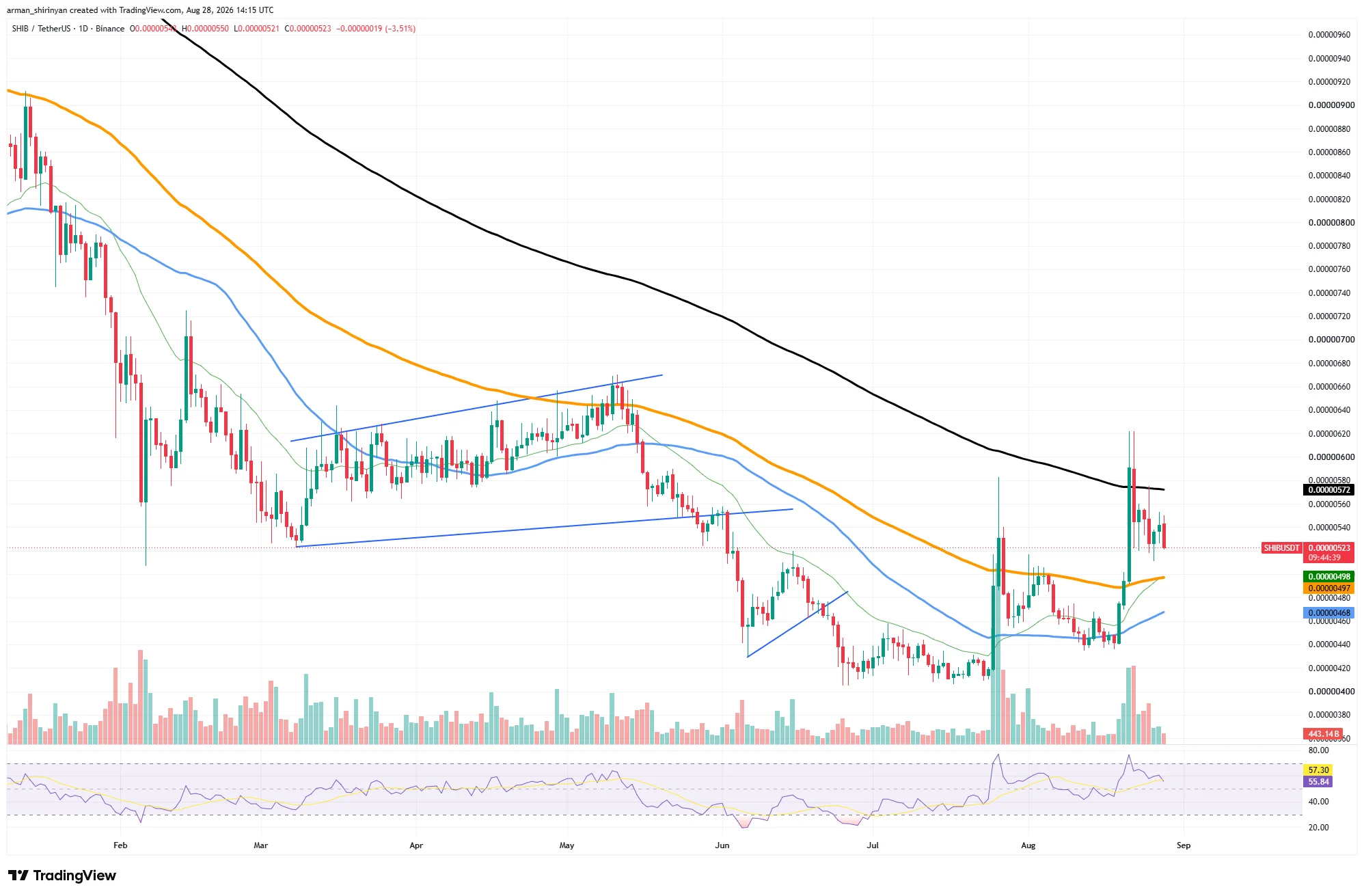
The article argues that although SHIB has once again crossed the 20-day, 50-day, and 100-day moving averages, a trend reversal has not been fully confirmed unless it can effectively reclaim the price range of $0.00000572 to $0.00000600. Below that, the range of $0.00000470 to $0.00000500 forms a relatively strong support level.
The situation of XLM is similar to that of SHIB. The article states that after XLM rebounded from the $0.155 range, it once rose above $0.22 and has now fallen back to around $0.184. The 200-day moving average at approximately $0.190 remains the recent resistance level, and the range between $0.190 and $0.200 is considered a key short-term position.
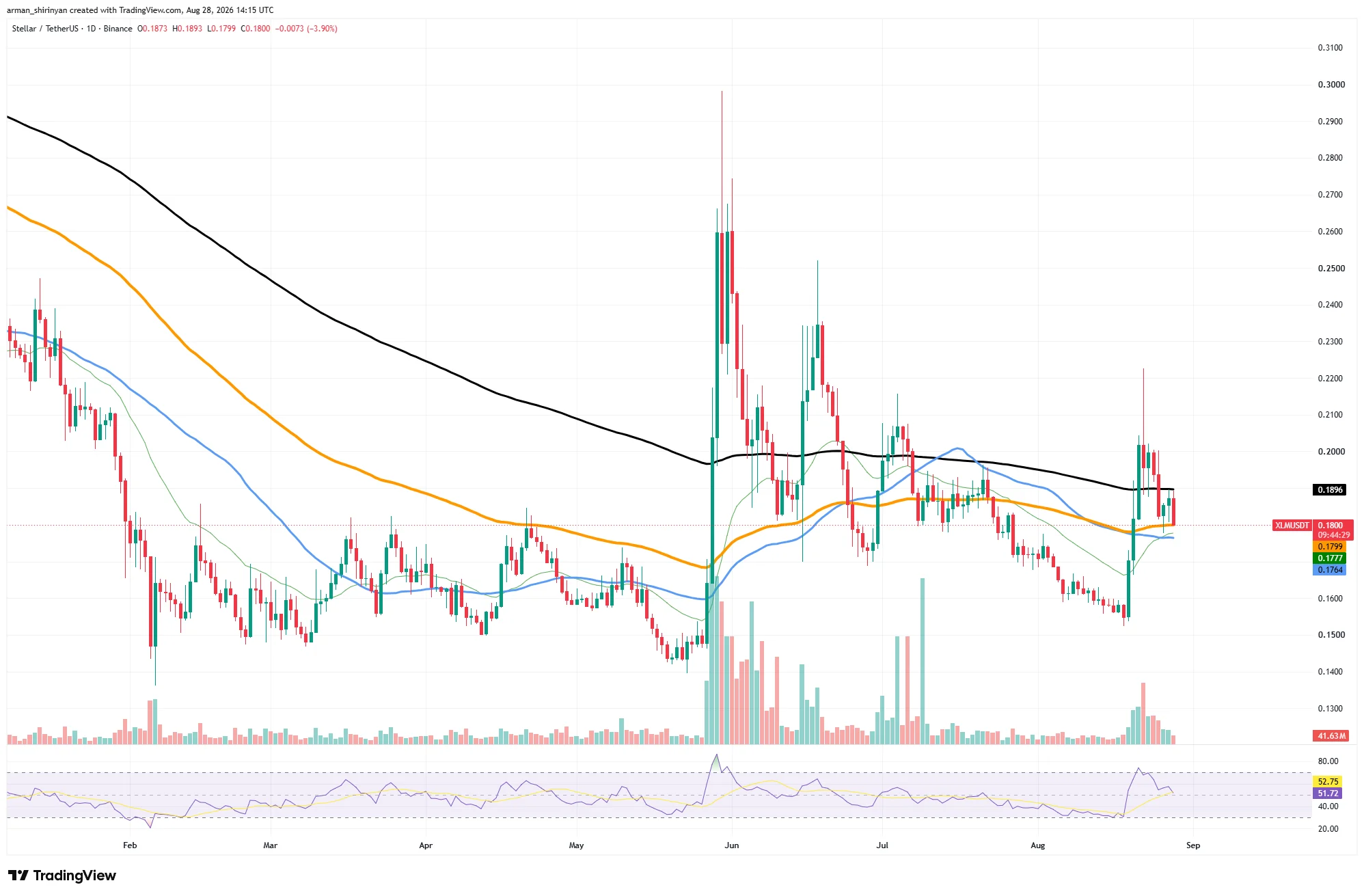
If XLM can regain $0.20, the range above $0.22 will once again come into focus; if it fails to break through, the $0.176 to $0.182 area will serve as the current main support level. The article suggests that after a rapid rebound, these tokens have entered a consolidation phase from a period of sharp increase. Whether they can continue to recover in the future depends on whether the support levels can be maintained and whether trading volume can increase again.