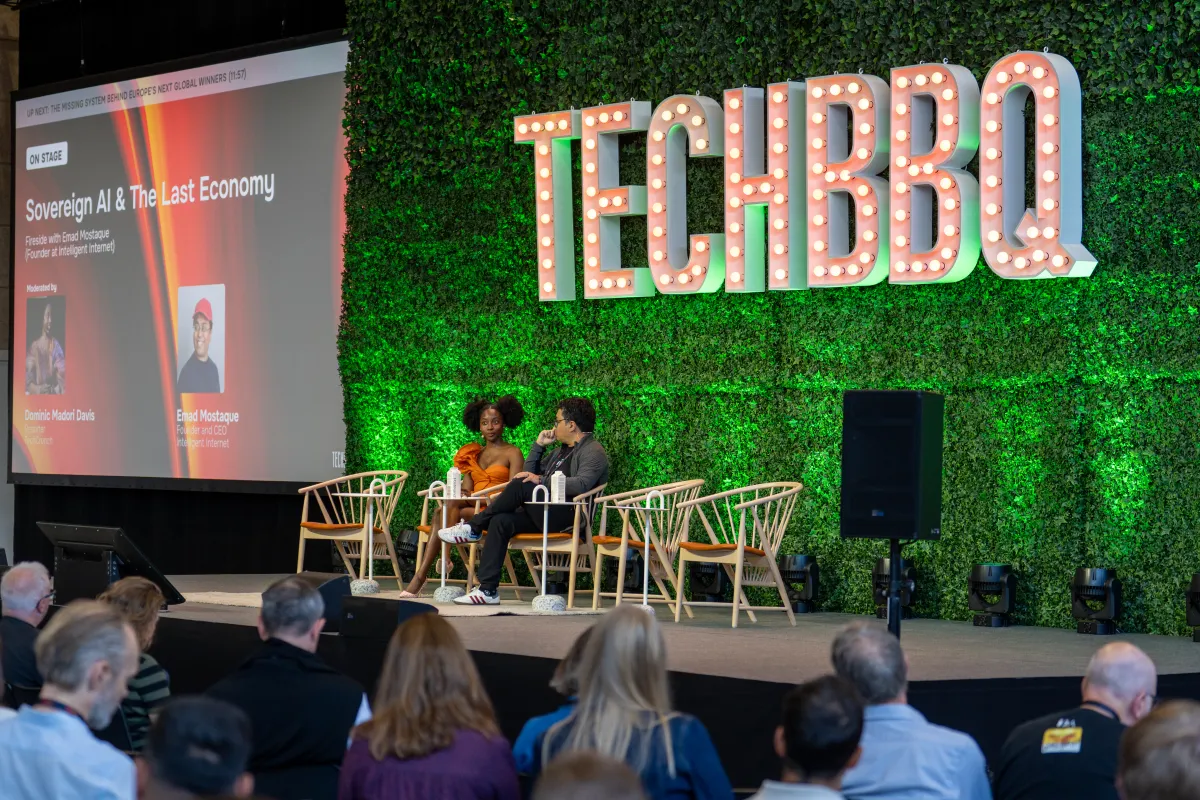


At the TechBBQ conference held in Copenhagen, foreign media reported that when European investors, entrepreneurs, and operators discussed AI, the focus was no longer just on products and applications, but also on...Who holds the control over models and infrastructure?This topic resonates with this year's conference theme of “Emerging from Agency”, and it also reflects the ongoing concerns of the European tech community regarding the sovereignty of AI.
Model interruption amplifies anxiety.
The report mentioned that the AI models Mythos and Fable of Anthropic were unable to provide services to users outside of Europe earlier this year. This incident prompted many participants to re-evaluate whether Europe truly has the capabilities in this round of AI trend, or if they are merely renting capabilities from the United States and China.
An executive from a startup company stated that this interruption in the model significantly disrupted the work rhythm of their software team; others believe that business operations can still be maintained in the short term, and that the problem has not yet truly erupted. However, the general discussion at the venue has shifted from "what AI can do" to "whether Europe has the capability to decide what AI should do."
The focus of discussion shifts to human judgment.
Angel investors, Novo Nordisk Foundation Cellerator, cooperation leader Ellen, de, and Brever stated that this year's discussions were more about questioning how much decision-making power people are willing to entrust to AI, rather than simply comparing whether machines are smarter. She believes that the so-called AI agency era is not just about machines gaining more autonomy, but also about humans voluntarily giving up some of their decision-making powers.
The report also mentioned that Signal President Meredith Whittaker clearly opposed the deep integration of AI assistants and agents into the operating system during a discussion on whether privacy and AI can coexist. She specifically criticized practices such as ChatGPT connecting to iMessage, arguing that the current AI development is forming a new data collection system, and that laboratories and platforms are weakening public awareness of the consequences of data collection through marketing efforts.
She also stated that there is still a clear demand for privacy in the market, and especially against the backdrop of increasing concerns over sovereignty, European users will continue to show interest in such products.
Controlling AI affects a nation's capabilities.
In another discussion, co-founder Emad Mostaque defined sovereignty as "the ability to resist the influence of external powers." He believes that currently, the power of AI is concentrated in the hands of a few laboratories, and in the future, the governance, economy, and social operations of various countries may become increasingly dependent on AI.
According to him, whoever controls AI has the potential to influence a country's operational capabilities to a greater extent. This judgment also raises broader questions: if intelligent agents take on more cognitive tasks and robots undertake more physical work, society may not just experience a technological upgrade, but will also need to re-examine concepts of ownership, labor, democracy, and modes of economic participation.
The report concluded that although the conference also covered topics such as women's health, cross-regional innovation cooperation, and European growth capital, AI remained the underlying theme throughout. For Europe's tech community, the key issue in the next phase is no longer just how to use AI, but rather how to retain more initiative at the levels of models, data, and infrastructure.