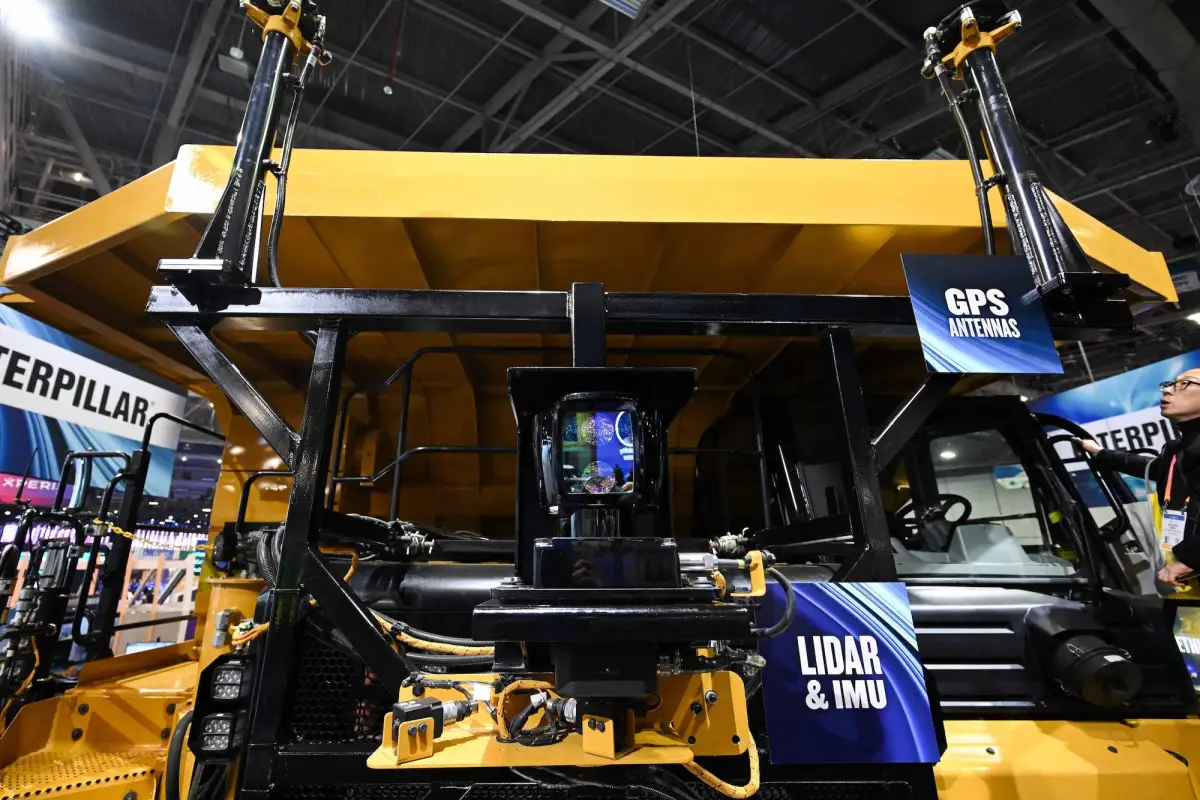


Caterpillar is applying its years of experience in mining automation to a broader range of AI applications. Company management indicates that the real challenge is not just developing the technology, but also integrating it into on-site processes and ensuring it operates seamlessly with existing personnel.
From mines to construction sites
Caterpillar was among the first to advance automation, initially focusing on the mining sector. The shortage of labor and the high-risk working environments in mines made these areas particularly suitable for realizing the value of automation. Today, the company sells autonomous mining trucks, drilling rigs, underground loaders, bulldozers, and remotely controlled construction equipment, along with software tools such as command centers, fleet management systems, and intelligent terrain analysis.
The company's Chief Technology Officer, Jaime Mineart, stated that Caterpillar now hopes to bring these experiences to more dynamic environments, including construction sites, quarries, and building sites. She mentioned that deploying automated equipment does not equate to the completion of the transformation on-site; companies still need to restructure their operational processes and rearrange the way people and machines collaborate.
AI Assistant enters the maintenance phase.
In practical applications, Caterpillar has incorporated AI into the tools used by technical personnel and internal employees. Its Cat AI Assistant supports on-site technicians in invoking maintenance procedures via voice, identifying potential faults, and determining the parts that may be needed before repairs are carried out.
Mineart indicates that this tool is currently being used by customers, equipment operators, and technical personnel. This assistant operates based on Caterpillar's own data, which comes from its networked equipment system. She mentioned that the company has approximately 1.6 million networked assets globally and has accumulated over 16 PB terabytes of structured data.
Five years of investment of $100 million in training
In addition to maintenance, Caterpillar is also using AI to support on-site scanning and digital twin generation in order to analyze manufacturing operations. The company also utilizes AI for internal business operations and software development, including using AI to proxy transform old code, generate and test new software, as well as to identify defects more early on.
However, the company believes that the challenge in implementing AI still lies at the organizational level. Mineart indicates that Caterpillar will rely on experienced operators to train the AI system, transforming years of accumulated on-site knowledge into model capabilities. As the degree of equipment automation increases, some operators may in the future shift from controlling a single piece of equipment to managing multiple devices simultaneously from a remote command center.
This transformation also brings about new training needs. Mineart indicates that Caterpillar plans to invest $100 million over the next five years to train its 118,000 employees in AI, automation, and robotics-related skills.
From a business perspective, this investment is also related to the increasing infrastructure demands of AI. Caterpillar's revenue in the second quarter reached $20.5 billion, a record high. Among this, driven by the demand for data center power generation equipment, its power generation business sales increased by 72% to $3.1 billion. The company's CEO, Joe Creed, stated that the demand for infrastructure surrounding cloud computing and generative AI continues to grow.