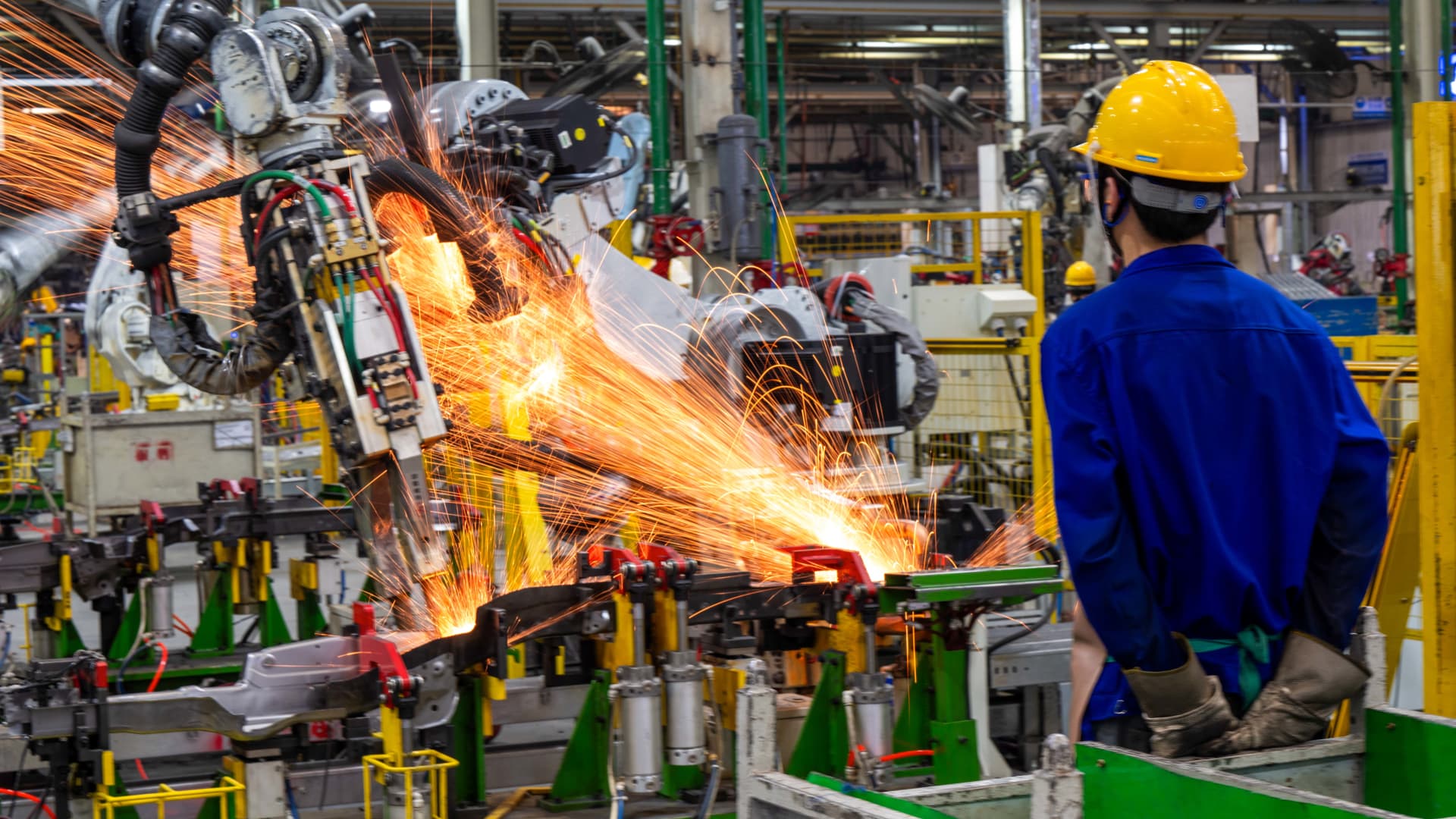


China's manufacturing sector saw some recovery in August compared to the previous month, but it has not yet returned to an expansionary range. Official data shows that the Manufacturing Purchasing Managers Index (PMI) for August was 49.8, higher than 49.2 in July and slightly better than market expectations, indicating that industrial activity is still contracting, albeit at a slower pace.
PMI has been below 50 for two consecutive months.
PMI A value above 50 usually indicates expansion, while a value below 50 signifies contraction. Although the data improved in August, it has been below the boom-bust line for the second consecutive month, reflecting that demand in the manufacturing sector and the recovery of production are still unstable.
This also indicates that the current downward economic pressure has not yet significantly eased. Compared to the market's initial expectations, the data for August was slightly better, but the overall economic sentiment remains weak.
Domestic demand and the real estate sector continue to drag down
China's economic growth rate slowed to 4.3% in the second quarter, the lowest level since the end of 2022. Weak domestic demand and a continuously sluggish real estate market continue to suppress overall economic activity.
After entering the second half of the year, the pressure has further become apparent. Consumer spending has stagnated, urban investment has contracted more rapidly, and the unemployment rate has risen. In July, both retail sales and industrial value-added growth slowed down, and the profit growth rate of industrial enterprises also dropped to a low level for the year.
Exports support growth, but it's difficult to drive the overall situation on their own.
Against the backdrop of weak domestic demand, exports remain one of the few areas supporting growth this year. Driven by global AI infrastructure investment, the demand for technology products made in China has increased, enabling exports to maintain double-digit growth for most of the year.
However, it is difficult for external demand to fully offset the drag brought about by the slowdown in the domestic economy. China's decision-making authorities have previously stated that they will introduce new policy measures at an appropriate time and mentioned that there is still room for further fiscal spending and monetary easing. However, economists generally expect that the subsequent support may be relatively limited.