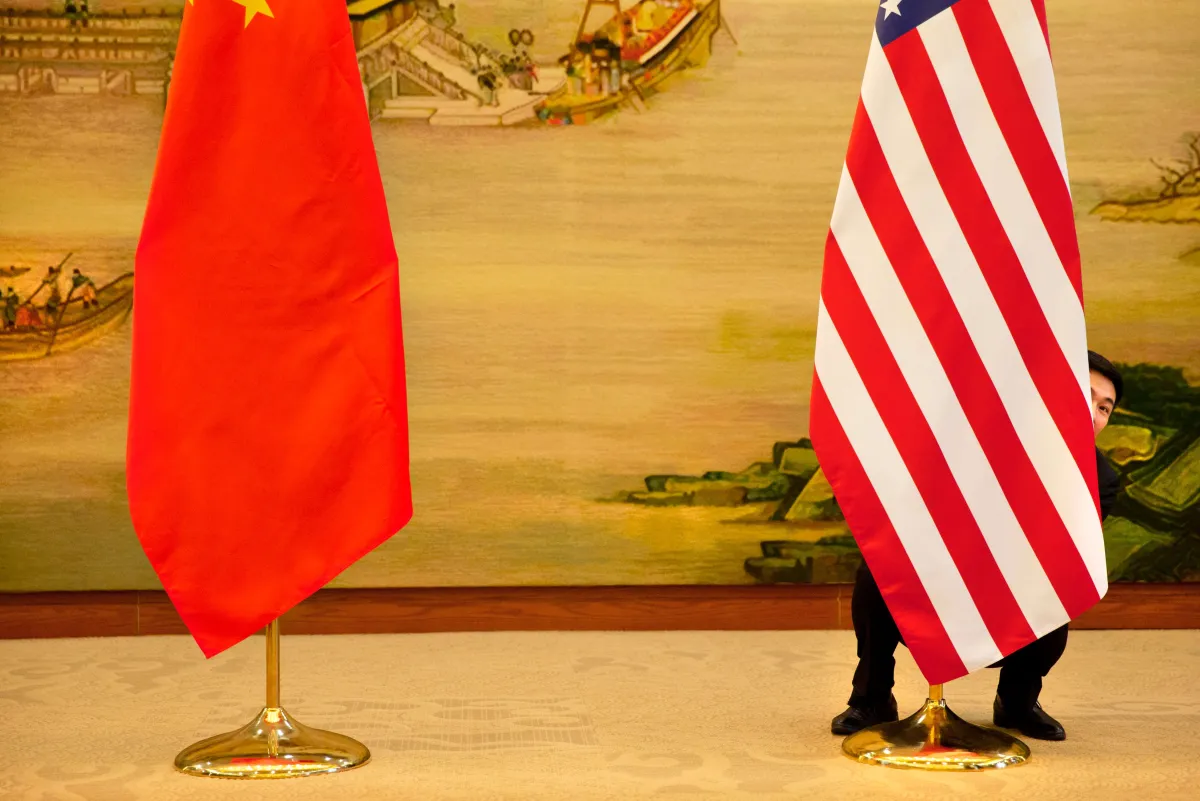


Foreign media: The United States has recently tightened restrictions on drones and advanced robotics systems manufactured abroad, citing national security as the reason. TechCrunch comments that these measures will raise the barriers for Chinese companies to enter the U.S. market, but it is difficult to diminish China's production capacity and cost advantages in global robotics manufacturing.
The United States continues to impose additional restrictions
The article mentions that Washington expanded the scope of restrictions in July and August, and imposed high tariffs on imported drones and their components. The tariffs on drones will take effect in September, while additional tariffs on components are scheduled to be implemented in 2027.
The "Cover List" previously established by the Federal Communications Commission of the United States was mainly aimed at communication and security devices, later it gradually expanded to include drones manufactured abroad, and most recently it has been extended to advanced robotic equipment as well. The article argues that this indicates that the United States is incorporating robots and drones into a broader scope of strategic industrial protection.
Chinese companies possess advantages in shipment and cost control.
TechCrunch citing Counterpoint data states that in the first half of this year, the global shipment volume of humanoid robots reached 22,000 units, with the vast majority coming from Chinese manufacturers. In terms of shipment volume, the top five manufacturers – AgiBot, Yushu Technology, Galbot, UBTECH, and Joyrobot – are all from China, accounting for a total of 86% of the global shipments.
The article argues that the advantages of Chinese manufacturers are not limited to price. Lower selling prices mean that more devices can be deployed in real-world scenarios, thereby accumulating data and allowing for continuous product improvements; higher production volumes further reduce costs, creating a scale effect that continues to amplify over time.
Analysts also mentioned that Chinese companies are continuing to reduce costs by developing more core components in-house and leveraging their existing manufacturing systems. For example, Yushu Technology has increased its internal development of components, while automakers involved in robotics can reuse chip and vehicle manufacturing expertise.
Competition or shifting to markets outside of the United States
The article argues that even though Chinese robotics companies face limitations in the US market, they still have a large domestic demand and can continue to expand into other regions. Regions such as Europe, Southeast Asia, Latin America, and the Middle East, which have an increasing demand for low-cost automation and are facing labor shortages at the same time, are seen as more viable directions for growth.
Comments suggest that this path may be similar to that of Chinese electric vehicle companies: first establishing scale domestically, then entering overseas markets, and subsequently promoting localized production. For countries with a high degree of repetition in manufacturing jobs and under pressure due to population structure, humanoid robots may be implemented sooner.
A similar differentiation has emerged in the drone market. The article states that the industry is gradually forming two ecosystems: one is dominated by the United States and its allies, with an emphasis on compliance and safety requirements; the other is led by Chinese manufacturers, which occupy a broader market by relying on low costs and mass production.
Global markets may become further regionalized.
The article argues that the future landscape may not necessarily involve a complete separation between the Chinese and American systems; rather, regionalization is likely to accelerate. American companies and their allies may seek to gain a share in areas with higher security requirements such as national defense, critical infrastructure, and long-range autonomous systems, while Chinese companies will continue to expand their presence in price-sensitive markets.
At the same time, Japan, South Korea, and Taiwan, China may also gain more space. The article mentions that Japan has a strong foundation in industrial robots and precision manufacturing, South Korea has a base in electronics, batteries, and the automotive industry, while Taiwan, China occupies an important position in semiconductors.
However, comments also pointed out that it is difficult for these regions to completely replace China in the short term, as Chinese components are still widely used in the global robotics industry chain. The more likely outcome is that the United States will strengthen its domestic and allied supply chains, China will continue to expand its global presence based on scale and cost advantages, while other manufacturers in Asia will seek their market position somewhere in between.