

The city of Selina, in Texas, USA, is introducing Helium Network for local connectivity construction. Over the past year, the city has seen an increase of more than 12,700 new residents, with a population growth rate of 24.6%. Under the pressure of expansion, locals have chosen to utilize existing public facilities to provide coverage rather than waiting for traditional communication infrastructure to be gradually established.
Public buildings have been connected to the internet.
The city of Selina announced that public buildings such as libraries and senior activity centers have begun to support the Helium network. Local officials stated that this approach can convert the existing Wi – Fi resources into coverage capabilities that residents' mobile phones can directly use, reducing the time and cost associated with building new communication towers.
Helium The Chief Executive Officer Mario Di Dio stated that the demand for connectivity in rapidly growing cities often outpaces the approval and construction progress of traditional infrastructure, while existing urban facilities can more quickly accommodate the traffic from operators.
The daily data traffic within the city is approximately 100GB.
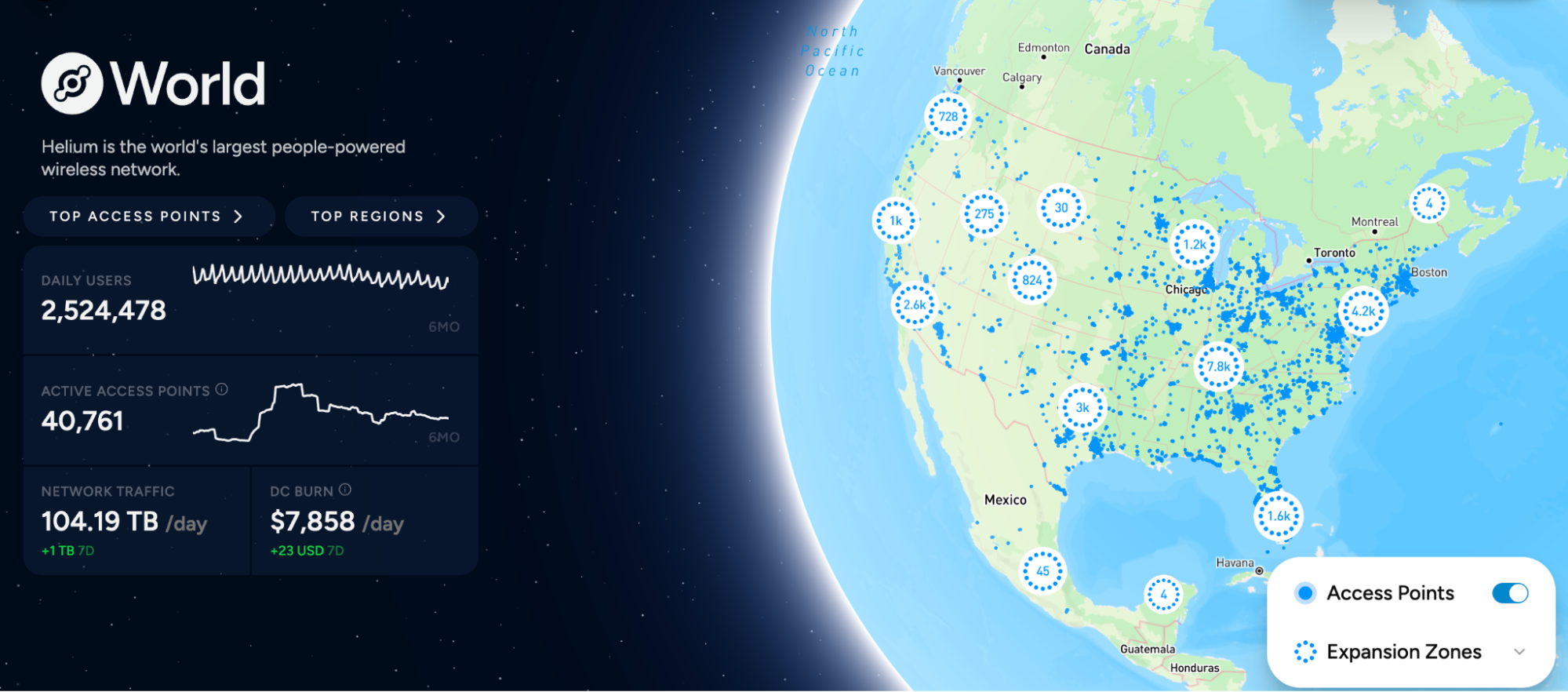
According to reports, the Helium network currently handles approximately 100GB of user data per day in the city of Selina, and new hotspots will continue to be deployed in the coming months. Helium Explorer data shows that the entire network now serves over 2.5 million active users daily, with a daily data transmission volume exceeding 104TB.
This means that Helium is attempting to push the use cases of DePIN beyond personal and community networks to city-level connectivity services. For the project, case studies involving local governments can help enhance its commercial narrative.
Rebound after acquisition and governance disputes
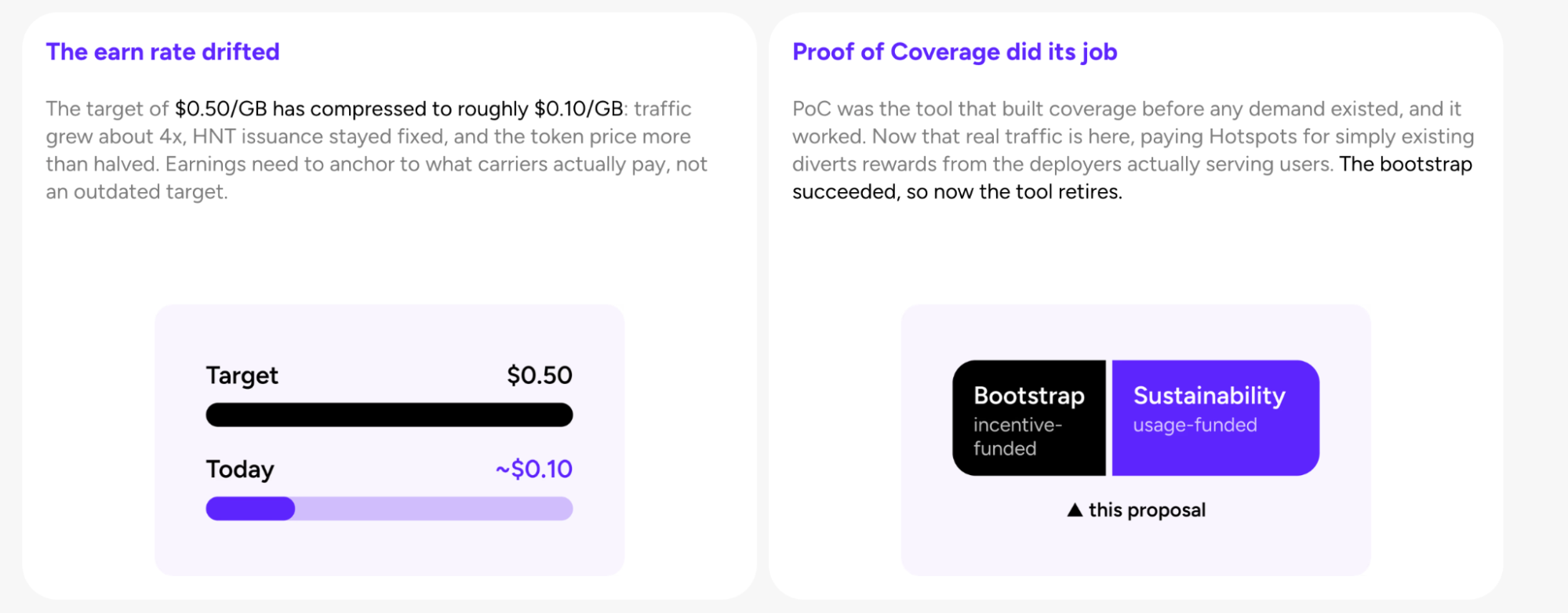
Helium has been under pressure in recent months. Previously, its mobile business was acquired by Noble Mobile under Andrew Yang, which sparked controversy within the community. At the same time, governance proposal HIP-149 also plans to reduce the earnings of network contributors, leading to doubts about the sustainability of the network's original incentive model from the outside world.
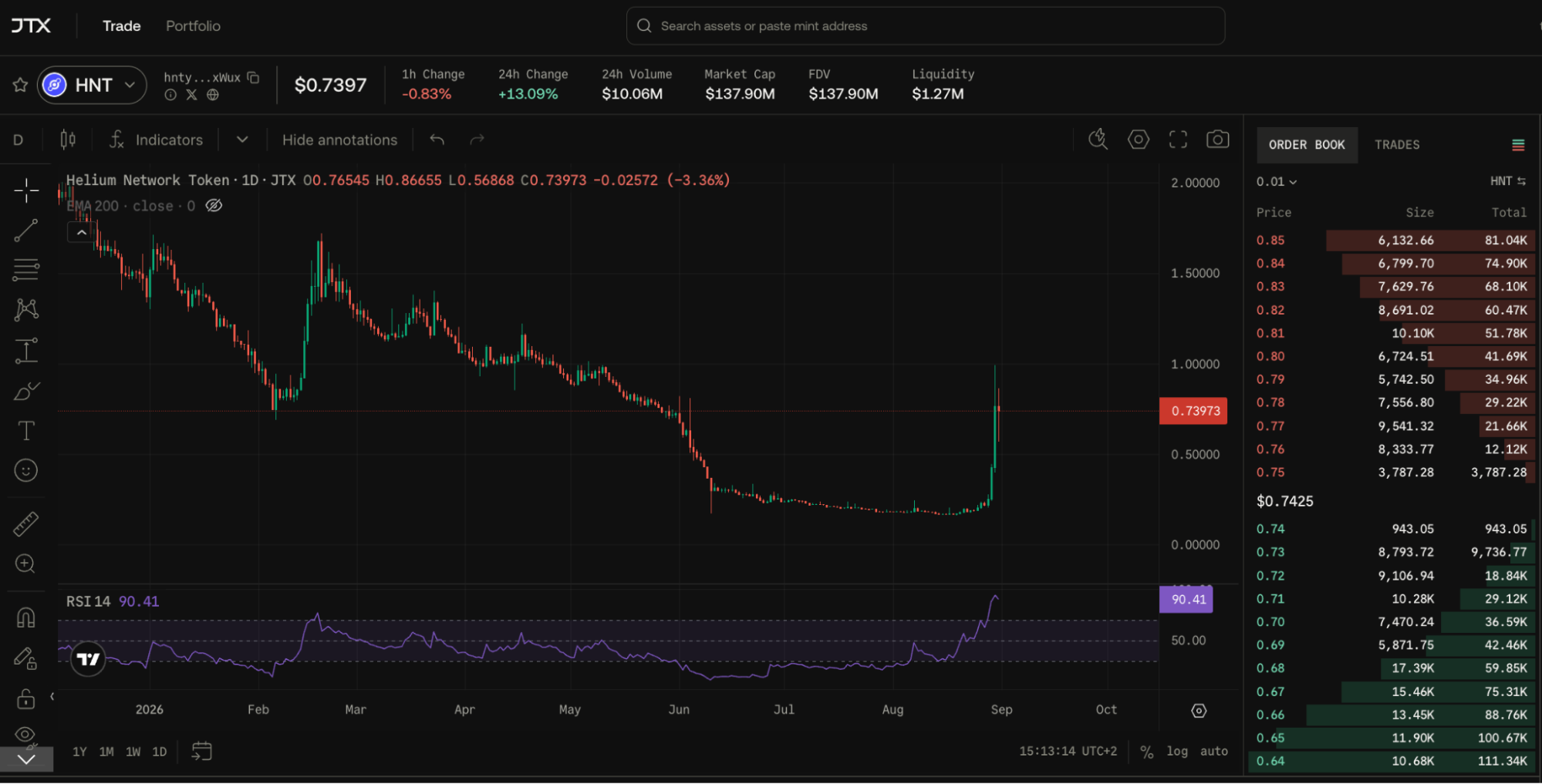
Under the influence of the aforementioned factors, HNT experienced a significant decline in June, with a monthly drop of 67%. However, after the announcement of the collaboration with Selina, HNT saw a rapid rebound in a short period of time. Reports mentioned that the token rose by more than 380% within just a few hours, and at the time of publication, its price was around $0.73, corresponding to a valuation of approximately $137.9 million.
However, from a project perspective, the more significant meaning of this collaboration lies in the fact that Helium is attempting to prove the implementation capability of the DePIN network through real-world urban scenarios, rather than relying solely on token incentives to maintain growth.