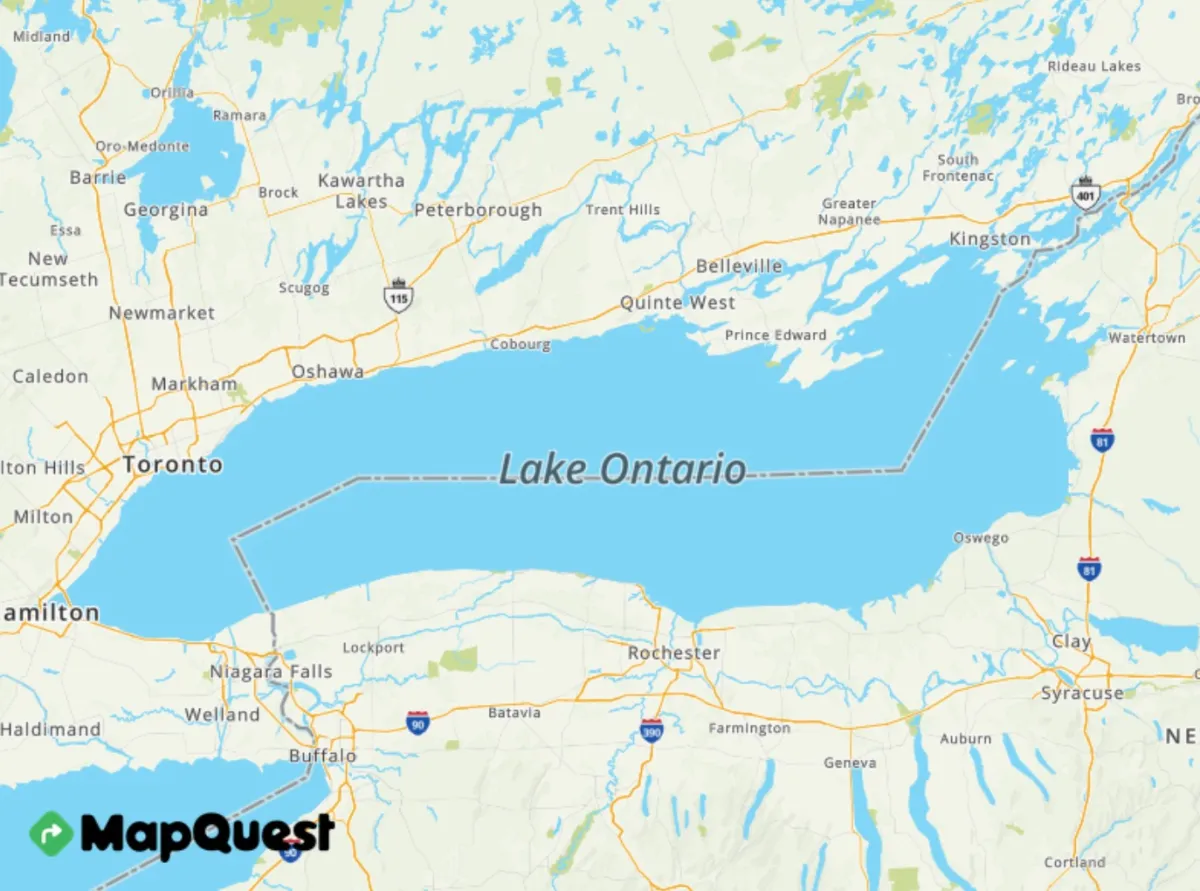


MapQuest gained significant attention in North American app stores for refusing to rename Lake Ontario as "Lake America." As Trump pushed for updates to the official U.S. place-name system, this controversy, which originally revolved around map labeling, quickly spread to topics such as technology platform choices, user attitudes, and U.S.-Canada relations.
Downloads increased by more than 10 times in a week
TechCrunch citing Sensor Tower data indicates that during the week of August 24, MapQuest had approximately 184,000 global downloads, with the US market accounting for around 162,000 downloads, both showing an increase of over 10 times compared to the previous week. In the US market alone, the daily download volume from August 26 to 30 also increased by 128%.
According to the app store rankings, as of Monday morning Eastern Time, MapQuest has risen to 4th place in the overall US App Store rankings (excluding games). In the Canadian region, this app once reached 2nd place in the overall rankings.
MapQuest The general manager, Doug Berger, stated that the company continued with the approach it took previously when dealing with the renaming issue of the "Gulf of Mexico," which was to retain the names familiar to users. He mentioned that a large number of users expressed their support by downloading the app over the weekend.
The controversy stems from Trump's executive order to change names
The dispute began when Trump requested that the U.S. Department of the Interior update the name of Lake Ontario in the United States' geographical naming system to "Lake America." Lake Ontario, located on the border between the United States and Canada, is one of the Great Lakes of North America.
The report mentions that this move occurred after the breakdown of trade negotiations between the United States and Canada. The U.S. subsequently imposed a new 50% tariff on Canadian goods worth $20 billion, and Canada is also preparing to take countermeasures. As a result, the dispute over map naming is no longer just a matter of product-level adjustments but is being viewed within the context of broader bilateral tensions.
Google has been updated, Apple has not been adjusted yet.
Google Maps stated last Saturday that it would follow the updates to official U.S. place name sources for display. Google explained that its map naming would refer to the official government database, which in the United States corresponds to Geographic Names Information System, that is, GNIS.
According to the processing method specified by Google, users in the United States will see the new name, users in Canada will still see "Lake Ontario", while users in other regions will see both names. In contrast, as of Monday morning, Apple Maps has not yet completed the name change, nor has it made any public announcements regarding subsequent arrangements.
Previously, both Google Maps and Apple Maps had changed "Gulf of Mexico" to "American Gulf" after Trump issued similar executive orders. This also made it easier for MapQuest not to follow suit this time, which can be more readily seen by the outside world as a clear expression of their product stance.
MapQuest has once again gained attention
MapQuest was one of the earlier online map services, and later it came under the ownership of AOL and Verizon successively. In 2019, Verizon sold it to the internet advertising company System1.
Sensor Tower Estimates show that since the beginning of this year, the global cumulative downloads of MapQuest have reached approximately 687,000 times, a year-on-year increase of 29%. Since 2012, the total number of downloads for this app has been around 24.4 million times, with 97% of those coming from the US market. The sudden surge in downloads due to the geographical name dispute has also brought this established map app back into the mainstream spotlight.